
Tyre Markings: How To Find Your Tyre Size
The writing on your tyres can be confusing. The sidewall of typical tyre is imprinted with myriad codes and numbers that are used to identify the size and physical features of that tyre as well as details relating to its manufacture. Many of these tyre markings are of little or no importance to the driver while others are essential when it comes to choosing a replacement tyre.
If you are looking for new tyres you should familiarise yourself with the following tyre markings.
Tyre Size
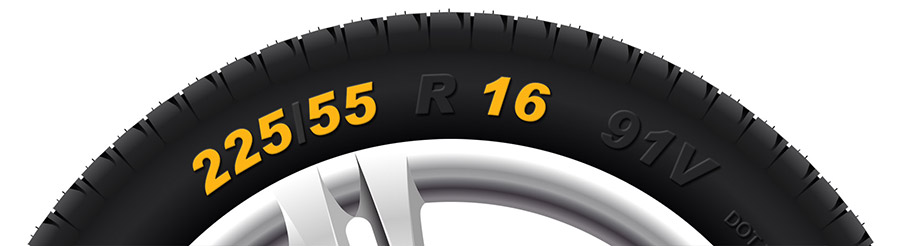
Your tyre size can be found on the sidewall of your current tyre and is a sequence of numbers and letters. The most common tyre size in the UK is 205/55R16 but there are many variations so it’s important to check your existing tyre or to check your vehicle handbook to ensure the right tyre size has been installed.
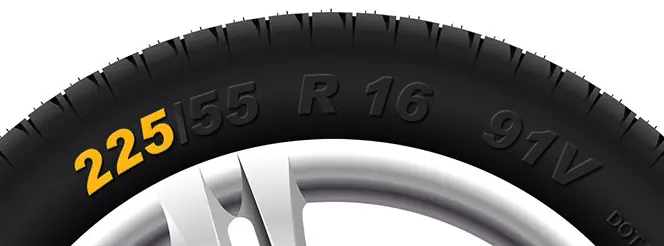
Tyre width
The first three digits. This displays the width of the tyre in millimetres. A tyre marked 225 will measure 225mm across the tread from sidewall to sidewall.
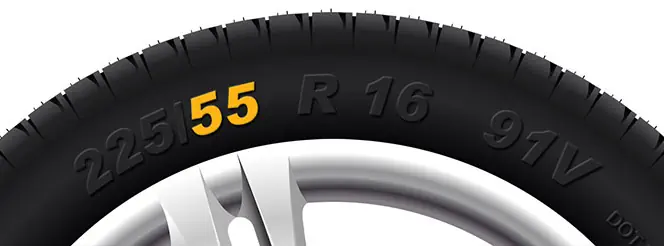
Aspect ratio
The fourth and fifth digits of the tyre code that immediately follow the tyre width. The aspect ratio or profile height of the tyre sidewall is expressed as a percentage of the tyre width. So an aspect ratio of 55 for example means that the profile height of the tyre is 55% of its width.
Radial
Radial tyres are marked with the letter R. Radial tyres are constructed with the cord plies positioned at a 90 degree angle to the direction of travel to give the tyre additional strength. Almost every new tyre manufactured today is a radial tyre.
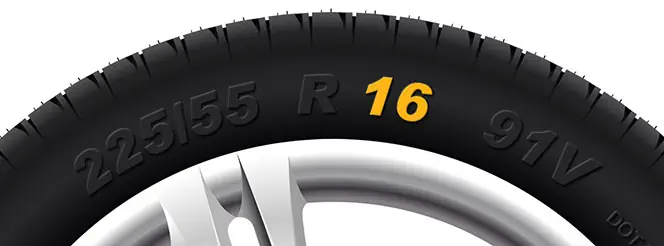
Wheel diameter
The next two digits represent the size of the wheel rim that the tyre can be fitted to. It is also the diameter of the tyre from bead to bead. So a tyre marked 16 will fit on a 16-inch wheel rim.
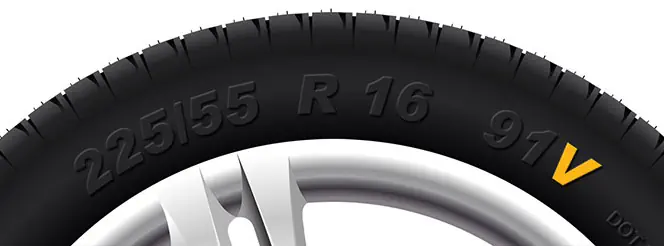
Speed Rating
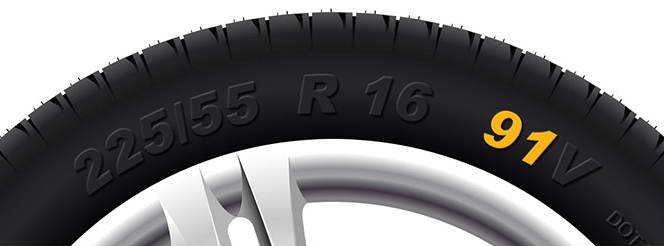
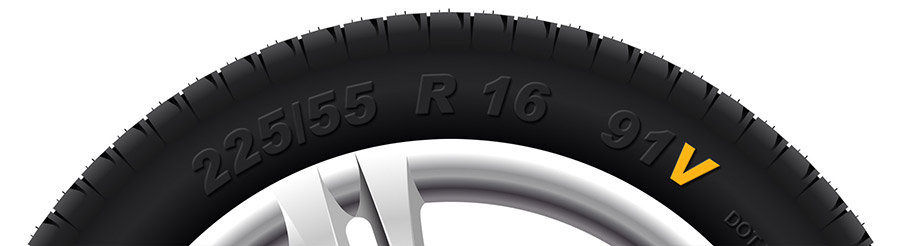
The speed rating of a tyre is represented by a letter of the alphabet at the end of the tyre size code and indicates the maximum speed capability of the tyre. Tyres receive a speed rating based on a series of tests which measure the tyre's capability to handle a set speed for a prolonged period of time.
Select your tyre speed rating to find out the maximum speed your tyres can maintain.
If you are unsure what speed rating you need, be sure to check your vehicle handbook. Choosing a lower speed rating than that recommended by your vehicle manufacturer could potentially invalidate your insurance.
Load Rating
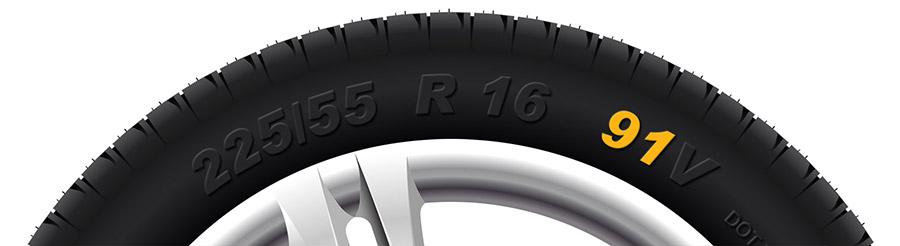
The load rating provides information on the maximum weight capability for the tyre. The load rating is a numerical code that can be located just after the tyre size marking and before the speed rating.
Select your load rating to find out the maximum load capability for your tyres.
Although not illegal, it is not advisable to have tyres with a lower speed rating or load rating than the manufacturer recommended tyre specification for your vehicle, or to have a combination of different tyre construction types. Consult your vehicle handbook to confirm your vehicle's tyre speed rating and load rating as well as any additional requirements.
Date of Manufacture
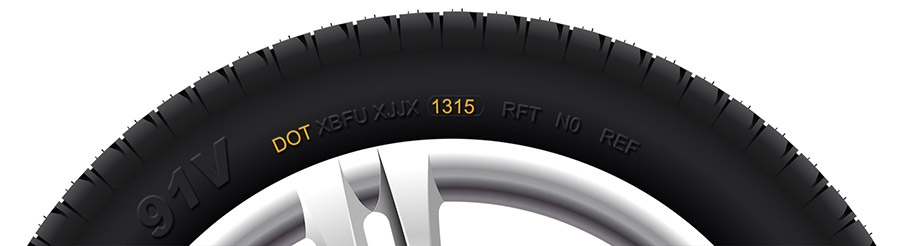
Your tyre is also printed with information about when and where the tyre was manufactured. This is represented by a series of letters and numbers which starts with the letters DOT (meaning the tyre exceeds Department of Transport safety standards).
The first 8 characters that follow DOT are essentially a serial number used by the manufacturer to identify the tyre and in which production facility it was made.
The last four digits, usually presented in a small window can help you to identify the age of the tyre.
The first two digits represent the week of the year the tyre was produced from 1 to 52. The last two digits represent the year. So a tyre marked 1026 was manufactured in the 10th week of 2026.
Tyres age over time, which can be accelerated if the vehicle is used infrequently. If the date of manufacture on your tyres is in excess of 6 years, we recommend having your tyres checked out to ensure they are still roadworthy.
Reinforced
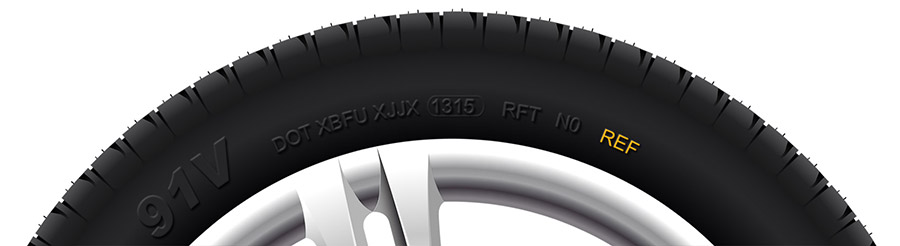
Tyres with an increased load rating are often marked to show that they have been reinforced in order to handle extra weight. This varies from one manufacturer to the next but look out for the following symbols which are used to identify if the tyre has been reinforced.
| Symbol | Meaning |
|---|---|
| XL | Extra Load |
| EXL | Extra Load |
| RF | Reinforced |
| REINF | Reinforced |
| RFD | Reinforced |
Run Flat
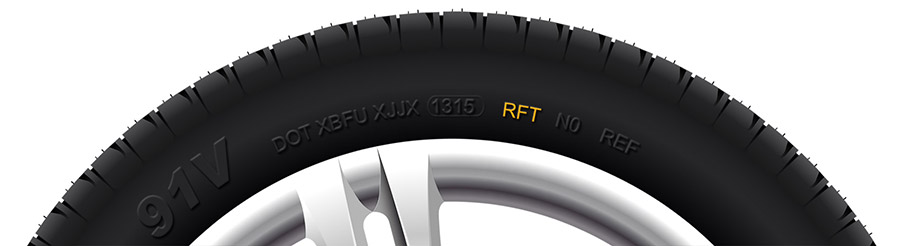
Run flat tyres are specially designed with strengthened side walls so that, in the event of a loss of pressure such as a puncture, the tyre can hold the weight of the vehicle and continue to be used for a short time until you can reach an appropriate place to stop and have the tyre replaced. There are many different tyre markings for run flat tyres depending on the manufacturer.
| Symbol | Meaning | Manufacturer |
|---|---|---|
| ROF | RunOnFlat | Goodyear |
| EMT | Extended Mobility Technology | Goodyear |
| RFT | Run Flat Technology/Tyre | Pirelli, Firestone, Bridgestone |
| ZP | Zero Pressure | Michelin |
| SSR | Self Supporting Run Flat | Continental |
| DSST | Dunlop Self Supporting Technology | Dunlop |
Homologation
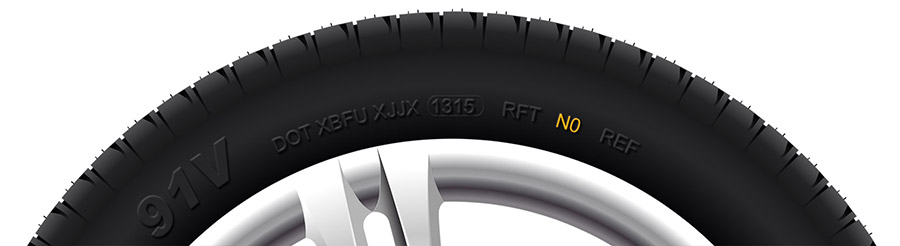
Some tyres are intended specifically for use with certain vehicle makes for added performance benefits. These tyres are designed in close co-ordination with the vehicle manufacturer and feature a designated symbol on the sidewall which shows that the tyre meets the manufacturer's exacting standards and has been given OE status.
Many of the world's top car manufacturers including BMW, Mercedes, and Audi have designated markings and the same letters and symbols are used by all tyre manufacturers to show that the tyre has been specifically designed for that vehicle.
| Manufacturer | Symbol |
|---|---|
| Alfa Romeo | AR, ARR, AZ |
| Audi | AO |
| Bentley | B, B1 |
| BMW & Mini | (Star) |
| BMW Electric & Nio | I |
| Ford | FO |
| Jaguar | J |
| Land Rover | LR, LRO |
| Mercedes | MO |
| Mercedes (AMG) | MO1 |
| Mercedes Runflat | MOE |
| Porsche | N0, N1, N2, N3, N4, N5, N6 |
| Tesla | T0 |
| Toyota | TO, MZ |
| Volkswagen | (Plus), VO, G |
How to read your tyre size
When buying new tyres, you will need to make a note of the following tyre size information from the sidewall of the existing tyre to ensure you select the correct replacement tyre for the vehicle.
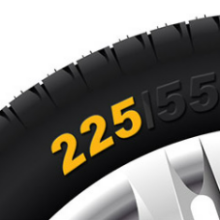
Tyre Width
The tyre width is a 3 digit number that is followed by a '/'. This is the width of the tyre in millimetres. e.g. 225
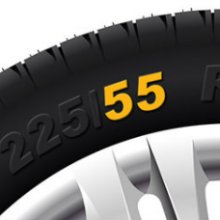
Aspect Ratio
Also referred to as the tyre profile, this is the two digits that appear to the right of the '/' just after the tyre width. e.g. 55
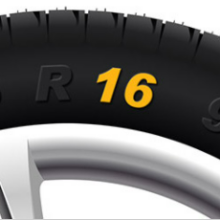
Rim Size
The rim size is the rim diameter of the tyre. It is a two digit number that can be found just after the letter R on the sidewall. e.g. 16.
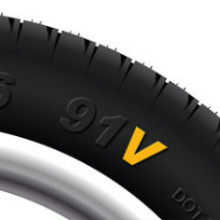
Speed Rating
The speed rating is represented as a letter of the alphabet and can be found to the right of the load index - It is usually the last character shown in the tyre size string. e.g. V
What if my rear tyres and front tyres are a different size?
Don’t worry, its perfectly normal for some cars to have different size tyres fitted to the rear than to the front. This is quite common in high-end vehicle models like the BMW M Series where the rear wheels are larger. This is usually done to improve the handling of the vehicle. Your vehicle handbook can provide guidance here or enter the vehicle registration to see the most likely tyre fitments for your vehicle including those where the front and rear tyre size is different.
That said, tyres on the same axel should always be the same size and it would be dangerous to fit, for example, a different size front drivers side tyre to the one on the front passenger side.
If your still unsure, pop in to one of our centres and our technicians can let you know if its recommended that you have different tyre sizes on the front and rear of the car.