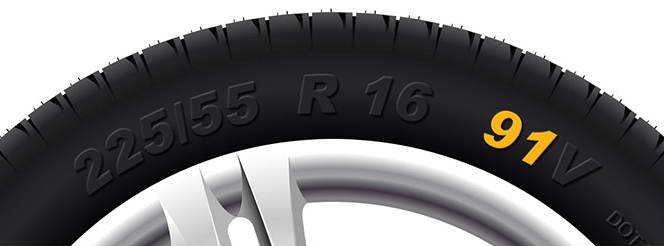

EU Tyre Labelling
As of May 2021, all new car, 4x4, SUV, van and most truck tyres manufactured carry an EU tyre label which is similar to the energy stickers that appear on white goods.
No two makes of tyre are the same, so the EU tyre label has been created to provide drivers with objective, reliable and comparable information about each tyre so that you can make a more informed choice when buying new tyres.
Similarly, labels need to display vital information about certain traits, benefits, or dangers of a product. If these are visible at a glance rather than in the small print of the product manual then it makes choosing the right product for your needs significantly easier.
The EU’s targeted outcome is that road safety will improve and that the environmental impact of road transport will be reduced.
The EU Tyre label explained
The EU tyre label, mandatory for all tyres sold in Europe, provides important information about safety and environmental aspects of a tyre similar to the energy label found on kitchen appliances.
Every tyre is assessed on three key areas of tyre performance and given a rating in each of these three categories for the EU tyre label, allowing the consumer to compare tyres on a like-for-like basis. The three areas assessed are:
- Rolling Resistance - How economic is this tyre? - Savings
- Wet Grip - How quickly can the tyre stop in wet conditions? - Safety
- Exterior Noise - How noisy is the tyre? - Volume
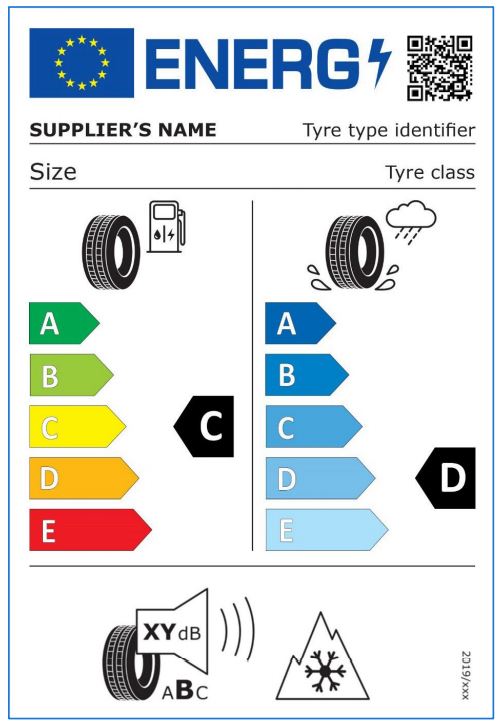
How do you read EU tyre labels?
The EU tyre label is broken down into three main categories:
Rolling Resistance
The EU tyre labelling criteria looks at the rolling resistance of the tyre in order to rate its fuel/energy efficiency. Rolling resistance is the force acting opposite to the tyre’s direction of travel. As a tyre rolls along the road it creates friction, the higher the friction the more energy will be needed to keep the tyre rolling, making the engine work harder and use more fuel. Tyres with low rolling resistance place lower demands on fuel since less energy is being used as the tyres roll along the road.
The difference in fuel consumption between a car fitted with A and E class tyres is around 0.5 litres per 100km, that's a saving of around 80 litres and more than £110 per year.*
Other factors affect fuel consumption such as aerodynamics, vehicle weight, type of engine, auxiliary systems like air-conditioning, slope of the road, personal driving style, tyre pressure level, accelerations or general traffic conditions. Energy-efficient driving, or “eco-driving” can significantly reduce your fuel consumption.
*Savings based on a petrol engine car travelling 10,000 miles per year with £1.40 per litre fuel cost
Wet Grip
In an emergency situation, a few metres can make all the difference.
Tyres with excellent wet grip have shorter braking distances on slippery roads and increased aquaplaning resistance, essential for keeping you safe in the rain.
These ratings (from A-E) are measured from the distance travelled by a car after braking at 50mph in the wet.* Tyres with the best EU tyre label rating for wet grip will exhibit a 30% shorter braking distance than those with the worst rating for a full set of tyres fitted to an average car.
A tyre’s EU tyre label wet grip rating reflects the capacity of the tyre to brake on a wet road. However, there are other parameters which are relevant for safety (e.g. road holding ability, directional control, deceleration ability on wet and dry surfaces at higher speed and aquaplaning behaviour) but wet grip was chosen by the EU as the most representative situation of reduced adherence in Europe.
*Testing according to regulation EC 1222/2009
Exterior Noise
Think about the many thousands of cars on our roads each day. If we all chose tyres with lower noise ratings, imagine how much quieter our towns and cities would be?
The EU tyre label rating measures the external noise emissions of the tyre, which contribute to the amount of pass-by noise a vehicle generates. Choosing a tyre with a good noise rating will lower the impact of your driving on the surrounding environment.
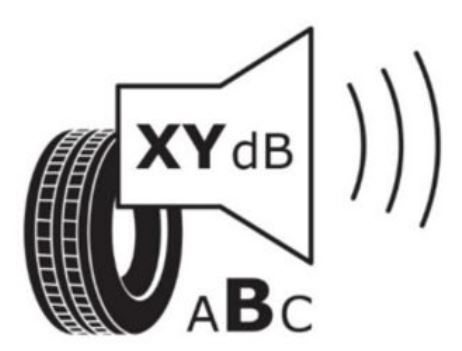
Exterior noise levels are measured in decibels (dB) and shown as a rating of A-C on the EU tyre label. An A rating is the best performance and C is the worst. In fact, a C rating is the current limit, while a B rating meets future laws and A is a further 3dBs below. The EU tyre label only measures the external rolling noise of the tyre which is not related to the in-cabin noise that the driver will experience.
Additional Information
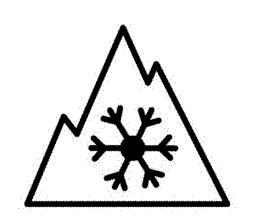
The new label also includes additional icons for tyres suitable for severe snow conditions (3PMSF) and/or for grip in icy conditions.

How does the new EU Tyre label differ from the old label?
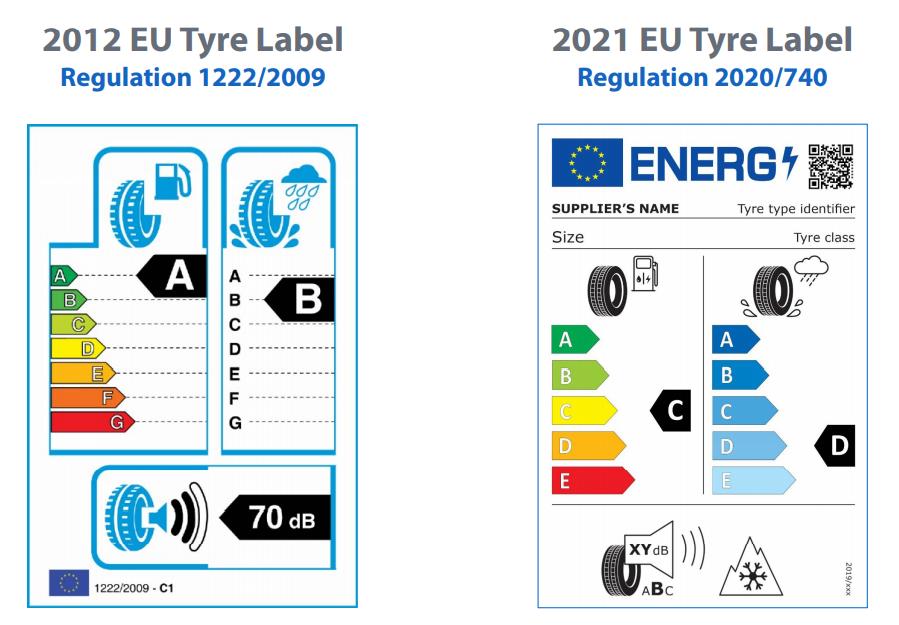
While the label may look the same at first glance, there are several notable changes – particularly when it comes to how information is provided on the tyre label.
Rather than the relatively ambiguous information before, the new labels now allow you to immediately see a supplier’s name, as well as different identifying information for the tyre. This gives a foundation for making educated decisions on more fuel-efficient tyres. What’s more, the labels can be set up with QR codes to take people to specific web pages so that more information can be found.
Rolling resistance and wet grip classes will be shown, as well as noise classes (A, B, and C). The new EU tyre label includes more information about tyre performance in snow and ice conditions, also known as ‘Snow Grip’ and ‘Ice Grip’. The label classes for wet grip and rolling resistance now include 5 instead of 7, denoted by the letters A through E. Tyres that would previously be placed in Class E will now be in the new Class D, and tyres from the old Class F & G will merge to form the new Class E.
In the EU Label shown here, the ‘Snow Grip’ is the symbol with the snowflake on it, while the ‘Ice Grip’ is the symbol of a mountain peak.
These are often traits that would be advertised with tyres, but this labelling helps to quickly display whether a tyre has a trait or not, as well as to standardise what each of the traits actually mean.
If a tyre doesn’t have either of these traits, the area of the label will appear as blank.
The QR Code
QR codes have been used to encourage consumer behaviour for some time now – usually in the form of deeper engagement with brands through ‘unlocking’ videos and other media.
The QR code is unique for each tyre model and will be linked to a product sheet on the EU product database (EPREL), allowing consumers to easily access additional product details by just scanning the code.
Are EU tyre labels accurate?
When purchasing tyres, the EU tyre labels are useful since they provide a basis for making an informed decision for more fuel-efficient tyres. It is crucial to remembe, that EU tyre labels do not indicate how well a tyre grips in the dry, how well it corners in the wet or dry, how much it contributes to the car's comfort, or how old it is.
Need new tyres?
If your vehicle needs new tyres, whether summer, winter, or all-season, put the replacement in the hands of your local Kwik Fit - the experts will have the right tyres on in no time. Alternatively, If you have any questions about EU tyre labels, get in touch with our expert team today.