
Car Brake Checks & Replacement at Kwik Fit
Book your car brake check appointment at Kwik Fit
Brakes are one of the most important car components, and it's vital to make sure they're always in great condition. Luckily, the experts at your local Kwik Fit centre are always on hand to help.
If you're concerned about the condition of your brakes, or just want some peace of mind, we offer a free brake check service where we inspect all key elements of your car's brakes, including brake pads and brake discs.
We'll then provide a no-obligation brake check report and quote, outlining what we feel should be addressed immediately and what may be worth keeping an eye on in the future.
Please enter your vehicle registration below and click 'Search'.
Please note: free brake checks on hybrid/electric vehicles are currently available at selected centres only.
Lifetime guarantee
To ensure your car brakes are always at their best, we offer a unique brakes lifetime guarantee. Once you have pads or shoes fitted at Kwik Fit, the replacement of these parts when they wear out is absolutely free to you, as long as you own the car.
Additionally, we will guarantee all other new brake parts fitted for the first 12 months after or the first 12,000 miles (whichever comes first).
What happens during a brake inspection appointment?
We check the condition and static operation of the braking system to ensure it is safe for a road test. This includes:
- Pedal travel
- Servo operation
- Low speed brake performance
- Brake light operation
We'll then perform a road test in order to check the brakes for common signs of wear before returning to the garage to do a full inspection of the brake system components.
Brake check quotes
When we're done, we'll provide you with a full list of our findings, as well as quotes for any repair work that may need to be undertaken. You can receive this quote via email if you prefer, but you're under no obligation to proceed with the repair work.
If you decide to go ahead with the repair work, we'll often be able to do those brake repairs on a same-day basis, but we may need to order in specific parts for some vehicles and types of repairs. In these instances, you can either leave your car at your local garage (though it's worth checking with the centre's technicians) or we can book a time for you to return.
What components does the brake inspection cover?
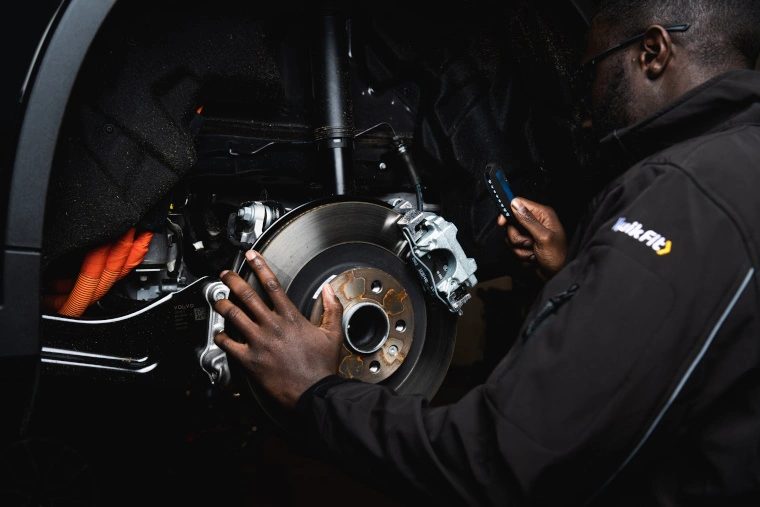
We check all the components in the braking system for a comprehensive brake inspection. This includes:
- Pads and shoes
- Master cylinder
- Disc brakes, drums, and calipers
- Wheel cylinder (for drum brakes)
- Brake pipes and hoses
- Parking brake (aka the handbrake)
- Brake fluid level and reservoir condition
When do I need a car brake inspection?
We recommend keeping on top of brake condition as part of routine maintenance.
This usually means as part of general safety checks (around once a week and before long drives) and regular car servicing, but also through maintaining awareness of key brake wear indicators.
Here are some tell-tale signs that you should book your free brake inspection as soon as possible:
- A metallic, usually low-frequency grinding sound when you apply your brakes.
- Excessive squeaking or constantly squealing brakes.
- A pulsating feeling on the brake pedal when you apply it, indicating that your brake disc is warped.
- Vehicle pulling to one side, especially when braking and braking suddenly, but this can also happen without the brakes applied if a caliper is stuck. This can often present quite subtly at the beginning.
- A spongy or soft brake pedal that can be pressed further than usual before there's any resistance. This indicates there's a problem with your car's brake fluid - it could just need topping up, but this is quite a task to DIY.
- A lit brake warning light on your dashboard, indicating that a sensor is showing a fault.
- A higher handbrake bite than usual.
For a lot more detail on what these problems mean, read our dedicated blog on key brake problems.
How often should car brakes be replaced?
Different driving patterns have a dramatic effect on how often your car's brakes need servicing.
For example, a set of brake pads could last up to 60,000 miles or more on a car driven mostly on the motorway (as, comparatively, there's not a great deal of sudden braking during motorway driving). However, the brakes on the same car driven mostly in busy city centre traffic may last only 25,000 miles or less.
Front brakes normally wear out before rear brakes because they handle a higher percentage of the braking load, especially on front-wheel drive cars.
It is often recommended that car brake pads should be replaced if the pad friction material has worn down to a thickness of 3 millimetres. Brake disc thickness should be measured. If they are at or below the manufacturer's safe minimum thickness specification then they should be replaced.
While it is possible to measure your brake disc thickness yourself, it is extremely difficult and requires specialist equipment. Firstly, your vehicle needs to be lifted with a jack; then, you'll need to remove the wheels before measuring. So it tends to be better left to the experts.
More about your car's brakes
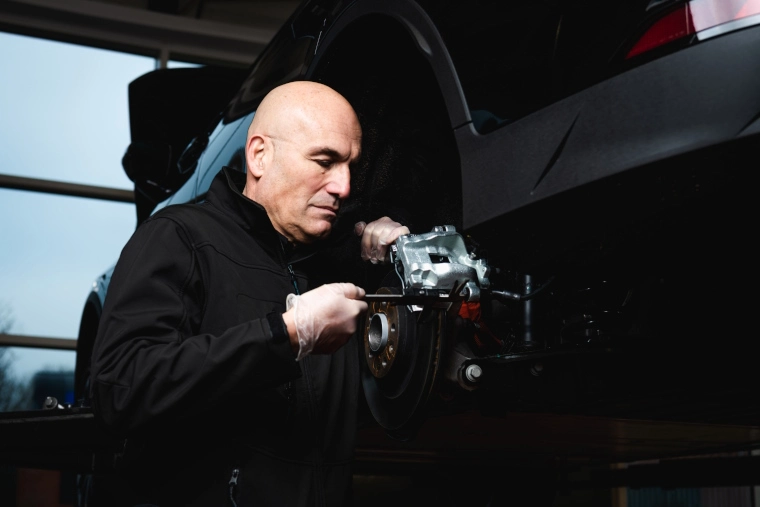
We always recommend that car brake discs or drums are replaced in axle pairs. This is because replacing one brake disc or drum could cause an imbalanced braking performance that could lead to further premature wear.
When new parts are fitted, it's vital to drive gently and carefully until they bed in. This takes approximately 200 miles. Excessive braking action on new parts can potentially damage them and lead to a loss of braking efficiency and performance.
As best practice for drivers whose annual mileage is considered average or high (around 8,000 miles per year or more), we recommend that your vehicle's braking system is checked at least twice a year. You may also want to check your braking system before a long journey or in advance of your MOT. Did you know that your vehicle will fail its annual MOT test if your braking system does not meet the required standards to allow your vehicle to come to an efficient stop?
Car brake FAQs
For any specific car brake queries you might have, find answers straight from the experts below.
General brake questions
A car's brake is a mechanical device that prevents forward movement by absorbing energy. When you press down on the brake pedal, hydraulic pressure is created, pressurising brake fluid.
This fluid moves towards the pistons that help induce pressure on the calipers to squeeze the brake pads onto the disc. It's this friction that slows the vehicle down. You can read more about how brakes work in our explanatory blog.
There are two core types of brakes used in cars: drum brakes and disc brakes. Drum brakes are slightly less common and use a set of shoes that press outwards against a rotating drum. This is how they cause the friction required to slow vehicles. Disc brakes, on the other hand, use brake pads to squeeze against a rotating disc.
The core difference between these two brake types is their structure and the way in which they generate friction. Generally speaking, the best way to tell these two brake systems apart is by how 'open' they are. Drum braking systems typically conceal the inner workings, whereas disc brakes leave the rotor exposed in order to encourage heat dissipation and cooling.
Yes, while you can still technically drive if your brakes are making a noise, this sound is often a warning sign that something is wrong with them. So, continuing to drive long distances on squeaky or grinding brakes can cause damage to your car if left unchecked.
Brake repair and replacement servicing questions
On average, replacing both the front and the rear brake pads costs between £200 and £500 for small vehicles, and £300 to £700 for larger vehicles such as SUVs. If your brake discs also need replacing, there will be an added cost.
If your brake warning light appears on your dashboard, it may signify low brake fluid, a fully engaged parking brake, or severely worn brake pads. Don't ignore this light, and get your car checked as soon as possible.
One of the best ways to mitigate the costs mentioned above is by maintaining brake health by getting your brakes checked regularly to spot any causes for concern well ahead of time. Luckily, Kwik Fit offers its customers free brake checks.
Yes, our brake check really is free. Although we provide you with a quote for any repairs needed, you are under no obligation to go for this.
Yes, we do offer brake checks for vans and light commercial vehicles. Head to our Van Brakes page to find out more.
If you're concerned about the performance of your brakes, you can always give them a quick test yourself before bringing them in for inspection.
Simply find a safe place to conduct the test (ideally, somewhere away from main roads and traffic). Then, making sure there is no one behind you, accelerate to around 30mph and then brake to a stop. When you brake, the pedal should push down smoothly without any juddering or resistance. You should also test your brakes lightly after driving through water.
Still have questions? Get in touch with the team of experts at your local Kwik Fit centre and they can speak with you directly about your brake queries.