
A Guide to Self-Driving Cars
Jessica Bird | Friday 19th June 2026 4:00pm
Once a distant dream of science fiction, self-driving cars (or ‘autonomous vehicles’ as they are increasingly known) have become a purchasable reality in recent years — taking motorists’ imaginations (and wallets) by storm.
In 2022, the global autonomous vehicle market amounted to almost 17,000 units (vehicles), and it’s projected to reach 127,000 units in 2030.
With advancements in technology, more and more vehicles are equipped with autonomous features designed to make driving safer, easier, and more efficient. So, don’t be too surprised if you see a car without a driver pull up next to you at traffic lights in the next few years…
Below, Kwik Fit’s experts explain how self-driving cars work, what the current UK adoption rates are, and what laws are in place for these exciting new vehicles.
Self-driving cars fact box
| Self-driving cars use artificial intelligence (AI) to respond to road conditions. | The first semi-autonomous vehicle was trialled in 1977 by Japan's Tsukuba Mechanical Engineering Laboratory. | The Global Autonomous Vehicles Market size is expected to be worth around USD 3,084.4 billion by 2033 (Market.US) |
| Autonomous vehicles have different levels of automation from 0-5, depending on the human intervention required. | In 2024, the Automated Vehicles Act established the legal framework for self-driving cars in the UK. | In 2026, the UK was trialling automated taxis and buses to improve public transport. |
What are self-driving cars?
A self-driving car is any vehicle that operates without human input owing to a combination of sensors, camera, artificial intelligence, and radar.
By using advanced technology to quickly gather and respond to stimuli, self-driving cars are able to mimic the decisions and manoeuvres made by a human when driving, successfully driving safely along roads.
In the UK, there are currently no autonomous vehicles allowed on the roads, as it is not yet legal (as of June 2026). However, since the Automated Vehicles Act came into force (more on this later), self-driving cars may soon begin to appear on UK roads.
Levels of automation
The phrase ‘self-driving car’ is a blanket term that refers to multiple different types of automated vehicle, each with differing levels of automation.
| Level 0 Automation | No automation. There may be some electronic systems in place, but these must be activated manually by drivers. |
| Level 1 Automation | Driver assistance. A couple of assistive automated technologies, such as lane assist, parking assistance, or adaptive cruise control. |
| Level 2 Automation | Partial driver assistance. This involves ADAS (Advanced Driver Assistance Systems), which can help drivers be more hands-off but still require supervision. |
| Level 3 Automation | Conditional driving automation. The car can be fully autonomous when engaged - but only in certain conditions. This involves braking, steering, and accelerating, but the driver must be ready to take full control when the vehicle requires. |
| Level 4 Automation | High driving automation. This is essentially a fully autonomous vehicle, but the self-driving mode is only permitted within certain areas and under certain weather conditions. Speeds can also be limited for self-driving. Level 4 is most commonly used in driverless taxis at the moment. |
| Level 5 Automation | Full driving automation. Finally, we have a completely automated car that will likely have no need for steering wheels or pedals. |
How do self-driving cars work?
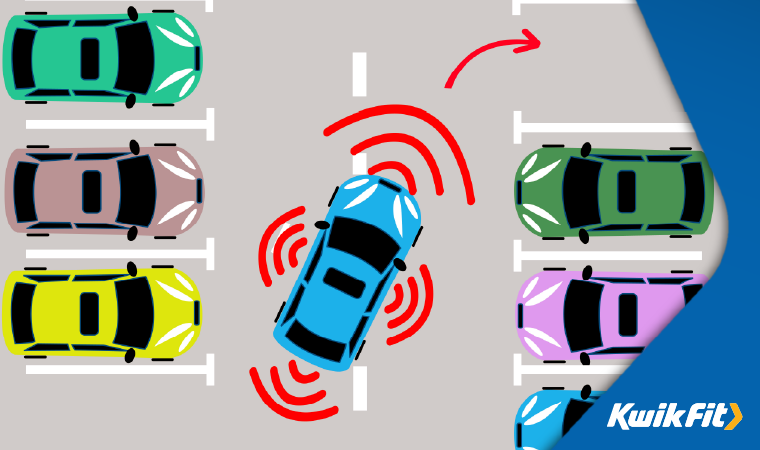
Driverless cars rely on artificial intelligence, sensors, and radar to react to the road and surrounding traffic without a human driver controlling the car.
Rather than following a set of pre-programmed instructions, self-driving cars are built with the technical capabilities to respond to external stimuli as they move.
At a glance...
- Autonomous cars usually have a built-in GPS system to give them destination directions.
- Their on-board sensors detect hazards like pedestrians, cyclists, stopped vehicles, animals, objects in the road, traffic lights, and even road markings.
- Based on what their sensors pick up, autonomous vehicles then brake, steer, step, or accelerate as required.
- Mainstream models still have controls for a human driver to take over (say, in the event of an emergency), but this may change in the future as capabilities get more advanced.
Heading 3 with Paragraph
Lorem ipsum dolor sit amet, consectetur adipiscing elit. Integer mollis justo vitae pretium egestas. Sed non quam eros. Nullam nisl nulla, cursus eu tellus at, posuere efficitur eros. Phasellus sollicitudin lacinia lacus ut blandit. Phasellus non pharetra massa, feugiat sodales lorem. Integer pretium nibh felis, in aliquet tellus malesuada sed. Duis sagittis egestas elit, in posuere diam. Duis viverra aliquet lorem, ut fermentum purus dignissim non. Praesent accumsan lectus luctus eros volutpat tempus id eu neque. Nam ac egestas ante, ac ultrices metus. Mauris in risus auctor, rutrum lorem cursus, vulputate nisl.
Lower-level self-driving cars rely on ADAS
Many of the lower-level automated vehicles rely on ADAS for the extent of their automation. But automatic braking and lane assist are relied upon too. These features let you put the car in essential auto-pilot while on a motorway until you need to take action, which results in a much less stressful drive over long distances.
How higher-level self-driving cars work
A self-driving car works via a central computer, taking inputs from various cameras and sensors around the car. It then uses those inputs to make decisions about how to drive.
The software that powers this is usually one that will have been trained on huge image datasets of what other vehicles and vehicle types look like, what common road markings look like, what pedestrians crossing roads look like, and so on.
Often, the computers generate 3D understandings of the world around them that will include a certain distance around them. These can be helpful for understanding obstacles (even if it doesn’t categorise those obstacles correctly) because it’s often useful to be able to be aware that something solid is in front of you.
As technologies advance more and more every year, self-driving cars may also be “connected” to networks or each other to give them even more information to respond to. This connectivity allows the most sophisticated self-driving car models to communicate with other vehicles or even smart infrastructure, like next-generation traffic lights.
How could we benefit from self-driving cars?
Many people praise autonomous vehicles for their potential to offer a safer, greener way of driving. Most notably, road safety charity, Brake, has argued that self-driving cars may help reduce the number of deaths and injuries from collisions caused by human error.
Safety
1,800 people are killed on the UK’s roads each year. And, when considering that at least 85% of crashes include human error as a cause, autonomous vehicles could help to improve the safety of motorists and pedestrians.
Reduced congestion
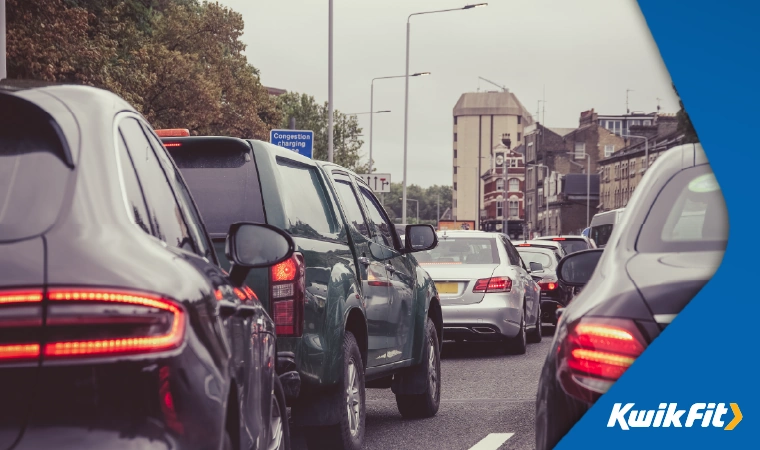
Autonomous vehicles have smart technology on board that allow them to plot the most efficient route, sensing where they are in relation to other vehicles. This may allow for fewer traffic jams and bottlenecks at peak times, reducing emissions from engine idling.
Fewer emissions
Over half of self-driving cars are electric, meaning far fewer emissions from internal combustion engines (ICEs).
Efficiency
The average annual mileage for cars in the UK is 7,200 (at the time of writing). If self-driving cars become the norm in the future, drivers could save hours commuting and multitask instead, working en route or eating on the go. Of course, drivers should always be ready to take over control from the car if needed.
Accessibility
For individuals with limited mobility, certain health conditions, or who simply cannot drive for whatever reason, autonomous vehicles offer a potential lifeline for getting around independently. For rural communities with limited public transport, this is especially valuable.
On this, Roads and Buses Minister, Simon Lightwood, speaking about the 2026 public transport pilot scheme for self-driving cars, said:
“Self-driving vehicles represent a transformative opportunity for Britain, opening up independent travel for disabled people and older adults, while driving growth and creating high-skilled jobs across the UK”.The latest on driverless cars in the UK
While there have been plenty of autonomous vehicle advancements globally, the UK is only just beginning to roll out trials.
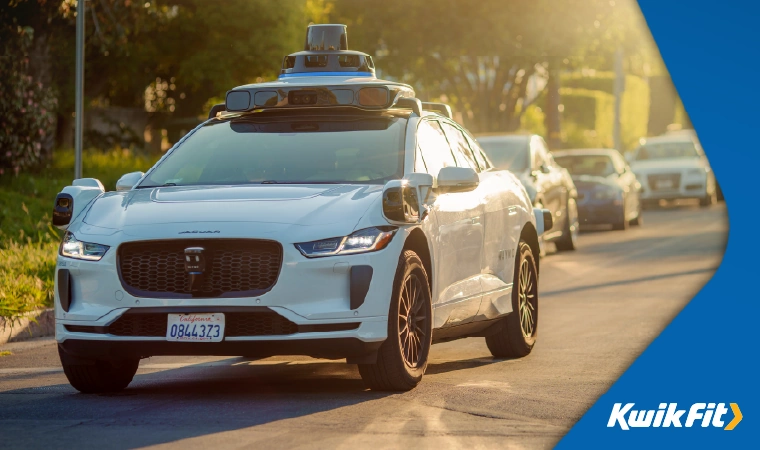
In the US, ride-hailing company Waymo (previously the ‘Google Self-Driving Car Project’) has served 20 million rides in 11 North American cities with its downloadable app and 24/7 service.
Are there any self-driving cars in the UK?
While there are no autonomous vehicles for the public to hire (like Waymo’s) on the UK’s roads yet, there are numerous trials making self-driving cars a soon-to-be reality.
The government is on board with testing, but has high standards, outlining their Code of Practice for those wanting to trial self-driving vehicles in the UK. The government is also regularly asking for the public’s feedback when determining its trials.
UK driverless car trials
Under the existing code of practice for self-driving cars, some trials have taken place in London and Oxford under controlled conditions:
- In Milton Keynes, self-driving shuttles are running between the train station and Hotel La Tour as part of an autonomous vehicle safety research project called StreetCAV Plus.
- At Heathrow Airport, self-driving cars have been deployed to transport luggage between terminals since 2024, in a collaboration between DHL and Oxa.
The UK’s self-driving taxi & bus pilot scheme
The government has also opened applications for operators to run the first driverless public transport scheme in the UK, with the aim of passengers being able to book taxi and bus-style self-driving vehicles before the end of 2026.
So far, firms like Waymo and Uber have expressed interest, alongside British self-driving technology company Wayve.
How close are we to having driverless cars on the road?
Globally, over 40 companies are actively trialling autonomous vehicles on the roads, including Tesla, Waymo, Cruise, Baidu Apollo, and Mercedes-Benz. But trials are very different to fully-realised deployment of these vehicles.
It’s worth noting that, at the time of writing, no one has yet achieved a self-driving car with full Level 5 Autonomy, but that doesn’t mean manufacturers aren't racing against each other to be the first.
In the UK, it may still be a few years before AVs (autonomous vehicles) become the norm. But, if you live near a trial area, you may well see shuttle buses or taxis without drivers before 2028.
The mixed reception for self-driving cars in the UK
As exciting as these autonomous vehicles are, their reception in the UK is not always positive.
- The Royal Society for the Prevention of Accidents (RoSPA) has warned about the risks involved in automated driving. And it’s not surprising that, over in the US, the National Highway Traffic Safety Administration (NHTSA) has been actively investigating AV-related crashes.
- In June 2026, the Mayor of the West of England, Helen Godwin, turned down plans for driverless taxis to trial in Bristol and Bath, claiming to be focusing on providing better buses and train stations instead
The Automated Vehicles Act (2024): what is it & what does it mean for UK roads?
Up until recently, self-driving cars were not fully recognised by law in the UK. However, the 2024 Automated Vehicles Act changed all that. The Act delivers one of the world’s most comprehensive legal frameworks for autonomous driving and liability. As the transport secretary, Mark Harper, said:
‘Britain stands at the threshold of an automotive revolution, and this new law is a milestone moment for our self-driving industry, which has the potential to change the way we travel forever.’
Announced in the King’s Speech 2023, the AV Act enables advanced technology to safely drive vehicles on British roads. The law requires self-driving cars to be on the roads under some conditions:
- Self-driving vehicles must achieve a certain level of safety, at least as high as careful and competent human drivers.
- Self-driving vehicles must also meet rigorous safety checks before being allowed onto roads.
The core reasoning behind this law is safety - in particular, the reduction of deaths and casualties caused by drunk driving, speeding, tiredness, and inattention to the road.
Since this law has been passed, self-driving vehicles that pass safety testing could be rolled out onto Britain’s roads by 2027.
Is it illegal to have a self-driving car in the UK?
It is currently illegal to operate a fully self-driving personal car without human supervision on UK roads.
Who is at fault if a driverless car crashes?
The Autonomous Vehicles Act (2024) makes some interesting statements about responsibility; primarily that, when an autonomous vehicle is in self-drive mode, drivers cannot be held responsible for how the car drives.
Instead, and for the very first time, car manufacturers, software companies, insurance providers, and corporations that sell autonomous vehicles will be responsible for any faults made by self-driving cars.
Keep you car safe, self-driving or otherwise
Here at Kwik Fit, we’ve made it our mission to ensure that motorists drive away happy, every time. And, at this rate, while it might not be actual humans driving away from our centres soon, we’ll always strive to deliver excellent service.
So, if you’re keen to keep your car roadworthy and in tip-top condition for as long as possible, book in for regular servicing and essential maintenance like a Free Vehicle Safety Check or Free Brake Check at your nearest Kwik Fit.
In the meantime, don’t get left in the dust by constantly evolving car technology; keep up to date with all the latest advancements as explained on the Kwik Fit blog.
All information is correct as of the time of writing.


Any facts, figures and prices shown in our blog articles are correct at time of publication.
Featured Articles
Is it Illegal to Drive With One Headlight?
Saturday 19th July 2025
Wondering if it’s illegal to drive with one headlight? Learn about the safety risks and penalties of illegal blown bulbs and why you should fix them promptly.
Air Con in EVs & Hybrids: Experts Answer Your Questions
Monday 30th June 2025
Does air con drain EV batteries? Can you use the air con while charging an electric car? Find out the answers to these questions & more from Kwik Fit’s experts.
Why Is Your Car Making a Noise? Fixes & Tips
Friday 13th June 2025

When your car starts making unexpected noises, it can certainly be quite disconcerting; it may be nothing to worry about, but here’s what you need to know.