
How To Do A Perfect Emergency Stop
An 8-step guide to making sure you are safe in an emergency situation
- React quickly to a hazard by taking your foot off the accelerator.
- Assess your situation using your mirrors.
- Firmly press the brake, applying steady pressure without slamming it.
- If you’re a manual driver, push the clutch down just before stopping to prevent stalling.
- Keep both hands on the wheel to maintain a firm grip and keep control of the car.
- Avoid swerving and let the ABS (if equipped) do the work; do not jerk the wheel.
- Come to a complete stop.
- Check your surroundings before moving again.
From July to September 2023, the practical driving test pass rate in the UK was just 48.9% — meaning that over half of learners taking a test failed. When breaking down the most common reasons for failure, manoeuvres such as moving off and checking mirrors came out on top almost every time!
As well as the regular manoeuvres that learners may be asked to do on a driving test, an emergency stop can be asked for too. In fact, on average, every 1 in 3 driving tests will feature an emergency stop.
Whilst a good driver will not need to perform emergency stops on a regular basis — anticipating potential hazards in good time and braking sensibly — accidents and emergencies still happen where an emergency brake is a must.
In this guide, we’ll run you through how to perform the perfect emergency stop so that you don’t get caught out on your test or in emergency situations after you pass. Read on for more.
What is an emergency stop?
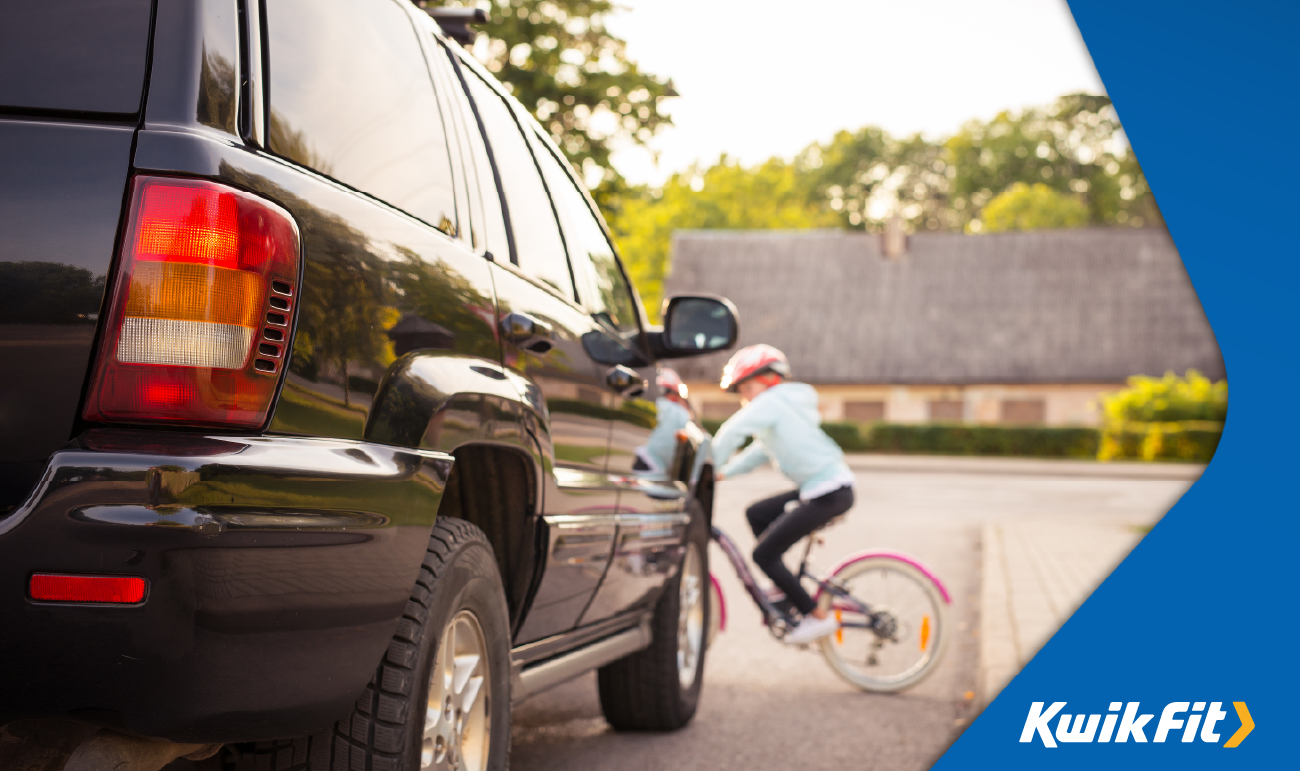
An emergency stop refers to an essential driving manoeuvre in which you are required to bring your vehicle to a complete halt as quickly (and as safely) as you can. Usually, an emergency stop is performed by drivers if they encounter unexpected hazards on the road, such as a car pulling out in front of them or a pedestrian stepping out in front of a bus or parked vehicle.
Many learners dread the emergency stop because it can seem scary and dramatic to bring a moving vehicle to a sudden stop with passengers inside. However, it is important to remember how vital emergency stops are; they are designed to help prevent the likelihood of collisions on the roads and keep everyone safe.
A brief history of the emergency stop
Emergency stops have been a feature of modern driving tests for many years (and a feared one for just as long). On June 1st 1935, driving tests became compulsory in the UK, and with them came the addition of the emergency stop.
As part of the Road Traffic Act 1934, which sought to make driving safer, emergency stops and hill starts became part of the original driving test. This act also introduced the 30 mph speed limit for built-up areas and set laws for vehicle insurance.
Since then, emergency stops have formed an essential part of the driving test for nearly 100 years.
What happens when you do an emergency stop?
When you perform this manoeuvre, your brakes are applied with maximum force, often triggering systems such as the anti-lock braking system (ABS) to prevent skidding and maintain steering control by modulating brake pressure.
- Braking in this way means that your vehicle's stopping distance is minimised
- but it can lead to increased wear on braking components and potential loss of traction, especially on slippery surfaces.
If you’re feel like your brakes are not working as well as they could be, you can get them checked with Kwik Fit for free.
If your car does not have an ABS system, the risk of wheel lockup significantly increases, causing the tyres to lose traction with the road. This then leads to a long stopping distance, loss of steering control, and a higher chance of skidding, especially on slippery surfaces - which can consequently pose a high risk of an accident, should you need to emergency stop.
When do you need to do an emergency stop?
While emergency stops play a starring role in many driving tests, you’ll need to feel confident stopping quickly without an instructor or examiner in the car, as emergency situations can happen at any time.
1. Once you've passed
There are numerous reasons why you may need to perform an emergency stop outside of a driving test scenario, including:
- The sudden appearance of pedestrians or animals on the road.
- Sudden, unexpected obstacles or debris in your driving path - such as a sign blowing into the road or falling branches during high winds.
- The abrupt stop of the vehicle in front of you.
- Any sudden changes in traffic signals (traffic lights turning red).
- Other drivers making unpredictable stops or manoeuvres, such as pulling out of a junction.
- Avoiding a potential collision in busy traffic.
- Mechanical failure or sudden loss of vehicle control.
2. In a driving test
In a driving test, you will need to do an emergency stop if:
a) You, like a regular driver, encounter an unexpected hazard that requires you to stop suddenly
b) Your examiner tells you to as part of the test.
How will the examiner signal an emergency stop?
A driving test examiner will be very clear about signalling you to do an emergency stop. They will first raise their hand and then immediately give a verbal command to stop — loudly and clearly. As soon as they’ve given this command, you will need to proceed with the steps below to do as they say and bring your car to a halt.
Are the DVSA phasing out emergency stops?
In May 2025, the DVSA announced its plans to potentially put the brakes on the emergency stop in driving tests, marking the first review of this manoeuvre since its introduction to the test in 1935.
The DVSA is now trialling a reduction in the number of emergency stops: from 1 in 3 tests down to 1 in 7. But why?
- Cars are now fitted with new and improved braking technology, with all new cars since 2004 being fitted with ABS (anti-lock braking systems) and some cars having ADAS assisted braking systems too.
- So, when drivers hit the pedal, their car’s technology will ensure they stop safely, without risk of wheels locking or skidding.
Because of in-car technology bringing a new era of driving, the DVSA is questioning whether the emergency stop is as important as it used to be, given that the test is supposed to replicate everyday driving. So, in response to the question “is the emergency stop still in driving tests in the UK?” - Yes, but perhaps not for much longer, and definitely not as frequently.
How to do an emergency stop
Ok, so the examiner has just signalled that you need to make an emergency stop — or, if you’ve already passed, you’ve suddenly seen a vehicle stop right in front of you. Now, it is time to stop the car.
- Check for hazards. Immediately look around your vehicle using your mirrors and assess whether there are any hazards.
- Firmly press the brake pedal. Press the brake pedal with confidence — not in a sudden stamp but rapidly and applying consistent pressure as the pedal goes down. If you are in an automatic car, congratulations, your work here is done (sort of).
- Clutch control. If you are in a manual car, you will need to also press the clutch pedal once your speed begins to slow to avoid stalling.
- Steer straight. Do not forget that your hands are on the steering wheel and need to keep your car in a front-facing, straight position while slowing.
- If necessary, signal. If there are many other drivers around, and you will be stopping for a while, pop on your emergency hazard lights to signal to fellow road users. If you are on a test, you will be asked to drive on when it is safe to do so, so hazard lights are less necessary as there will be no ‘hazard’.
Helpful emergency stop reminders
Lastly, we understand that performing any manoeuvre with the word “emergency” in it is naturally going to be a cause for concern for learners. However, we’d encourage you to refocus on the safety reasons behind them.
Emergency stops are, after all, designed to prevent emergencies from happening by ensuring you can control your vehicle quickly and in response to stimuli on the roads.
If that doesn’t help, here are some further tips:
- Stay calm. Remember that you are in no immediate danger and that, between you, you and the examiner have complete control of the car.
- Maintain a safe following distance. Whether on your test or not, emergency stops still require some distance to bring your vehicle to a halt. You can’t predict when you’ll need to suddenly stop, so cover yourself by never getting too close to the car in front while moving at speed.
- Don’t be afraid to push that pedal! Some people grind slowly to a halt when doing their first emergency stop, afraid to jerk to a stop. But, there has to be some urgency about it.
- Check for hazards quickly first. Lastly, just because it’s a fast-paced action, does not mean that regular safety precautions should go out the window.
Feel comfortable behind the wheel
If you’re feeling better about emergency stops, why not try getting to grips with some of the other manoeuvres in our other Driving Foundations series? Simply head over to the Kwik Fit blog for all the driving advice you need to see you safely on the road.
In the meantime, be sure to give yourself a good chance of driving success by keeping your car up to scratch with our range of vehicle servicing options.