
Can You Recycle Cars? How Car Recycling Works
Jessica Bird | Thursday 26th February 2026 9:00am
Each year, millions of vehicles reach the end of their lives. Whether due to age, accident damage, or rising repair costs, every car eventually comes off the road. But what happens next?
With Global Car Recycling Day on June 20th, now is a good moment to ask an important question: Can you recycle cars? The answer might surprise you. Modern car recycling in the UK is far more advanced and environmentally responsible than many drivers realise.
In fact, today’s vehicles are among the most recycled consumer products in the country. Here’s how car recycling works, what parts can be reused, and why it plays a vital role in protecting the environment.
Can cars really be recycled?
Yes, and to a very high degree. In the UK, up to 95% of a vehicle can be recycled or recovered when processed correctly.
Car recycling is governed by strict regulations under the End-of-Life Vehicle (ELV) directive. This ensures that when a vehicle is scrapped, it must be handled by an Authorised Treatment Facility (ATF). These regulated centres follow environmentally responsible processes designed to reduce waste and prevent pollution.
It’s important to distinguish between simply “scrapping” a car and properly recycling it. Responsible car recycling involves safely removing hazardous materials, salvaging reusable parts, and recovering raw materials that can be re-entered into manufacturing supply chains.
How does car recycling work in the UK?
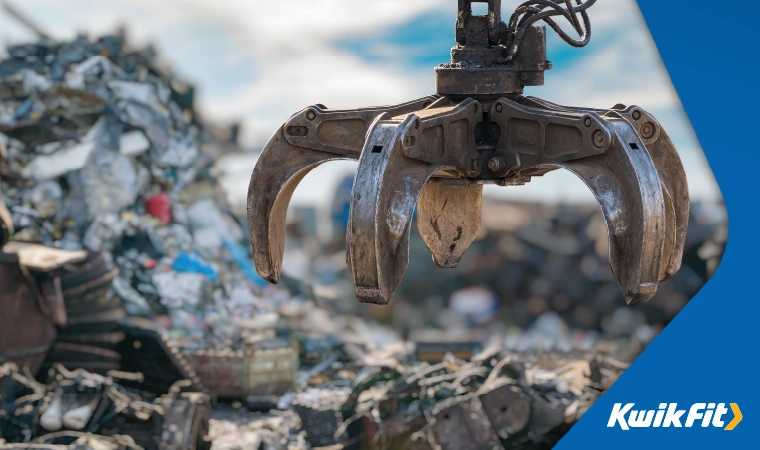
Once a vehicle reaches an authorised recycling facility, it doesn’t get crushed straight away. Instead, it goes through a structured process designed to recover as much material as possible, while safely removing anything that could harm the environment.
The vehicle recycling process follows several carefully managed stages.
Depollution
The first step is removing anything that could harm the environment.
This includes:
- Engine oil
- Coolant
- Brake fluid
- Fuel
- Air conditioning gases
The car battery and tyres are also removed at this stage. These materials require separate recycling processes to ensure they’re handled safely and responsibly.
Dismantling and reuse
Before a vehicle is crushed, reusable parts are carefully removed. Components such as engines, gearboxes, alternators, mirrors, catalytic converters, and electronic modules can often be refurbished or resold.
Reusing parts reduces demand for newly manufactured components, which saves energy and raw materials.
Shredding and material recovery
Once reusable parts have been removed, the remaining vehicle shell is crushed and shredded. Powerful magnets separate steel from other materials. Aluminium, copper, plastics, and glass are then sorted using advanced techniques.
Steel and aluminium can be melted down and reused in manufacturing, significantly reducing the need for new mining. This makes car recycling one of the most effective forms of large-scale material recovery in the UK.
What parts of a car can be recycled or reused
Modern vehicles are made up of thousands of components, many of which can be given a second life.
Metals
Steel is the primary material used in car manufacturing, and is highly recyclable without losing strength or quality. Aluminium components, increasingly common in modern cars, are also widely recycled.
Recycling metal uses far less energy than producing it from raw materials, which helps reduce carbon emissions.
Tyres
Tyres cannot legally be sent to landfill in the UK. Instead, they are collected and processed through specialist recycling facilities, where they are shredded and repurposed in a variety of ways.
Recycled tyre rubber can be used in road surfaces, playground flooring, sports pitches, equestrian surfaces, and even in energy recovery systems. By giving used tyres a second life, the industry helps reduce waste and conserve raw materials.
With millions of tyres replaced across the UK every year, responsible tyre recycling plays a significant role in reducing environmental impact. At Kwik Fit, tyres removed from vehicles are collected and sent to authorised recycling partners, helping ensure they are processed safely and sustainably.
Batteries
Lead-acid batteries, commonly found in petrol and diesel vehicles, are among the most successfully recycled consumer products. Lead and plastic components are recovered and reused in new batteries.
As electric vehicles become more common, battery recycling processes are also advancing to recover valuable materials such as lithium and cobalt.
Glass, plastics and interior components
Windscreens, side windows, dashboard plastics, and interior trim materials can all be separated and reused. While not every plastic component can be recycled in the same way, advances in sorting technology continue to improve recovery rates.
Together, these processes ensure that very little of a modern vehicle goes to waste.
What happens if a car isn't recycled properly?
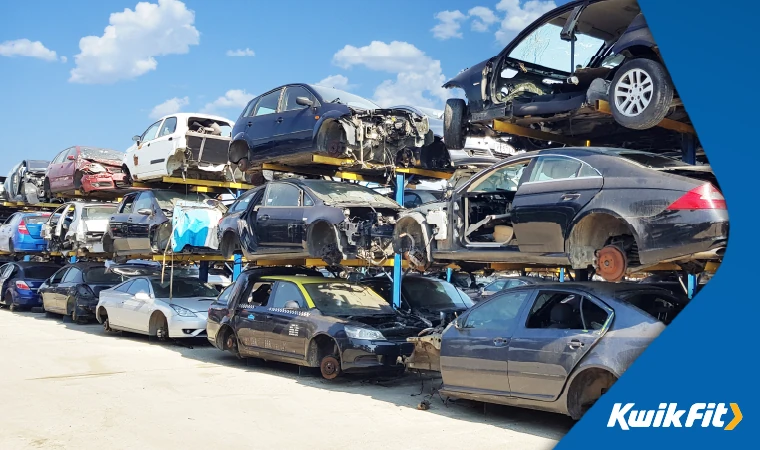
Improper disposal of a vehicle can have serious environmental consequences. Fluids such as oil, coolant, and brake fluid can contaminate soil and water supplies. Batteries also contain hazardous materials that must be handled safely.
That’s why it’s essential to use an authorised recycler when disposing of a vehicle. In the UK, an Authorised Treatment Facility will issue a Certificate of Destruction, confirming that the vehicle has been legally scrapped and notifying the DVLA.
Responsible car recycling protects both the environment and vehicle owners from potential legal issues.
Why car recycling matters more than ever
Car recycling plays a crucial role in reducing waste and conserving natural resources. By recovering metals, plastics, and reusable parts, the automotive industry reduces its reliance on raw material extraction.
Recycling steel, for example, requires significantly less energy than producing new steel from iron ore. This contributes to lower carbon emissions and supports wider environmental goals.
As sustainability becomes a greater focus across industries, responsible vehicle disposal is an important part of the circular economy. Instead of ending up in a landfill, old vehicles can provide the materials needed to build new ones. For drivers, understanding the value of car recycling highlights how even end-of-life vehicles can continue to contribute positively.
Driving towards a more sustainable future
At Kwik Fit, sustainability is part of everyday vehicle care. From responsible tyre recycling to the safe handling and disposal of batteries, oils, and other fluids, environmental considerations are embedded across our nationwide network of over 600 centres.
By choosing responsible recycling and maintaining your vehicle properly throughout its lifespan, you can help reduce environmental impact while keeping your car safe and roadworthy.


Any facts, figures and prices shown in our blog articles are correct at time of publication.
Featured Articles
Is it Illegal to Drive With One Headlight?
Saturday 19th July 2025

Wondering if it’s illegal to drive with one headlight? Learn about the safety risks and penalties of illegal blown bulbs and why you should fix them promptly.
Air Con in EVs & Hybrids: Experts Answer Your Questions
Monday 30th June 2025

Does air con drain EV batteries? Can you use the air con while charging an electric car? Find out the answers to these questions & more from Kwik Fit’s experts.
Why Is Your Car Making a Noise? Fixes & Tips
Friday 13th June 2025

When your car starts making unexpected noises, it can certainly be quite disconcerting; it may be nothing to worry about, but here’s what you need to know.