
Wireless EV Charging: How Close Are We To Cutting the Cord?
Jessica Bird | Tuesday 30th December 2025 9:25am
For the last decade, electric vehicles have dramatically changed the way we think about driving. And it’s easy to see the benefits – from quieter roads to cleaner air. But, for many drivers, one frustration remains: charging, and charging cables. They’re bulky, heavy, sometimes messy, and not exactly glamorous. So the idea of simply parking your car and letting it charge wirelessly feels like the natural next step. After all, if you can charge your phone wirelessly, why not your car?
Wireless EV charging has been talked about for years, but is it finally close to becoming a real, everyday option for UK drivers? And what does it actually involve under the bonnet (or rather, under the road)? Let’s take a look at how the technology works, where it’s being tested right now, and how close we really are to cutting the cord for good.
How does wireless EV charging work?
At its core, wireless EV charging relies on a principle that’s been around for a long time: electromagnetic induction. It’s the same basic idea used in electric toothbrushes and wireless phone chargers, just scaled up to handle the much bigger energy demands of a car.
The actual way this works (especially at the scale of an electric car) gets very sciency very quickly, so we’ll keep it as straightforward as possible.
Essentially, a wireless charging system has two main components. The first is a charging pad installed on or just below the ground, usually in a driveway, car park, or even embedded into the road surface. This pad is connected via a high-voltage line to the electricity supply.
The second component is a receiver pad fitted underneath the vehicle. When the car parks over the charging pad, an alternating electric current passes through the ground unit, creating a magnetic field. That magnetic field induces a current in the receiver pad on the vehicle, which is then converted into electricity to charge the battery.
The key benefit here is that there’s no need for a physical connection between the car and the charger – which means no cables, plugs, or sockets (and, more importantly, no failure points due to those things being exposed to the elements).
Is wireless EV charging safe?
The obvious next step is to wonder about its safety. The good news is that using EMF (electromagnetic field) transfer works through non-ionizing radiation, which means that, unlike X-rays or nuclear radiation, it can’t cause potential illness in humans. Instead, it works by heating.
Wireless chargers also include built-in safety features that monitor the charging process in real time. Charging only starts when a compatible vehicle is correctly aligned over the pad, and it automatically stops if a foreign object or interference is detected.
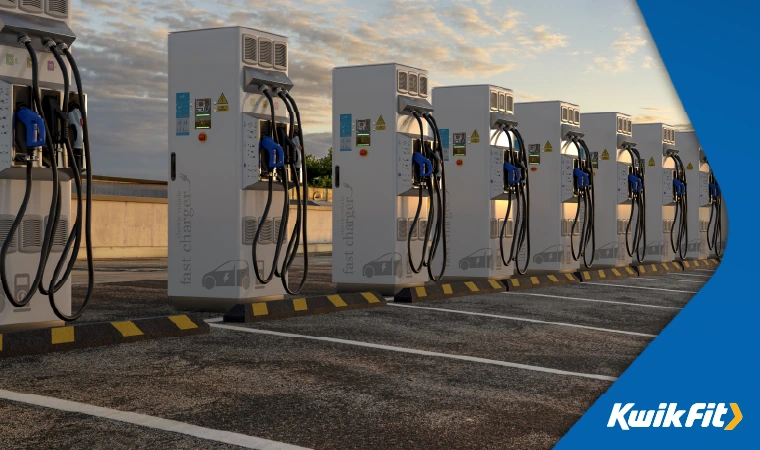
Is wireless charging efficient enough for real-world use?
One of the most persistent questions around everything to do with EVs is efficiency. Fundamentally, the more electricity you supply, the more energy you tend to lose through wasted heat – so early plug-in EVs often had frustratingly slow charge times. But this has now largely been solved, with 0-80% charging in as little as 10 minutes.
The same question then applies to wireless charging. After all, sending energy through the air sounds like it must involve losses. But while that was true in the early days, current designs have been improved quite dramatically - and are now able to achieve efficiencies of over 90%. This is actually comparable to (and sometimes better than) traditional plug-in charging.
The only real downside at the moment is that wireless EV charging is still comparatively slow. Current systems typically offer power levels similar to a 7kW home wallbox, making them well suited to overnight charging at home or longer stays in car parks.
For everyday drivers, the real advantage here isn’t necessarily speed, but convenience. Not having to think about plugging in, especially in bad weather or low light, could make EV ownership feel significantly more natural.
The already-advanced ADAS systems on EVs could also be calibrated to self-align perfectly over charging pads, so you’d not have to worry about parking.
What's happening in the UK right now?
Promisingly, wireless EV charging isn’t just a concept on a drawing board. It’s already being tested on UK roads. One of the most talked-about trials took place in Nottingham, where five wireless pads were installed in a taxi rank. Specially equipped taxis parked on the pads were able to charge their batteries while waiting for passengers.
The idea behind these dynamic charging trials is particularly exciting. Instead of relying solely on large batteries and long charging stops, vehicles could top up their charge little and often as they move around a city. For high-mileage vehicles like taxis, buses, or delivery vans, this could significantly reduce downtime and ease pressure on charging infrastructure.
How close are we to seeing wireless charging go mainstream?
So, when will wireless EV charging become a common sight in the UK? The honest answer is that it’s a compelling technology, but will require similar levels of infrastructure overhaul as we saw with the shift to EVs in general – which is likely to take quite a while.
For home use, wireless charging is likely to appear first among early adopters. The technology already works and, for drivers with off-street parking, installing a ground pad could soon be a realistic and convenient alternative to a wall-mounted charger.
Widespread adoption will ultimately depend on a mix of factors: cost, vehicle compatibility, government support, and public awareness. As with most technology, progress is likely to be steady rather than sudden.
What does this mean for drivers today?
For now, plug-in charging isn’t going anywhere. But wireless EV charging gives us a glimpse of a future where owning and running an electric car feels simpler and more seamless. No cables to coil up, and no forgotten charging sessions – just park and power up.
We’ll certainly be keeping a close eye on developments around EV charging. In fact, we’re always looking to stay ahead of the curve when it comes to keeping your vehicles in the best condition. If you ever need any help with your EV, from full servicing to tyres and repairs, get in touch with the experts at your local Kwik Fit centre.


Any facts, figures and prices shown in our blog articles are correct at time of publication.
Featured Articles
Is it Illegal to Drive With One Headlight?
Saturday 19th July 2025
Wondering if it’s illegal to drive with one headlight? Learn about the safety risks and penalties of illegal blown bulbs and why you should fix them promptly.
Air Con in EVs & Hybrids: Experts Answer Your Questions
Monday 30th June 2025
Does air con drain EV batteries? Can you use the air con while charging an electric car? Find out the answers to these questions & more from Kwik Fit’s experts.
Why Is Your Car Making a Noise? Fixes & Tips
Friday 13th June 2025

When your car starts making unexpected noises, it can certainly be quite disconcerting; it may be nothing to worry about, but here’s what you need to know.