
The Complete Guide to Keeping Your Car Clean
Jessica Bird | Sunday 8th March 2026 12:00pm

‘Spring cleans’ should not be confined to spring time alone. Yet, for many, car cleaning is on the bottom of the priority list.
In fact, a recent study found that only 3% of drivers clean their vehicle weekly, while 22% clean it every 6 months. A further 6% claim to have never cleaned their car.
Your car spring cleaning checklist
Here’s a quick checklist you can use to freshen up your car after winter:
- Rinse off road salt, mud, and grime from the bodywork
- Wash the lower panels, wheel arches, and around the sills
- Clean the windscreen, side windows, mirrors, and lights
- Check wiper blades for smearing or wear
- Wash tyres and wheels, and inspect tread and sidewalls
- Vacuum mats, carpets, seats, and footwells
- Wipe down dashboards, controls, and interior touchpoints
- Clean the inside of the windscreen to improve visibility
- Remove rubbish and clutter from the cabin
- Finish with wax or polish for added exterior protection.
Why cleaning your car regularly matters
Before we dive into how to keep your car clean, let’s take a look at why you should!
While many people clean their cars simply because they like to drive a clean car, cleaning your car regularly actually has many more benefits.
- On the exterior, a regular cleaning schedule can help remove dirt, minerals, bird droppings, tree sap, and other contaminants before they have time to damage your paintwork.
- During and after winter in particular, road salt and grime can cling to your car’s body and undercarriage. When left in place, this build-up can gradually wear away protective finishes and contribute to corrosion over time
- Spring is also a key time to focus on visibility. Windscreens, windows, mirrors, and lights can all become coated in a film of salt, dirt, and spray during the colder months. If these areas are not cleaned properly, your visibility can be reduced – especially in low sun, rain showers, or early-morning driving conditions that tend to result in glare.
- Wheels, tyres, and brake components all face heavy exposure to dirt, brake dust, moisture, and debris from the road. So, cleaning them regularly keeps them in good working order.
Regular interior cleaning is just as important. While internal cleans are more of an aesthetic choice, they can also help preserve your car’s resale value as marks, odours, stains, and worn-looking upholstery can all make a vehicle feel older than it is.
- Footwells should be kept clear of mud, stones, and clutter that could interfere with pedal operation.
- Dust, food crumbs, moisture, and everyday grime can also build up quickly in seats, carpets, and touchpoints, affecting hygiene and comfort.
How to clean the exterior of your car step by step
While washing a car might seem simple, there are a few steps that you might overlook. For a quick and efficient wash, follow these steps:
1. Rinse the car down
Using a hose or pressure washer, rinse the vehicle from the top down. This helps remove loose grit, mud, and surface grime before you start washing by hand.
In spring, pay particular attention to the lower panels, wheel arches, and around the bumpers, where winter salt and road dirt often collect most heavily.
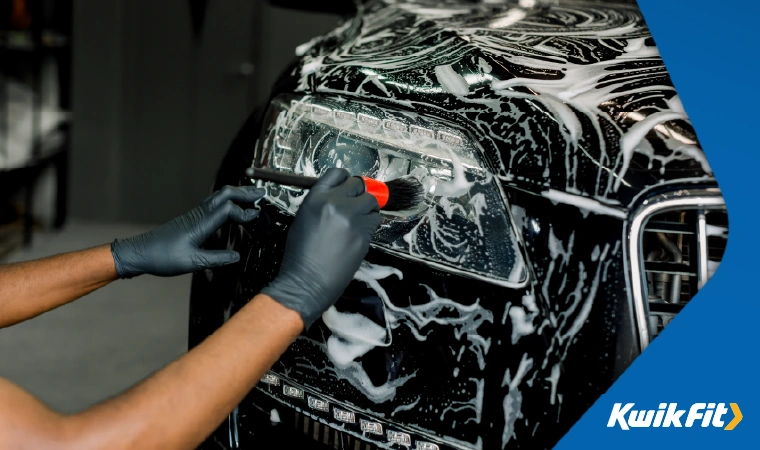
2. Soap downwards
Use a specialised car shampoo and a non-abrasive sponge or wash mitt. Start at the roof and work your way down the vehicle body using gentle motions.
Working from top to bottom helps stop dirt from the upper sections from running back over areas you have already cleaned. It is also a good way to avoid dragging heavier grime across the paintwork.
3. Keep rinsing as you work
Rinse each section after cleaning it. This helps prevent soap marks, stops dirt from being spread around the car, and makes it easier to achieve a cleaner finish.
4. Thoroughly dry the bodywork
Use a clean microfibre cloth or drying towel to dry the bodywork thoroughly. Drying the car properly helps reduce streaks and water marks, leaving the finish cleaner and clearer.
5. Use wax or polish
Finish with a suitable wax or polish to add shine and provide a protective layer over the paintwork.
This can be especially useful after winter, when your car’s exterior has been exposed to harsher conditions. A protective finish can help dirt and water lift away more easily in future washes.
Don't forget the windows, mirror and lights
Use a suitable automotive glass cleaner for the windows, and wipe the lights carefully with a soft cloth. If your wiper blades are smearing dirt rather than clearing it, spring is a good time to inspect them for wear and potentially replace them.
Give your tyres some TLC
Once you’ve cleaned the bodywork of your vehicle, hose down your tyres to remove any sediment and mud that has accumulated there. Then, use a hard-bristled brush to clean between the grooves and spokes. Dry down with a microfibre cloth and wax when dry.
And once they’re clean, it’s a great opportunity to give them a good inspection to check for cracks, cuts, or bulges.
While you're there... clean your brake discs!
Your brake discs are a little harder to reach, so you’ll need to jack up your vehicle and remove the tyre you’re working on. Once you reach them, use a rag and brake cleaning fluid to wipe the surface gently.
If you notice any problems while there, such as serious rusting, pitting, or scoring, get in touch with your local Kwik Fit centre for assistance.
Wiping down your engine bay
Ensure your car is parked and has had time to cool off, and then remove the negative battery cable to prevent any damage to the battery’s inner components in the cleaning process.
Next, cover the battery, distributor (if your car still has one), and alternator with a waterproof sheet. Begin by removing any debris from the engine bay, then use a degreaser and soft-bristle brush to softly wipe down the surfaces. Use a gentle hose setting to rinse and wipe dry with a microfibre cloth.
How to clean the interior of your car
Most drivers know the basics of cleaning the inside of the car, but it helps to do it in the right order.
- Clear the decks. Before wiping down surfaces, remove any items from the car. Also, remove any mats and shake them out to get rid of loose dirt.
- Hoover through. Then vacuum the mats, carpets, seats, and floor areas thoroughly before putting everything back in place.
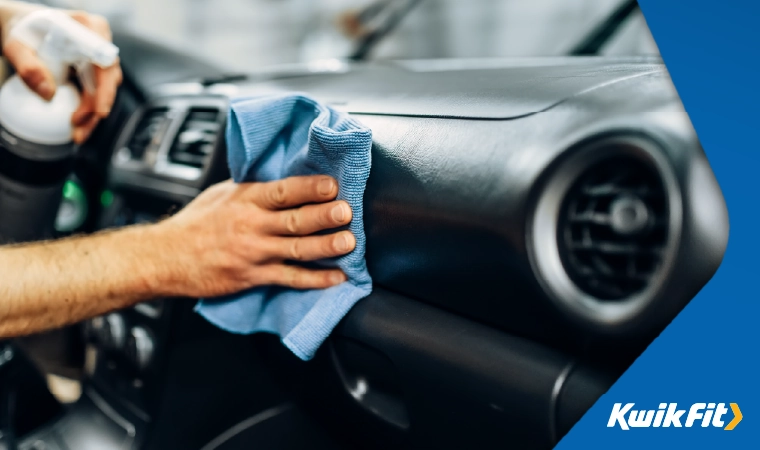
- Use a damp cloth. Take care not to get electronics too wet when cleaning dashboards, centre consoles, screens, or controls. Use a suitable interior cleaner and a soft cloth to wipe away dust, fingerprints, and grime.
- Wipe the windscreen. Clean the inside of your windscreen. A dedicated glass cleaner is usually the best option, as it is less likely to leave streaks. Do not forget the rear-view mirror and side windows too.
- Air out the car. Spring is also a good time to tackle built-up dirt from wet coats, muddy shoes, and general winter mess. If moisture has built up inside the car, cleaning and airing it out can help reduce stale odours and keep the cabin feeling fresher.
Cleaning car seats
Seats can easily collect dust, crumbs, stains, and odours. Fabric seats can usually be cleaned with a vacuum first, followed by an upholstery cleaner suitable for automotive interiors. Leather seats should be vacuumed gently and then cleaned with a product designed for leather, before conditioning if required.
Always use products that are appropriate for the material and avoid soaking the seats, as excess moisture can be difficult to dry fully.
Car cleaning FAQs
How often should I wash my car?
How often you should wash your car depends on how often you drive and the conditions you drive in. As a general rule, washing your car every couple of weeks can help keep dirt, salt, and contaminants from building up.
You may want to wash it more often during winter or at the start of spring, when road salt, mud, and grime are more likely to collect on the paintwork, wheels, and underbody.
Does washing your car prevent rust?
Regular washing can help reduce the risk of rust by removing substances such as road salt, dirt, and moisture-trapping grime that can sit on the bodywork and underneath the vehicle.
While washing alone cannot guarantee rust prevention, it is an important part of protecting your car’s exterior and spotting early signs of corrosion before they become more serious.
Is it better to hand-wash or use a car wash?
Both hand washing and car washes can be effective, depending on the method used.
Hand washing gives you more control and can be gentler if you use the right products and clean tools. A car wash can be quicker and more convenient, especially for regular upkeep. Whichever option you choose, the key is to clean the car properly and remove harmful dirt, salt, and grime without damaging the finish.
What is the best way to clean car seats?
The best way to clean car seats depends on whether they are fabric or leather.
For fabric seats, start by vacuuming thoroughly, then use an upholstery cleaner designed for car interiors. For leather seats, use a soft cloth and a leather-safe cleaner, followed by a conditioner if needed.
In all cases, avoid soaking the seats and always use products suitable for the material.
Can leaving a car dirty cause damage?
Yes, a dirty car can lead to damage over time. Road salt, bird droppings, tree sap, and built-up grime can all affect paintwork if they are left in place for too long.
Dirt and moisture can also contribute to corrosion in vulnerable areas, while dirty glass, mirrors, and lights can affect visibility. Inside the vehicle, built-up dirt and debris can also reduce comfort, hygiene, and resale appeal.
Cleaning & maintenance are your car's best friend
As well as cleaning your car, there are lots of maintenance checks you should do to ensure your vehicle runs smoothly.
Book in for a service with Kwik Fit or get in touch with your local centre if you have any questions or notice an issue with your car while cleaning it.


Any facts, figures and prices shown in our blog articles are correct at time of publication.
Featured Articles
Is it Illegal to Drive With One Headlight?
Saturday 19th July 2025

Wondering if it’s illegal to drive with one headlight? Learn about the safety risks and penalties of illegal blown bulbs and why you should fix them promptly.
Air Con in EVs & Hybrids: Experts Answer Your Questions
Monday 30th June 2025

Does air con drain EV batteries? Can you use the air con while charging an electric car? Find out the answers to these questions & more from Kwik Fit’s experts.
Why Is Your Car Making a Noise? Fixes & Tips
Friday 13th June 2025

When your car starts making unexpected noises, it can certainly be quite disconcerting; it may be nothing to worry about, but here’s what you need to know.