

How Has Car Safety Evolved?
Jessica Bird | Friday 21st August 2026 11:46am

From the invention of the seatbelt to today’s fine-tuned ADAS features, car safety has come a long way since the "father of the automobile industry", Karl Benz, engineered the first motorised vehicle in 1886.
Beginning with humble origins in airbag development, and moving through rapid law changes in the 60s and 70s, car safety features have evolved to include electric, hybrid, and even self-driving cars in their remit.
Below, the Kwik Fit team has compiled a timeline of car safety features for you to explore.
The history of car safety features: a timeline
From the first-ever dashboard designs to parking assist technology, here’s a handy timeline to plot how car safety features have changed over time:
1885 - The first seatbelt prototype was patented to stop tourists from falling out of New York taxis.
1900s – Early dashboards were added. These were simple boards to shield drivers from engine heat and debris.
1900s - Critical safety features like windscreen wipers, lights, and signals were added to cars.
1910s–1920s – The glove compartment became a common cabin feature for stowing driving gloves and safety essentials.
1920s - Hydraulic brakes were developed ??to overcome the limitations of earlier mechanical braking systems, and started to be used more widely.
1921 - The first headrest was patented to avoid whiplash in rear-end collisions.
1930s – Instrument clusters were added in front of the driver for quicker, safer, at-a-glance checks.
1937 - Windshields legally had to be made from laminated glass.
1950s – Padded dashboards and more considered cabin layouts began to appear, aiming to reduce injuries in collisions.
1959 – The three-point seatbelt was introduced, and became a landmark passive-safety innovation.
1960 – The UK introduces the MOT test to keep older vehicles roadworthy.
1970s – More safety-critical items were added to the MOT (including windscreen wipers, indicators, and exhaust systems)
1970s – Anti-lock braking systems (ABS) began to reach production, helping drivers steer while braking.
Early 1980s – Driver airbags debuted on production cars, adding critical impact protection.
1983 – Front-seat belt wearing becomes compulsory in the UK, sharply improving occupant safety rates.
Late 1980s–1990s – Airbags spread (passenger/side), with sensors inflating bags in ~50 ms to cushion impacts.
1990s – Electronic Stability Control (ESC) arrives, reducing loss-of-control crashes.
Late 1990s – ISOFIX child-seat anchors standardised safer child restraint fitment.
1990s–2000s – MOT adds tighter emissions and safety-system checks as vehicles become more electronic.
2000s – Dashboards evolved into integrated “centres” for safety: clear warning lights, airbags indicators, and better ergonomics.
Early–mid 2010s – Advanced Driver Assistance Systems (ADAS) like lane assist and AEB begin to proliferate.
Late 2010s–2020s – Touchscreen infotainment and fully digital clusters arrive; clear HMI design becomes a safety priority.
2020s – Wider adoption of ADAS calibration (cameras/radars) to keep features like AEB and lane-keep precise after repairs.
Today – Connected diagnostics and standardised safety checks (via MOT and servicing) help keep modern cars safe in real-world use.
Read on for a more detailed breakdown of the developments in car safety features over time.
The early history of car safety features (1900-1950)
In the first decades of motor travel, from the early 1900s through to 1950s, safety features developed slowly and only covered the very basics (like securing passengers in cars, helping visibility, and preventing debris from the road from harming drivers).
Through these years, cars were often heavy and difficult to handle and manoeuvre, meaning that accidents were very common.
Speed limits at the turn of the century
Whilst laughable nowadays, the first traffic laws emerged in the late 19th century, and the first speed limit was imposed in 1895 at just 2mph, with drivers required to have a flag bearer in front of the vehicle to alert pedestrians. Just eight years later in 1903, the speed limit was increased to 20 mph, but many drivers exceeded this, and - as the popularity in driving increased - so did accidents.
Windscreen wipers
In 1903, Mary Anderson patented hand-operated wiper blades that were designed to improve visibility for drivers in adverse weather conditions.
Lights & signals
In 1911, rear-view mirrors were first used in racing cars to improve visibility and help with overtaking safely. Shortly afterwards, in 1914, actress Florence Lawrence invented the mechanical brake signal and the auto-signalling arm (precursors to the modern turning signal).
Brakes & headrests
In 1921, car headrests were invented to reduce the risk of whiplash injuries that came with sudden head motion in accidents. That year also saw the first use of hydraulic brakes in cars (on the Duesenberg Model).
The windshield
While early windshields existed since the start of the 1900s, laminated glass began to be used in Ford vehicles in 1927. By 1937, it was compulsory for all vehicles to feature laminated glass in the UK.
The dashboard & crash-test dummies
The introduction of padded dashboards began in 1948 (with the Tucker 48 car being the first model to have one fitted). This aimed to reduce injuries caused by passengers hitting the front of the car’s cabin during collisions.
In 1949, the first-ever crash test dummy, “Sierra Sam”, was used, marking the advent of more standardised crash testing for planes and cars.
Later milestones in car safety (1950-2010)
Car safety standards and features really started to advance beyond the bare necessities from the 1950s onwards.
The airbag
In 1951, German engineer Walter Linderer created the airbag, while the following year, Bela Barenyi came up with the crumple zone concept, which is a structural feature intended to absorb the force of a collision.
The three-point seatbelt
Perhaps the most significant development in car safety came in 1958, when Volvo introduced a three-point seatbelt designed by Nils Bohlin. To this day, it’s widely recognised as one of the most effective vehicle safety features invented in the history of the industry.
Safety rules & law changes
Safety rules started to ramp up from the 1960s, leading to big improvements in accident and injury prevention. In 1963, the Excelsior Motor Company introduced the inertia-reel seatbelt, and the same year, intermittent wipers were introduced.
By 1966, it was mandatory for all cars made in Europe to be fitted with a front seat belt, and padded dashboards, reversing lights, and front and rear lap belts became compulsory too.
In 1979, the National Highway Traffic Safety Administration in the US began crash testing new cars and publishing its results. By 1983, it was compulsory to wear front seatbelts in the UK, while four years later, the fitting of rear seat belts in cars became mandatory.
In-car safety technology develops
In the early 90s, cars began to develop more sophisticated technologies, and safety standards changed for the better as a result.
The 1990s saw the establishment of the European New Car Assessment Programme (Euro NCAP) and a host of new electronic systems being fitted to cars to enhance safety. For example, Bosch and Mercedes-Benz introduced electronic stability control, while Mercedes-Benz began incorporating Brake Assist Systems into its vehicles.
Car safety features in the 2000s:
2000 - The Lane Departure Warning System was developed by Iteris for use in trucks in Europe. The system relies on vibration, visual and audible warnings to make the driver aware if they are leaving their lane.
2004 - Volvo introduced a blind spot information system that uses motion sensors and cameras to help motorists avoid collisions when moving lanes or parking.
2008 - Volvo developed autonomous emergency braking for its XC60. The system automatically brakes to avoid collisions when sensors detect an oncoming vehicle.
2009 - Bosch and Citroën introduced the intelligent anti-skid system Snowmotion, which is designed to give drivers better control of their vehicles in icy and snowy conditions.
2010 - Volvo introduced the pedestrian detection system, which applies brakes automatically when a pedestrian is detected in the path of the car. It relies on radar and camera technology.
Recent developments in car safety features (2010+)
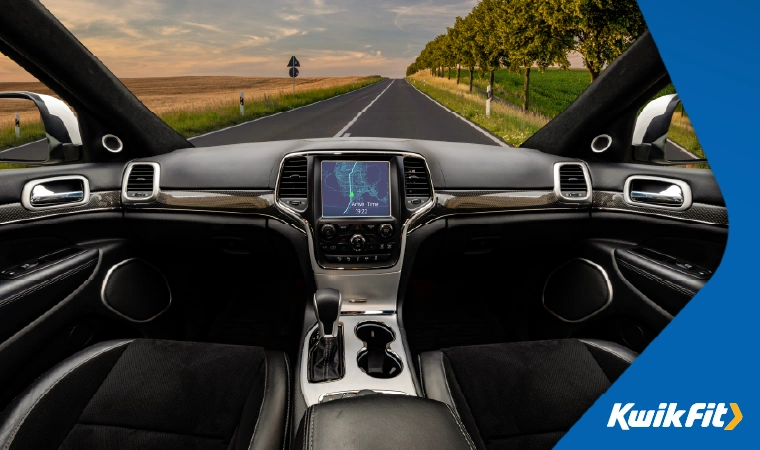
Since 2010, in-car technology has advanced at an astounding rate, leading to hundreds of new safety features, laws, and improvements. Here are the core changes.
Advances in ADAS
In July 2022, the European Commission made certain ADAS features compulsory for new cars in phases. Now, most cars have some level of automation - from basic features such as Adaptive Light Control (ALC) and Parking Assist to more sophisticated technology like Driver Drowsiness Recognition and Traffic Sign Recognition. Learn more about ADAS levels.
EV safety features
Plenty of drivers are turning to electric and hybrid vehicles, which come with their own set of specific safety features.
- BMS (Battery Management Systems): While around in early forms since the 1970s, it was 2009 when a company called Lithium Balance developed a scalable BMS platform for high-voltage applications like electric cars.
- Regenerative braking technology (that began in 2008 with the Tesla Roadster) has become a standard feature in electric vehicles.
The future of car safety
So, where next? Safety and innovation go hand in hand, and over the next few years, we’re expecting to see more developments in:
- Augmented reality, displayed to provide drivers with non-distracting helpful information while they drive; this might look like displaying warnings about upcoming hazards or visualisations to help with parking.
- In-car biometrics, such as heart-rate monitoring or fingerprint recognition for security and medical emergency purposes.
- And even safer autonomous vehicles with advanced LiDAR and RADAR.
Innovation and safety problems
As car technology continues to evolve, with it come several concerns about car safety.
The emerging debate around hidden car door handles is a great example. Led by Tesla, the streamlining of door handle design has made handles increasingly flush with car bodywork, especially in EVs. These “push-to-open” or “hidden” handles have electronic mechanisms to open them, rather than manual operation.
However, in February 2026, China announced that it would be banning these handles by early 2027, after a series of accidents saw drivers and passengers trapped inside their vehicles after accidents. This was because the vehicles, and therefore the handles, lost power, and couldn’t be opened manually.
Stay safe on the roads with Kwik Fit
While major advances have undoubtedly been made in car safety and more are set to come, motorists can’t rely solely on technology to keep them safe behind the wheel.
Your part in car safety
Major causes of avoidable accidents and injuries include drink driving, driving while tired, using mobile phones behind the wheel, and failing to wear seatbelts.
Not conducting basic vehicle safety checks can also put people at risk when they’re on the roads. For example, driving with unsafe tyres, faulty lights, or poor windscreen wipers can dramatically increase the chances of an accident. To help minimise the danger of being involved in an incident, it pays to always follow the rules of the road and to keep your car in good condition.
How Kwik Fit can help with car safety
Make sure your car’s safety features and core components are working as they should with Kwik Fit’s free checks. Book in for a Free Vehicle Safety Check or a part-specific check like a brake, tyre, or battery health check at your local Kwik Fit today.
Got a question? Need advice? Contact our experts today.


Any facts, figures and prices shown in our blog articles are correct at time of publication.
Featured Articles
Is it Illegal to Drive With One Headlight?
Saturday 19th July 2025

Wondering if it’s illegal to drive with one headlight? Learn about the safety risks and penalties of illegal blown bulbs and why you should fix them promptly.
Air Con in EVs & Hybrids: Experts Answer Your Questions
Monday 30th June 2025

Does air con drain EV batteries? Can you use the air con while charging an electric car? Find out the answers to these questions & more from Kwik Fit’s experts.
Why Is Your Car Making a Noise? Fixes & Tips
Friday 13th June 2025

When your car starts making unexpected noises, it can certainly be quite disconcerting; it may be nothing to worry about, but here’s what you need to know.