
How To Spot Tyre Damage: Warning Signs & What To Do
Your step-by-step guide to spotting damage in your car tyres
- Regularly inspect your tyres for bulges, cuts, punctures, splits and embedded objects.
- If you hit a kerb or a pothole, always check that your tyres have not sustained damage.
- If you notice a bulging or damaged tyre, get it seen by an expert immediately.
- Make sure your tyre tread depth is at the legal limit of 1.6 mm or more
- Routinely inspect your tyre sidewall and tread for cracks or splits.
- Monitor the wear patterns on your tyre tread to track wheel alignment and balancing issues.
- Check tyre pressures regularly, as deflated tyres can signal slow punctures.
- Never remove an object embedded in your tyre. Call in the experts to help.
Tyre damage isn’t always easy to spot, and many drivers don’t notice a problem until it begins to affect how their car handles. Left unchecked, even relatively minor damage can become more serious over time.
Knowing what to look for can help you spot the early warning signs, understand what may have caused the damage, and decide when it’s time to have your tyres checked.
What does tyre damage look like?
Tyre damage can range from visible cuts and bulges to less obvious signs, such as uneven tread wear, embedded objects, or a tyre that repeatedly loses pressure.
Some signs are immediately visible, while others only become noticeable when you’re driving.
The most common signs of tyre damage include:
- Cuts or splits in the tyre sidewall.
- Bulges or bubbles on the tyre.
- Uneven or excessive tread wear.
- Nails, screws, or other objects embedded in the tread.
- Cracks in the rubber.
- A tyre that’s regularly losing pressure.
- Vibrations or pulling through the steering wheel while driving.
How do you spot cuts and sidewall damage?
Cuts, bulges and cracks on the sidewall can weaken its structure and, depending on the severity, may mean the tyre needs to be repaired or replaced.
Tyre cuts
Cuts on your tyres can be caused by poor road surfaces, potholes, kerbs, sharp debris and more, and they often occur on the tyre’s sidewall.
While some minor cuts may only affect the rubber’s surface, deeper cuts can weaken the tyre’s structure. If you notice a cut and you’re unsure how serious it is, it’s always best to seek professional advice. If the cut exposes the tyre’s internal cords or fabric, the tyre should be replaced immediately.
Tyre bulges
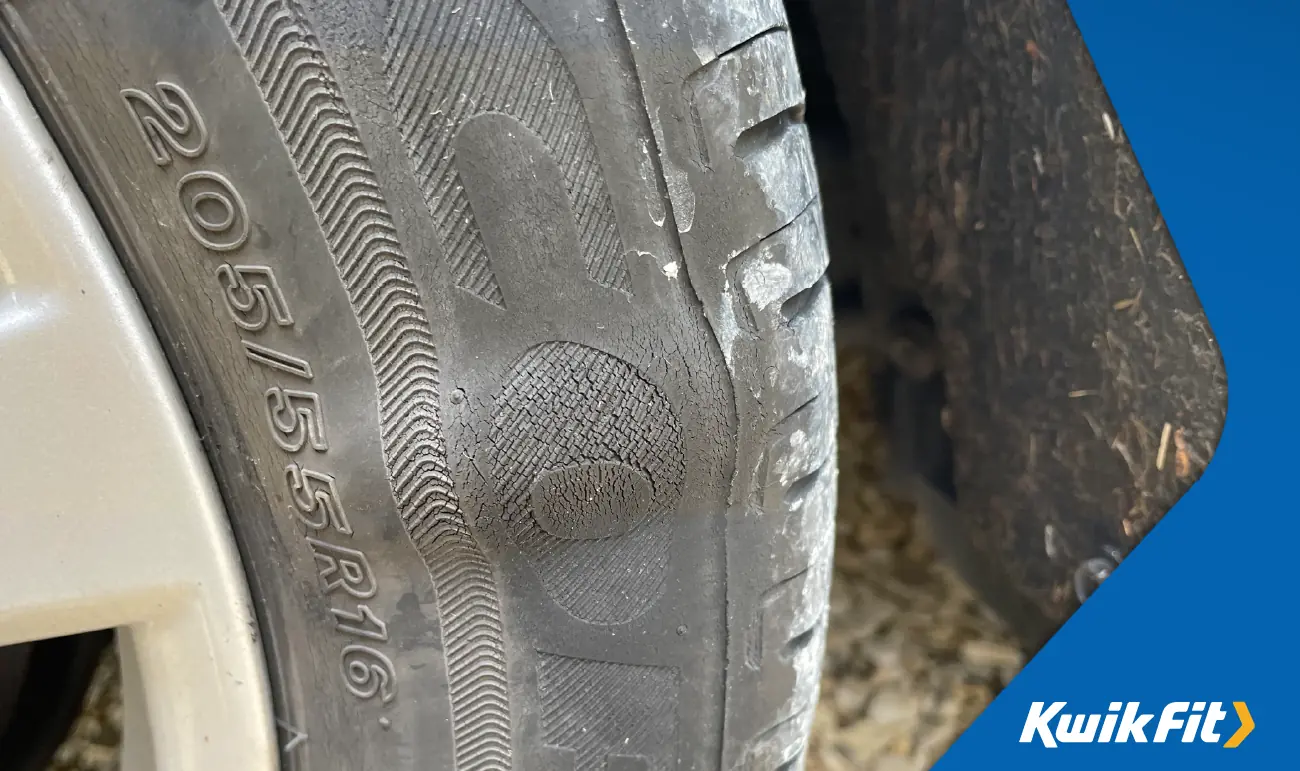
Tyre bulges usually occur after your tyre impacts a solid object, such as a kerb or a pothole. The impact can weaken the internal structure of the sidewall, allowing the air pressure inside the tyre to create a visible bulge.
Bulging isn’t always noticeable straight away, so it’s worth checking your tyres regularly, especially after hitting a pothole or kerb. If you spot a bulge, it should be inspected as soon as possible, as the weakened area could fail without warning.
How can you reduce the risk of sidewall damage?
While it’s not possible to avoid sidewall damage, there are some simple steps you can take to reduce the risk:
- Avoid contact with kerbs. Scraping or mounting a kerb, particularly when parking, can damage the tyre's sidewall and weaken its structure.
- Avoid potholes where it's safe to do so. Heavy impacts can damage the tyre's sidewall, even if there's no obvious sign of damage straight away. Reducing your speed on poor road surfaces can also help.
- Maintain the correct tyre pressures. Incorrectly inflated tyres place additional stress on the sidewalls, increasing the risk of damage over time.
What does uneven tyre wear tell you?
Tyre wear is a normal part of driving, but tyres don’t always wear evenly. The way your tyres wear can often help identify problems before they become serious. It’s also important to remember that tyres with a tread depth below 1.6mm are below the legal limit and must be replaced.
It’s also worth keeping in mind that you’re not necessarily in the ‘safe zone’ just because your tyre treads are over 1.6mm. Even tyres under 3mm can wear down rapidly and lose grip.
| If tread is wearing: | It could indicate: |
|---|---|
| More in the centre | Overinflated tyres |
| More on both outer edges | Underinflated tyres |
| More on one edge | Poor wheel alignment or suspension issues |
| Uneven or patchy across the tread | Wheel balancing or suspension problems |
If you notice uneven tyre wear, it's worth having your tyres and wheel alignment checked. Addressing the cause early can help improve tyre life and prevent unnecessary wear.
How can you tell if you have a puncture?
Punctures don't always cause an immediate flat tyre, so recognising the early signs can help prevent further damage.
A puncture is one of the most common types of tyre damage. When sharp objects from the road’s surface pierce the tyre, air leaks out – slowly or quickly, depending on the severity.
As you might imagine, the clearest sign of a puncture is a deflated tyre. But it can be much more subtle. If you’re finding, for example, that your tyre needs air every week, it’s highly likely that you’ve got a slow puncture. Often these are invisible to the untrained eye.
However, a flat tyre doesn't always mean you've suffered a puncture. Air can also escape because of damage to the valve or a poor seal between the tyre and wheel. If a tyre repeatedly loses pressure, it's worth having it inspected to identify the underlying cause.
How can you help prevent punctures?
- Check your tyres regularly for embedded objects. Nails, screws, glass, and other sharp debris can become lodged in the tread. Spotting them early may help prevent further damage and reduce the risk of a sudden loss of pressure.
- Don't remove an object if you think it has punctured the tyre. It may be temporarily sealing the hole, and removing it could cause the tyre to lose air more quickly. Instead, leave it in place and have the tyre inspected by the Kwik Fit technicians at your local Kwik Fit centre as soon as possible.
- Maintain the correct tyre pressures. Driving on underinflated tyres increases the risk of damage from potholes and road debris, so regularly checking your tyre pressures can help reduce the likelihood of a puncture.
When should a damaged tyre be replaced?
Some types of tyre damage can be repaired, while others mean the tyre should be replaced. If you’re ever unsure, it’s safest to have it inspected before continuing your journey.
A tyre may need replacing if it has:
- A bulge or bubble in the sidewall.
- A deep cut that exposes the tyre’s internal cords.
- Tread below the legal minimum depth of 1.6mm.
- Damage that can’t be safely repaired after a puncture.
Even if the damage appears minor, it’s always worth seeking professional advice if you’re unsure whether a tyre is safe to drive on.
Concerned about tyre damage?
If you'd like reassurance that your tyres are safe and roadworthy, book a free tyre check at your local Kwik Fit centre. Our Kwik Fit technicians can assess the condition of your tyres and advise whether they can be safely repaired or need replacing.
For more practical driving advice, maintenance tips and the latest motoring news, explore the Kwik Fit blog.