
How to Tell If A Tyre Is Flat
Not sure if your tyre needs replacing? Follow these handy tips.
- Pull over somewhere safe, stop the engine, and put your hazards on.
- Look at the tyre: is it visibly squashed against the road or sitting lower than the others?
- Check the sidewall for damage, including cuts, nails/screws, or a hissing sound.
- Compare both tyres on the same axle; does one look shorter or “flatter” at the bottom?
- Press the tyre with your palm: a firm tyre resists, while a flat tyre will feel soft.
- Check your dashboard: a TPMS warning usually means one or more tyres are under-inflated.
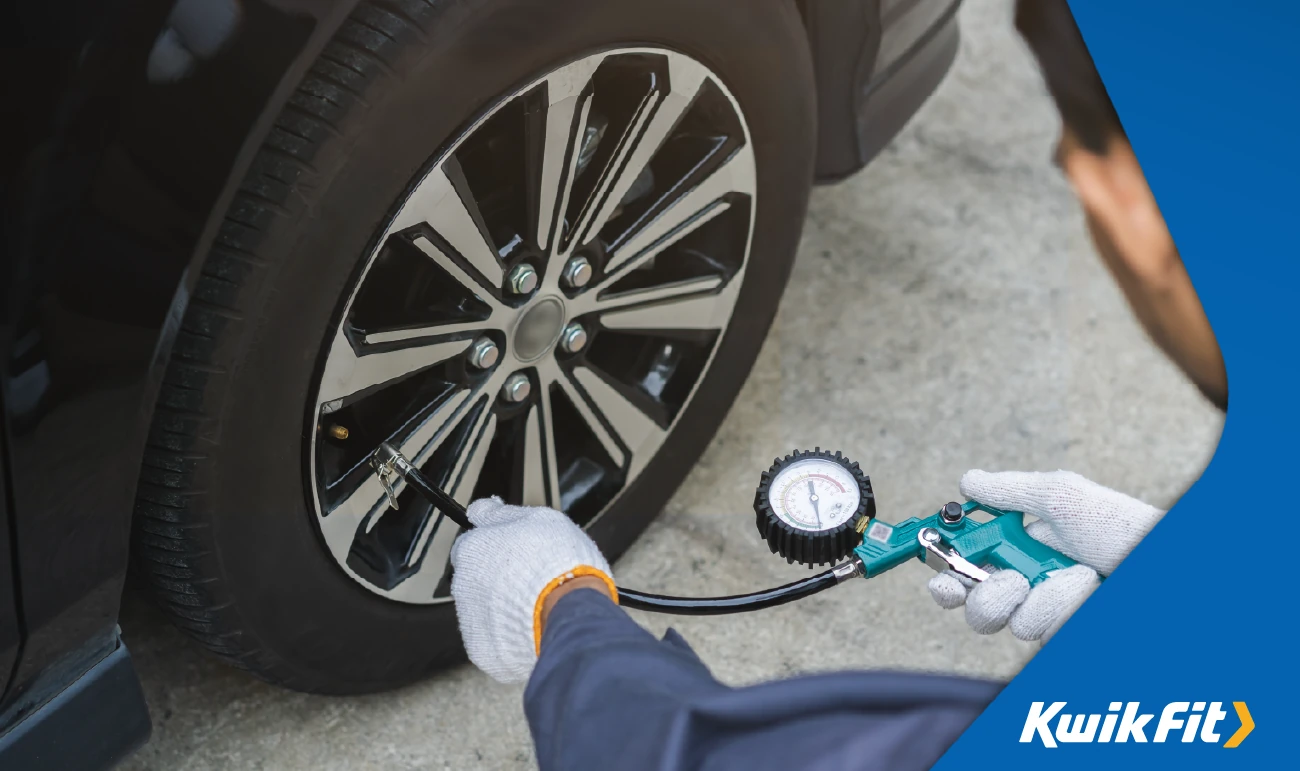
- Use a pressure gauge to check the pressure when the tyres are cold.
- Compare the pressure to the recommended amounts on the driver’s door sticker, fuel flap, or handbook.
- If the pressure is far below spec or won’t hold air, treat it as a flat.
- Do not drive on a flat - fit the spare or visit a local tyre centre to get the damaged tyre replaced.
While these quick steps can help you spot a flat tyre, it’s just as important to understand how to keep your tyres in good condition - as well as knowing what to do if you do think you’re running into problems.
Looking after your tyres with a few simple habits can help you avoid flats, save money on repairs, and give you extra peace of mind when you’re driving. Read on for some tyre health basics, tips on checking pressure, and what to do if you ever need to repair or replace a tyre.
What a “flat” tyre actually means
A tyre is considered flat when it doesn’t have enough air pressure to safely carry the weight of a car. This can mean a tyre has lost all of its air or that its pressure is just lower than recommended - although both are problematic.
- Tyres are designed to work within a specific pressure range; and if the pressure drops too far below that, the sidewalls and tread can no longer hold their shape properly.
- This causes extra flexing in the rubber, which causes a build-up of excess heat. That heat can weaken or even break down the structure of the tyre, leading to failure. In extreme cases, the tyre can separate from the rim altogether.
- Not only this, but a tyre with low pressure can also change the way your car handles: steering can feel heavy or unresponsive, braking distances increase, and you may notice the car pulling to one side.
That’s why even if a tyre doesn’t look completely flat, it’s safest to check the pressure as a priority if you have any concerns. If in doubt, slow down, stop in a safe place, and get it inspected by a professional.
Can you repair a flat tyre?
It’s natural to be tempted by having a damaged tyre repaired, especially if you’re worried about the cost of replacing a tyre. At Kwik Fit, we will always try to repair a punctured tyre if it’s safe to do so, but there are instances when this isn’t possible.
Our car puncture repair policy reflects that of the British Standard (BSAU159), which defines the requirements for safe tyre repair in relation to the damage’s proximity to the sidewall. In line with this, we will only carry out tyre repairs to the central ¾ of the tyre (known as the minor repair area). If the puncture or damage sits outside of this region, it is deemed too close to the sidewall to guarantee a safe and lasting minor repair, and a full replacement is required.
Find out more about repairing damaged tyres in our blog.
Can you drive on a flat tyre?
Driving on a flat tyre is never recommended, even for short distances. When a tyre loses too much air, it can no longer support the weight of your vehicle safely. Continuing to drive with a tyre in this condition can damage the wheel rim, shred the tyre beyond repair, and put you at risk of losing control of the car - causing far more damage overall.
If you notice a flat, the safest option is to stop as soon as possible in a secure location. Once you’re safely stopped, you can assess the situation and either change to a spare, use a repair kit, if provided, or call for roadside assistance.
The exception here is if your car is fitted with run flat tyres, in which case you may be able to drive a short distance at reduced speed. However, it’s still important to have the tyre inspected and replaced as soon as possible.
Run flat & self-seal tyres
Some modern vehicles are fitted with run flat or self-seal tyres, which are designed to give you peace of mind in the event of a puncture. It’s important to remember, however, that they’re not a permanent solution.
Run flat tyres: These are specially reinforced tyres that allow you to keep driving for a limited distance at a reduced speed when a tyre is deflated - usually up to around 50 miles. This means you can reach a safe place or a tyre centre without needing to stop immediately at the roadside. However, you should always follow the speed and distance limits set by your vehicle and tyre manufacturer, and have the tyre inspected as soon as possible.
Self-seal tyres: These contain an inner lining that can seal over small punctures (such as a nail) to prevent rapid air loss. While this can buy you more time, it’s not a guarantee that the tyre is safe to keep using indefinitely. You should still check the pressure regularly and have the tyre examined by a professional to ensure no further damage has occurred.
Tyre health basics
Looking after your tyres with a few simple, regular checks can help you avoid unexpected flats, blowouts, and potentially costly repairs. Preventative maintenance not only improves safety but also extends the lifespan of your tyres, keeps your car handling as it should, and can even boost fuel efficiency - so it’s a real win-win.
Here’s a quick checklist to follow to help keep your tyres at their best:
- Pressure: Check tyre pressure monthly, and again before any long trips (and always when the tyres are cold).
- Tread: The UK legal minimum is 1.6 mm across the central ¾ of the tread around the full circumference. For better grip in wet weather, or optimal safety, replace before the minimum tread level is reached.
- Wear pattern: Uneven wear is a warning sign. Centre wear suggests over-inflation, edge wear suggests under-inflation, and one-sided/feathering may point to alignment or suspension issues. Keep an eye on your tread wear, and seek guidance if you notice any irregularities.
- Sidewalls: Any bulges, cuts, exposed cords, or deep cracks mean the tyre needs replacing and should be addressed promptly to avoid potentially dangerous breakdowns.
- Age/condition: Even with low mileage, tyres degrade over time due to UV, heat, and general wear and tear. Inspect them regularly, and consider replacement if they’re over 5–6 years old.
If you’re planning a road trip or long journey, it’s even more important to conduct pre-travel checks on your car to make sure your journey is as safe as possible - even if you’ve recently conducted some general health checks.
Got a flat? Time to change your tyre
Changing a tyre can seem daunting, particularly if you’ve never done it before. However, once you’ve got a flat, it quickly becomes a necessity.
Knowing how to change a tyre is a great skill for any driver; check out our guide on how to change a tyre for a simple step-by-step checklist, or reach out to your local Kwik Fit centre if you’re struggling with making the switch.
Our friendly tyre experts are always on hand to help, with a great range of tyres in stock at all times.