
Rules Of The Road: 10 Driving Laws You Didn't Know
Jessica Bird | Sunday 26th October 2025 2:42pm
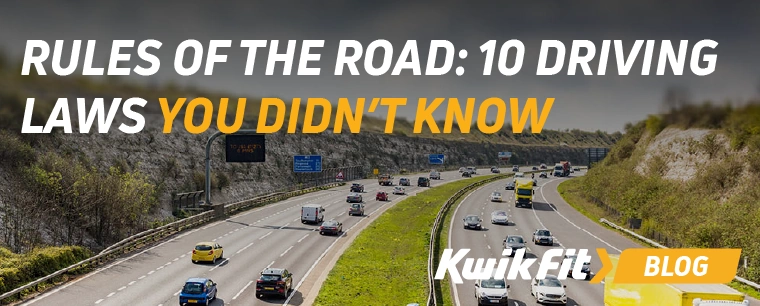
While we all passed our tests fair and square, even the most experienced of us on the road can fall foul of the law without realising it. And we’re not talking about the usual suspects here (like indicating or missing road signs). The UK’s driving laws cover far more than just speed limits and seatbelts, and many motorists unknowingly break them every day.
While the Highway Code provides valuable guidance on how to drive safely, it’s the law that ultimately determines what you can and can’t do on the road. So, what is it that you might be doing that could be breaking the law? Let’s find out.
1. Using your horn at the wrong time
Your car horn is designed to warn others of danger – not to show frustration. Under UK driving law, it’s illegal to use your horn while stationary or between 11:30pm and 7am in a built-up area, unless you’re warning another road user of a hazard.
While it’s rare to be fined for the odd impatient beep, unnecessary horn use can still be considered anti-social or aggressive driving. When in doubt, only use your horn for safety – not irritation.
2. Using your mobile phone behind the wheel
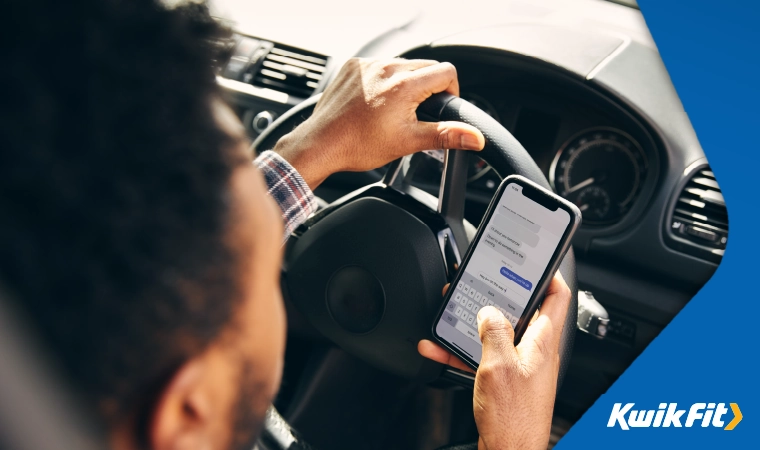
One of the most common (and costly) offences on UK roads is using a hand-held phone while driving. Even checking a notification while stopped at traffic lights or in a queue counts as an offence.
The law states that you cannot use your phone for any purpose while the engine is running, including using it as a sat nav - unless it’s securely mounted for hands-free use. The penalty is six points on your licence and a £200 fine for a first-time offence. And while this law technically still applies to drive-throughs, you are allowed to use your phone when using contactless payment.
3. Flashing your headlights to communicate
Flashing headlights to say “thank you”, “after you”, or to warn others of speed cameras is something many of us do without thinking. However, Rule 110 of the Highway Code (much like the rule on using your horn) states that headlights should only be flashed to alert others to your presence.
Doing it for any other reason could be classed as misuse, and warning others of police speed traps could even be interpreted as obstructing law enforcement. So, when it comes to headlight etiquette, a friendly wave is always the better choice.
4. Parking against the flow of traffic
It might seem harmless, but parking on the wrong side of the road at night is actually against the law. Vehicles must not park facing against the direction of traffic flow unless in a marked bay.
The reason for this is because you risk dazzling other drivers and reducing their visibility if your headlights or reflectors face the wrong way. To stay compliant (and safe) always park in the same direction as traffic, or use a proper car park.
5. Overtaking at pedestrian crossings
If the car beside you hasn’t moved off straight away when the lights turn green, don’t be tempted to overtake. The law is clear: you must never overtake the vehicle nearest to a pedestrian crossing.
Doing so could hide someone on foot from view and cause a serious accident. It’s one of those laws designed to protect the most vulnerable road users, so patience really does pay off.
6. Leaving your car engine running while unattended
Leaving your engine idling while you’re parked or waiting is more than just bad for the environment – it can actually be illegal. Under driving law, you must not leave a vehicle running while unattended.
Local authorities can issue on-the-spot fines if you refuse to switch off your engine when asked. Idling increases emissions and wastes fuel, so if you’re parked for more than a moment, turn the engine off. It’s better for your car, your wallet, and the planet.
7. Throwing litter from your car
It doesn’t matter if it’s a takeaway wrapper or an apple core – throwing anything from your car is classed as littering, and it carries fines of up to £150. Even if it was a passenger who threw it, the registered keeper of the vehicle is held responsible. It’s an easy one to avoid: keep a small rubbish bag in your car and empty it every once in a while when you refuel or get home.

8. Driving with unsecured pets
Many of us love taking our pets on road trips, but UK law requires animals to be properly restrained while driving. An unrestrained dog or cat can not only distract you, but can sometimes get into your footwell and make it impossible for you to operate the car – which is never something you want while going at any speed.
Rule 57 of the Highway Code recommends using a seatbelt harness, pet carrier, or boot guard to keep them safe. Failing to do so could see you charged with careless driving – and fined up to £5,000.
9. Deliberately splashing pedestrians
It might seem like a harmless prank, but splashing pedestrians by driving through puddles at speed can land you with a fine of up to £5,000. Under the Road Traffic Act 1988, it counts as “driving without reasonable consideration for other persons.” Beyond the embarrassment of getting such a huge fine for “a harmless prank”, it’s also dangerous – hitting water too fast can cause you to aquaplane. So if you can’t avoid a puddle safely, slow down and pass through it gently.
10. Playing music too loudly
Driving with music on can often be fun – but turn it up too loud, and you could be breaking the law. Excessive noise can distract you and prevent you from hearing emergency sirens. Under Regulation 97 of the Road Vehicles Regulations 1986, driving in a way that causes “excessive and avoidable noise” is illegal.
This largely means that you shouldn’t over-rev your engine, do wheel spins, and so on, but it also applies to playing loud music while driving – especially in residential areas. In fact, repeatedly playing loud music in residential areas can even lead to your car being seized under anti-social behaviour laws. Keep the volume sensible and stay alert to your surroundings.
Stay safe and legal on the road
These lesser-known driving laws are easy to overlook – but each one exists to keep you, your passengers, and other road users safe. The Highway Code is a useful reference point for understanding the reasoning behind these laws, but it’s important to remember that many of them carry real penalties if ignored.
At Kwik Fit, we’re committed to keeping UK motorists safe, both through awareness and regular vehicle maintenance. Many driving offences can be avoided simply by ensuring your car is roadworthy. For instance, driving with tyres below the legal tread depth of 1.6mm can lead to a fine and points on your licence – but more importantly, it reduces grip and braking performance, especially in wet conditions. Similarly, driving without a valid MOT can result in fines of up to £2,500 and may invalidate your insurance.
Regular checks are a simple way to stay compliant and confident behind the wheel. From tyre tread and pressure to lights, brakes, and fluid levels, our free vehicle checks at Kwik Fit help ensure your car meets safety and legal standards before you hit the road.


Any facts, figures and prices shown in our blog articles are correct at time of publication.
Featured Articles
Is it Illegal to Drive With One Headlight?
Saturday 19th July 2025
Wondering if it’s illegal to drive with one headlight? Learn about the safety risks and penalties of illegal blown bulbs and why you should fix them promptly.
Air Con in EVs & Hybrids: Experts Answer Your Questions
Monday 30th June 2025
Does air con drain EV batteries? Can you use the air con while charging an electric car? Find out the answers to these questions & more from Kwik Fit’s experts.
Why Is Your Car Making a Noise? Fixes & Tips
Friday 13th June 2025

When your car starts making unexpected noises, it can certainly be quite disconcerting; it may be nothing to worry about, but here’s what you need to know.