
Mobile Phone Driving Laws: The Complete UK Guide
Jessica Bird | Wednesday 10th June 2026 3:18pm
Using a mobile phone at the wheel remains one of the UK’s most common driving offences, despite stricter penalties and growing awareness around distracted driving. And with Scotland now trialling AI enforcement cameras designed to detect motorists using handheld devices, many people are questioning exactly what the law does and does not allow.
Mobile phone laws on UK roads have tightened significantly in recent years. Actions that some motorists once viewed as harmless, such as changing music, checking notifications, or briefly touching a sat nav, can now all result in penalty points, fines, and higher insurance costs.
At the same time, enforcement methods are evolving, particularly as AI-assisted technology begins rolling out in parts of the UK. Whether you use your phone for navigation, music, or hands-free calls, here’s what motorists need to know about the latest mobile phone laws in 2026.
Quick mobile phone driving law facts:
- Using a handheld mobile phone behind the wheel can result in a £200 fine and 6 penalty points.
- You can still be prosecuted for using your phone while stopped in traffic or at traffic lights.
- Phones can legally be used as sat navs if secured in a cradle, but touching the device while driving may still be an offence.
- Scotland is currently trialling AI enforcement cameras designed to detect phone use and seatbelt offences.
- New drivers who receive 6 points within two years of passing their test can lose their licence entirely.
The dangers of using a mobile phone behind the wheel
Even a brief glance at a phone can reduce concentration and delay reaction times.
Being distracted affects how quickly motorists spot hazards, respond to sudden braking, and react to changing road conditions. And, unlike many other distractions inside a vehicle, mobile phones actively pull attention away from the road.
That risk does not disappear simply because a vehicle is stationary in traffic or moving slowly through town. Whether checking a notification, changing music, or replying to a message, even momentary lapses in concentration can increase the likelihood of collisions.
What counts as using a mobile phone while driving?
UK law now covers almost any handheld interaction with a mobile phone while you are in control of a vehicle.
For many years, there was confusion around what legally counted as using a phone. Older legislation focused heavily on interactive communication, which created loopholes around activities such as filming, taking photos, or scrolling at the wheel.
That all changed with the 2022 law update.
Today, motorists can face penalties for virtually any handheld interaction with a device capable of sending or receiving data, including:
- Reading or sending messages
- Scrolling through apps or notifications
- Changing playlists or music
- Taking photos or videos
- Searching for directions
- Unlocking the screen.
Importantly, the law still applies even when your vehicle is stationary or you are supervising a learner driver.
Can you use your phone at traffic lights?
No, checking or holding your phone at traffic lights is still illegal.
This remains one of the most misunderstood parts of the law. Many motorists assume that being stationary at a red light makes it acceptable to quickly check a message or notification, but that is not the case.
If the engine is running and you are waiting in traffic, you are still considered to be driving.
The only situations where handheld phone use is generally permitted are during an emergency call to 999 or 112 when it is unsafe to stop, or when making a contactless payment at places such as drive-throughs, or toll roads while stationary.
Outside of those exceptions, you should safely park and switch off the engine before using your device.
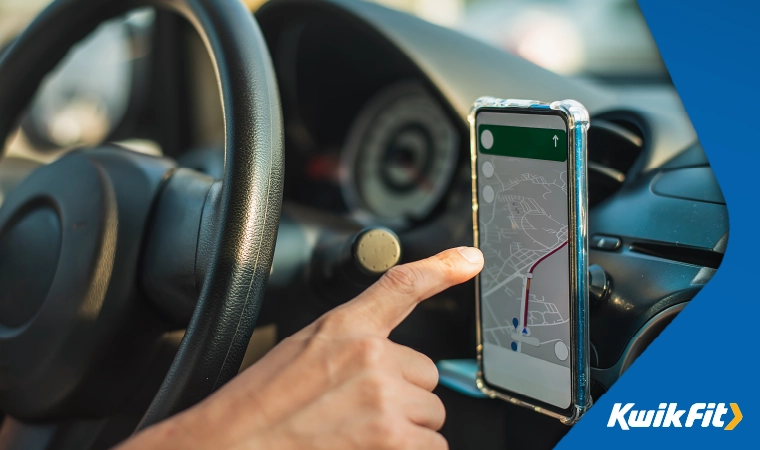
Can you touch your phone if it’s in a cradle?
A phone can legally be mounted in a cradle, but physically interacting with it while driving can still lead to prosecution.
Many motorists believe the law only applies when a phone is held in the hand. In reality, police can still take action if they believe a driver is distracted or not properly in control of the vehicle.
That means repeatedly touching a mounted phone to change music, adjust directions, read messages, or open apps could still result in penalties.
Can you use your phone as a sat nav while driving?
Yes, phones can legally be used as sat navs if they are properly secured and operated hands-free.
Navigation apps are now a normal part of everyday driving, particularly on unfamiliar routes. However, the safest approach is to always enter destinations and adjust settings before setting off on your journey.
Voice controls, steering wheel controls, and dashboard integration can all help drivers keep their attention on the road. But if you need to change your route, search for a destination, or adjust settings mid-journey, you should pull over somewhere safe first.
Even a brief interaction with a screen can still count as illegal phone use if the police believe your attention has been taken away from the road.
Are hands-free devices legal while driving?
Hands-free systems remain legal in the UK, although that does not automatically make them distraction-free.
Making calls with Bluetooth headphones, using voice-assistants, and integrated dashboard systems are all permitted as long as the device is not being held. But motorists can still be penalised if their driving standards are affected while using them.
Police may still take action if they believe your attention is too distracted, you are not properly controlling the vehicle, or your driving becomes careless or unsafe. Even legal phone use can become dangerous if it takes too much focus away from the road ahead.
What are the penalties for using a phone while driving?
Drivers caught illegally using a handheld mobile phone can face fines, penalty points, and long-term insurance consequences.
| Offence: | Penalty: |
|---|---|
| Using a handheld mobile phone while driving | £200 fine and 6 penalty points |
| Serious offences heard in court | Fines of up to £1,000 |
| Dangerous driving linked to phone use | Possible driving disqualification |
For many motorists, the financial impact extends beyond the initial penalty. Convictions related to mobile phone use can also increase insurance premiums, as insurers may view penalty points as evidence of being a higher driving risk.
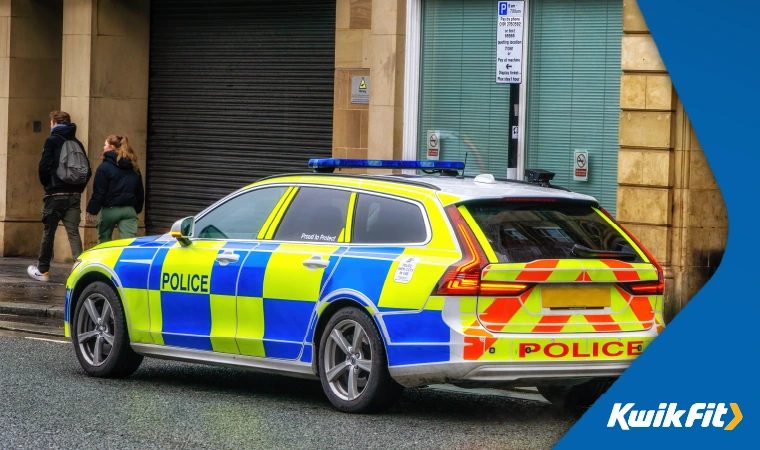
How do the police prove you were using a phone while driving?
Many motorists assume they would only face penalties if caught actively making a phone call. In reality, simply holding or interacting with a device while driving may be enough for police to take action.
Offences are often identified directly by police officers, particularly if a driver appears distracted or not fully in control of the vehicle. Dashcam footage, roadside cameras, and publicly submitted footage may also be used as evidence in some cases.
As enforcement methods continue evolving, it is becoming increasingly difficult for illegal phone use behind the wheel to go unnoticed.
Can AI cameras catch drivers using mobile phones?
Yes, AI-enabled cameras are able to identify motorists using handheld phones while driving.
Scotland is currently trialling AI enforcement cameras designed to detect both mobile phone use and seatbelt offences. The technology uses high-definition cameras alongside AI software to identify potential offences before the images are reviewed by enforcement officers.
The trial reflects growing concern around distracted driving across UK roads.
Recent research from Quotezone found that 81% of Brits believe the rest of the UK should introduce similar AI camera technology, while more than half of respondents believed mobile phone use among drivers is increasing.
Importantly, AI systems do not automatically issue penalties. Any suspected offences still require human review before fines or points are applied.
Stay safe behind the wheel
Mobile phone laws have changed significantly over the past few years, and with new AI enforcement technology now being trialled across parts of the UK, distracted driving offences are likely to face even greater scrutiny.
Whether you use your phone for navigation, music, or hands-free calls, staying focused on the road remains one of the simplest ways to protect yourself and other road users.
If you have any concerns about your vehicle’s safety or want peace of mind before a longer journey, you can book an MOT, servicing appointment, or a free vehicle safety check at your local Kwik Fit centre. You can also explore more motoring advice, driving law updates, and vehicle maintenance guides on the Kwik Fit blog.


Any facts, figures and prices shown in our blog articles are correct at time of publication.
Featured Articles
Is it Illegal to Drive With One Headlight?
Saturday 19th July 2025
Wondering if it’s illegal to drive with one headlight? Learn about the safety risks and penalties of illegal blown bulbs and why you should fix them promptly.
Air Con in EVs & Hybrids: Experts Answer Your Questions
Monday 30th June 2025

Does air con drain EV batteries? Can you use the air con while charging an electric car? Find out the answers to these questions & more from Kwik Fit’s experts.
Why Is Your Car Making a Noise? Fixes & Tips
Friday 13th June 2025

When your car starts making unexpected noises, it can certainly be quite disconcerting; it may be nothing to worry about, but here’s what you need to know.