
What You Need to Know About Catalytic Converter Theft
Jessica Bird | Saturday 18th October 2025 2:34pm

Catalytic converter theft has become a growing concern for drivers across the UK and, unlike many other types of theft, it’s not just an inconvenience. It can leave your car undrivable, cause unexpected repair bills, and leave you feeling vulnerable.
At Kwik Fit, we know how important it is for motorists to understand why this type of crime is on the rise and, most importantly, how you can reduce your risk.
In this article, we’ll break down what catalytic converters are, why thieves target them, the impact theft can have on your car, and practical steps you can take to protect your vehicle.
What is a catalytic converter?
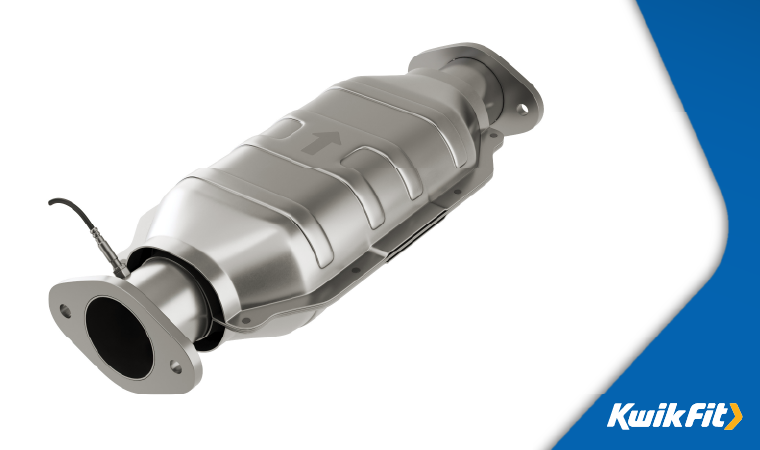
A catalytic converter is a device that converts harmful pollutants from your car’s exhaust into less harmful gases like water vapour or CO2.
Whenever you burn any fuel outside of perfect laboratory conditions, you’re left with some sort of byproduct. Because the byproducts of petrol & diesel combustion have been discovered to have quite harmful effects on our environment & health, every modern petrol and diesel vehicle is fitted with a catalytic converter. This clever device forms part of your car’s exhaust system and plays a crucial role in reducing those emissions.
How do catalytic converters work?
As exhaust gases pass through the converter, they’re filtered through a honeycomb-like structure coated with precious metals such as platinum, palladium, and rhodium. These metals act as catalysts (hence the name), breaking down toxic gases like carbon monoxide, hydrocarbons, and nitrogen oxides into less harmful emissions such as carbon dioxide, nitrogen, and water vapour.
Put simply, without a catalytic converter, your vehicle would release far more pollutants into the atmosphere. That’s why they are legally required and why their theft creates such serious problems.
Why are catalytic converters being stolen?
The surge in catalytic converter theft essentially comes down to one factor: the value of the metals inside.
- Catalytic converters contain precious metals like platinum, palladium, and rhodium – and their prices have risen sharply in recent years due to the demand for them from industries ranging from electronics to green energy.
- Crucially, a single catalytic converter can contain enough of these materials to fetch hundreds of pounds when sold illegally.
- What’s more, thieves know that catalytic converters are relatively easy to remove from certain vehicles, such as (and especially) those with higher ground clearance like SUVs and hybrid models. In some cases, it takes less than two minutes with basic tools for a thief to slide underneath and cut one free.
So it’s no wonder that catalytic converter theft has become such a prevalent crime: from the thief’s perspective, they’re making a few hundred pounds in as little as two minutes.
But this theft has real problems.
The impact of catalytic converter theft on car owners
If your catalytic converter is stolen, you’ll notice the difference immediately. Your car will sound far louder than usual, almost like it has no exhaust at all (largely because a significant part of your exhaust system has been removed). In many cases, you won’t even be able to drive the vehicle safely, and doing so could cause further damage. This is because your exhaust venting under the middle of your car, instead of out of the back, can lead to a lot of localised heat that could turn into a fire.
So the costs can quickly mount up. Replacement parts and labour for a new catalytic converter can cost anywhere from several hundred to over a thousand pounds, depending on your vehicle’s make and model; there are insurance implications as some insurers may count catalytic converter theft as a claim, which could affect your premium; and, of course, there’s the inconvenience. Being without your car for days while it’s repaired can create a real disruption in your daily life.
Moreover, for many motorists, it’s not just the financial burden but also the stress and frustration of dealing with this type of theft that really takes its toll.
Which cars are most at risk from catalytic converter theft?
While all vehicles with catalytic converters are potential targets, some models are more attractive to thieves than others.
Hybrid cars, such as certain Toyota Prius and Honda Jazz models, are particularly vulnerable. This is because their catalytic converters are generally less worn than those on petrol or diesel cars, meaning they contain higher concentrations of precious metals.
SUVs and vans are also at higher risk simply because their elevated ride height makes the converter more accessible. However, it’s important to remember that any car can be a target if parked in the wrong place at the wrong time.
How to protect your vehicle from catalytic converter theft
Although no solution can guarantee 100% protection, there are steps you can take to reduce the chances of falling victim to this crime.
1. Be sensible about where you park
Parking in well-lit, busy areas makes it harder for thieves to operate unnoticed. If you have a garage or secure driveway, use it. When parking on the street, try to position your car close to fences, walls, or other vehicles to make access to the underside more difficult.
2. Consider anti-theft devices
There are specially designed cages, clamps, and shields available that physically protect the catalytic converter, making it much more difficult to remove. While these involve some upfront cost, they can act as a strong deterrent.
3. Mark your catalytic converter
Some garages and local police forces offer marking or etching services. This makes it easier to trace stolen converters and can put thieves off if they know the part is identifiable.
4. Stay alert
Be aware of suspicious behaviour in your neighbourhood. If you see someone working under a car in an unusual location – especially if it looks rushed – it’s worth contacting the police.
What to do if your catalytic converter is stolen
If you suspect your catalytic converter has been taken, don’t attempt to drive your car. The noise will likely be extremely loud, and, as we’ve already mentioned, driving could cause further damage to the exhaust system.
Instead, call the police to report the crime and then contact your insurer. From there, the experts at your nearest Kwik Fit centre can assess the damage and replace the converter so your vehicle is roadworthy again.
Before you get to the point of needing a replacement, however, understanding why converter theft happens and taking a few sensible precautions significantly reduces your risk of falling victim. But if you ever do need help, we’re always here.
Support when you need it most
The experts at your local Kwik Fit centre are always on hand to help keep your car safe, reliable, and roadworthy.
Whether you need a replacement catalytic converter, an MOT, or a yearly service to keep everything singing, trust us to keep you on the road.


Any facts, figures and prices shown in our blog articles are correct at time of publication.
Featured Articles
Is it Illegal to Drive With One Headlight?
Saturday 19th July 2025
Wondering if it’s illegal to drive with one headlight? Learn about the safety risks and penalties of illegal blown bulbs and why you should fix them promptly.
Air Con in EVs & Hybrids: Experts Answer Your Questions
Monday 30th June 2025
Does air con drain EV batteries? Can you use the air con while charging an electric car? Find out the answers to these questions & more from Kwik Fit’s experts.
Why Is Your Car Making a Noise? Fixes & Tips
Friday 13th June 2025

When your car starts making unexpected noises, it can certainly be quite disconcerting; it may be nothing to worry about, but here’s what you need to know.