
How To Drive In Snow
An 8-step guide to staying safe in snowy road conditions
- Check the weather and your route before setting off, and avoid travelling in snow or ice unless your journey is essential.
- Clear snow and ice from your car so your windows, mirrors, lights, and number plates are clear.
- Check your tyres and prepare for the journey, including carrying suitable winter essentials.
- Accelerate gently and use a higher gear where possible to reduce the risk of wheelspin.
- Reduce your speed and leave much more space than usual, as stopping distances can be up to ten times greater in snow and ice.
- Brake, steer and accelerate smoothly, slowing before bends rather than braking sharply while turning.
- Watch for ice and know how to react to a skid, avoiding sudden braking or steering.
- Use your lights correctly and only use fog lights when visibility is seriously reduced.
Snow and ice can reduce grip, increase stopping distances, and make it harder to see what is happening around you. The Highway Code advises drivers to avoid travelling in snowy or icy conditions unless the journey is essential.
If you do need to drive, preparing your car properly and adapting how you accelerate, brake and steer can help you stay in control.
Should you drive in snow?
If driving conditions are severe, you should postpone any journey that isn’t essential.
If you have to drive, then you should check the weather forecast before setting off, as well as the road conditions and your planned route. Allow extra time and be prepared to change your route or delay the journey if conditions worsen.
Keep an eye on travel updates before and during your journey, and pay attention to any variable message signs or road closures along the way.
How should you prepare your car for driving in snow?
Before pulling away, you should make sure you can see clearly before moving the car.
- Clear snow and ice from all windows and mirrors, thoroughly demist the windscreen, and make sure your lights and number plates are clean and visible.
- Remove any loose snow from the vehicle that could fall into the path of another road user once you start driving.
- Before driving in winter, check that your tyres, lights, windscreen wipers and screenwash are ready for the journey.
- For an essential journey in severe weather, it is also sensible to carry a winter emergency kit. This could include a de-icer and ice scraper, torch, warm clothing, suitable footwear, first-aid supplies, a shovel and some food and drink in case you become stranded.
Safety tips: How should you drive in snow?
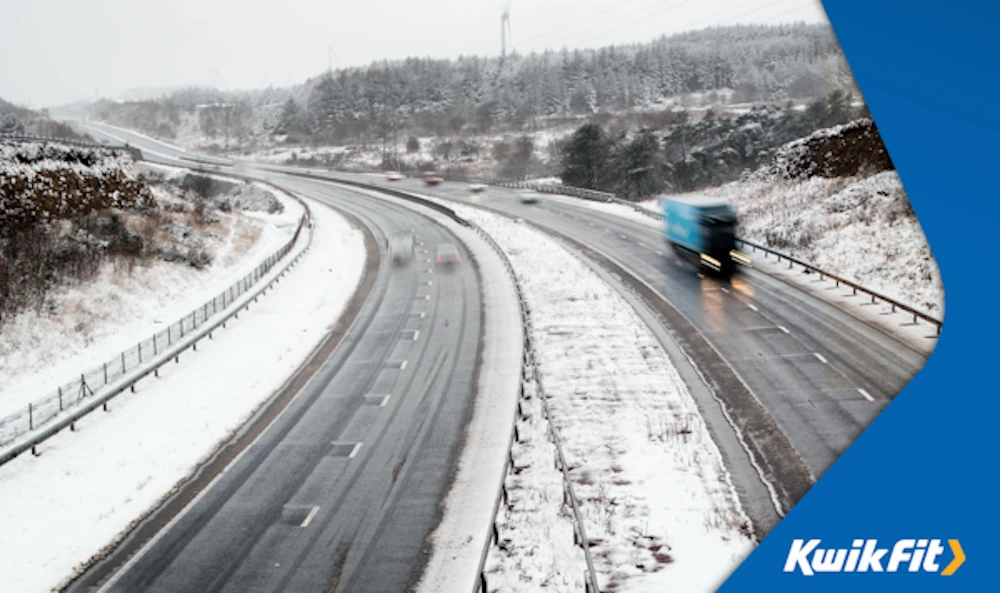
Keep your speed low and make every movement as smooth as possible. Accelerate gently, brake progressively, and avoid sudden steering movements that could cause the tyres to lose grip.
Leave considerably more space between you and the vehicle in front. In snowy and icy conditions, stopping distances can be up to ten times greater than on a dry road, so start slowing down much earlier than you normally would.
Take particular care around bends. Reduce your speed while the car is still travelling in a straight line, then steer smoothly through the corner. Even treated roads can remain slippery, and conditions can change over a relatively short distance.
What gear should you use when driving in snow?
When driving in snow, you should use as high a gear as is practical while keeping your speed low. This helps keep the engine revs down and can reduce wheelspin when accelerating on a slippery surface.
- For manual cars, change up earlier than you normally would. Moving away in second gear can also help the wheels gain traction more gradually in some vehicles.
- Automatic cars may have a dedicated snow or winter mode that adjusts how power is delivered. Check your vehicle handbook to see what settings are available and how they should be used.
- Four-wheel-drive systems vary between models, so there is no single 4x4 setting that is right for every car. If yours has a dedicated snow or winter mode, use it in line with the manufacturer’s instructions.
How can you avoid getting stuck in snow?
To reduce the risk of getting stuck in snow, you should:
- Plan ahead when approaching hills or untreated stretches of road.
- Leave enough room in front so you can maintain a gentle, steady pace rather than repeatedly stopping and starting.
- Apply the accelerator smoothly. If the wheels begin to spin, ease off rather than adding more power, which can make it harder for the tyres to regain grip.
- Avoid driving into deep or untreated snow if you are unsure that your vehicle can safely get through.
- If conditions ahead look unsafe, find a safe place to stop or choose another route.
What should you do if your car skids or hits black ice?
Black ice can be particularly difficult to spot because the frozen surface may look similar to a wet or clear stretch of road. Stay alert when temperatures are low and be prepared for grip levels to change suddenly.
If the steering begins to feel unresponsive, this can indicate that the tyres are losing grip on the ice. Ease off the accelerator and avoid sudden braking or steering movements. If the car starts to skid, ease off the accelerator or release the brake, depending on what caused the loss of grip. Then steer in the direction of the skid. For example, if the rear of the car slides to the right, steer to the right to help regain control.
For emergency braking in a vehicle with anti-lock brakes (ABS), apply the brake firmly and follow the guidance in your vehicle handbook. ABS can help you retain steering control, but it does not mean the car will stop in a shorter distance.
How should you use your lights when driving in snow?
When driving in snow, you should use your headlights when visibility is seriously reduced, generally when you cannot see for more than 100 metres. Front or rear fog lights may also be used in these conditions, but you must switch them off when visibility improves.
In dull daytime conditions, dipped headlights can also help make your vehicle easier for other road users to see.
Do winter tyres help when driving in snow?
Winter tyres are designed to provide improved grip and handling in cold, wet, icy and snowy conditions. Their tread patterns and rubber compounds work particularly well when temperatures regularly fall below 7°C.
They can therefore be worth considering if you regularly drive in colder parts of the UK or areas where snow and ice are common.
Winter tyres can improve grip in cold conditions, but they do not remove the need to adapt your driving to snow and ice.
Get your car ready for winter
If you’re unsure whether your car is ready for colder conditions, book a free vehicle safety check at your local Kwik Fit centre. Our Kwik Fit technicians can inspect key components and identify anything that may need attention before your next journey.
For more practical advice on preparing your vehicle and driving safely in colder conditions, explore our other Kwik Fit Guides.