
How To Safely Overtake: From Cyclists & Horses To Buses
A 10-step guide to keep you safe on the roads.
- Overtaking should only be done when it's legal, safe, and necessary.
- Always check road markings and signs before overtaking; solid white lines usually mean overtaking is prohibited.
- Cyclists should be given at least 1.5 metres of space when overtaking, more in poor conditions.
- For horse riders, pass wide and slow – ideally under 10mph and with at least 2 metres of space.
- Use extra caution when overtaking large vehicles like buses and HGVs due to reduced visibility.
- Never overtake on a bend, hill crest, or junction.
- Overtaking slow-moving or stationary traffic must be done with consideration for pedestrians and cyclists.
- Night-time and wet-weather overtaking increases risk due to reduced visibility and longer stopping distances.
- Always recheck mirrors and blind spots before pulling back into your lane.
- The Highway Code outlines specific rules for overtaking different types of road users (but read on for more detailed information).
Overtaking is one of the trickiest and riskiest manoeuvres a driver can make. Whether you’re behind a slow-moving cyclist, a horse rider on a rural road, or a lumbering bus in town traffic, knowing when and how to overtake safely is crucial; not only for your safety, but for the wellbeing of everyone sharing the road.
Let’s look at what you need to know to overtake different road users confidently, legally, and safely – as well as some very big cautions. Crucially, we’ll be talking here about overtaking on roads with one lane in each direction (single carriageways); overtaking on dual carriageways or motorways is much more straightforward and overtaking on single-track lanes is strongly discouraged (if it’s ever possible).
Why overtaking requires extra caution
Cyclists are among the most exposed people on the road. With no protective shell (such as a car chassis) and often limited space to manoeuvre, they rely on drivers to behave responsibly and give them room to ride safely. When overtaking a cyclist, it’s important to give them plenty of space – ideally at least 1.5 metres, which is roughly the width of a car door.
This space safely accounts for any slight wobbles or unexpected movements caused by potholes or gusts of wind. If you're travelling at higher speeds, such as on country roads or dual carriageways, you should allow even more space to account for wind resistance and reduced reaction time.
It’s also vital to wait until there’s a clear and safe opportunity to pass. If the road is narrow or you can’t see far enough ahead, be patient and hold back until conditions improve. Squeezing past a cyclist too closely, especially in busy or confined urban streets, not only puts them in danger but could result in a fine or penalty points — or both.
Passing horse riders
Horses are powerful but easily startled animals, which makes overtaking them a sensitive situation. Drivers must be extra cautious around horse riders, especially on narrow country roads, where passing space is limited. The Highway Code recommends slowing right down (ideally to 10mph or less) and leaving at least two metres between your vehicle and the horse. If in doubt, more space is always better.
It’s best to wait behind the horse and rider until you’re certain it’s safe to pass. Avoid revving your engine, using the horn, or making sudden movements, all of which could cause a horse to spook and create a dangerous situation for everyone involved. Many riders will give a hand signal when they believe it's safe for you to overtake, but it’s still your responsibility to judge the situation properly.
Being courteous and calm is essential here. Remember, the goal isn’t to get ahead as quickly as possible – it’s to make sure everyone stays safe.
Overtaking buses, lorries & larger vehicles
Larger vehicles such as buses, HGVs, and tractors often travel more slowly than cars, especially on rural or suburban routes. While it’s understandable to want to pass them, overtaking these vehicles can be particularly complicated and particularly dangerous. Their size means it takes longer to get past them, and your field of vision can be significantly reduced when following behind. This makes judging the road ahead trickier and leaves more room for miscalculation.
Before overtaking a large vehicle, always ensure you have a completely clear view ahead — not just a glimpse. Wait until you’re confident there’s enough time and space to pass safely and return to your lane without forcing the vehicle behind you to brake. Crucially, avoid overtaking near junctions, driveways, or bends, where other road users could unexpectedly enter your path.
When a bus is stopped at a bus stop, be cautious before overtaking. Consider whether passengers may be stepping out (they might cross the road from the front side of the bus), and check for any signage indicating whether the bus is about to rejoin the flow of traffic. Visibility can be particularly limited in these moments, so keep your speed down and your attention sharp.
Navigating slow-moving and stationary traffic
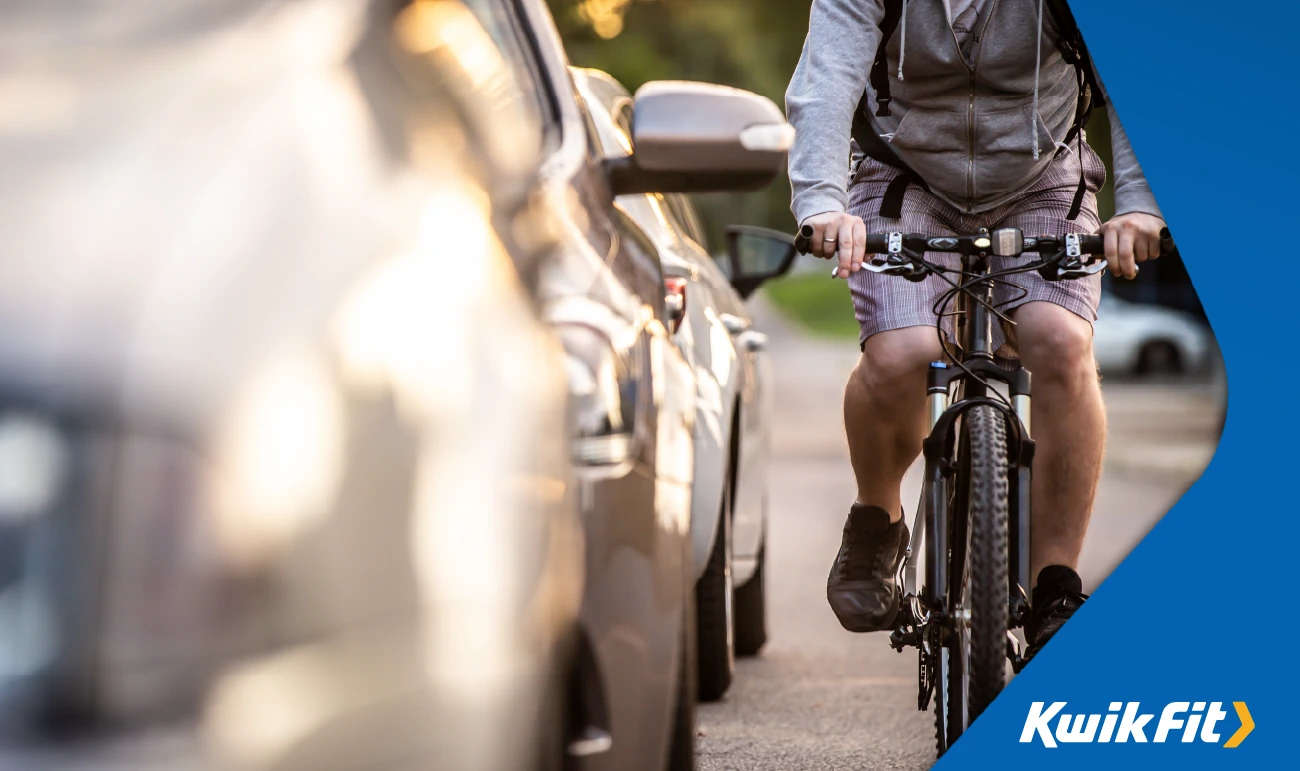
Urban congestion often means crawling traffic, and you may find yourself stuck behind slower vehicles with the temptation to weave forward. Again, in these conditions, it’s essential to be mindful of more vulnerable road users — particularly cyclists, motorcyclists, and pedestrians — as they may be filtering through traffic or crossing unexpectedly.
Resist the urge to move between lanes or use the pavement to get around traffic. Not only is this illegal, but it also increases the risk of collisions in tightly packed environments. Keep scanning your mirrors for filtering motorbikes and ensure you leave enough space for others to manoeuvre safely. In these instances, patience is absolutely a virtue.
When overtaking is never safe
There are some road scenarios where overtaking simply shouldn’t be attempted.
- Attempting to pass another vehicle on a bend, near the crest of a hill, or at a junction, for example, is not only dangerous – it’s often actually illegal. The Highway Code outlines clear restrictions, particularly where road markings indicate that overtaking isn’t permitted.
- Solid white lines along the centre of the road generally mean overtaking is prohibited. You should also avoid overtaking near pedestrian crossings, school zones, and areas with limited visibility (such as due to parked cars or hedgerows).
Even if you're in a rush, remember that a few seconds gained isn't worth the risk of a serious accident or a fine!
Take extra car in poor weather or low light
Bad weather and darkness significantly reduce your ability to judge distances and see hazards. Wet roads increase stopping distances, fog limits visibility, and night-time driving usually demands greater focus and sharper reactions.
In such conditions, it's wise to avoid overtaking unless absolutely necessary. It also helps to make sure your headlights are properly adjusted – dipped beams should be used in low light, while full beams must be dipped when other vehicles approach. It’s usually advised to allow for longer following distances, as your ability to slow down safely tends to be reduced in poor weather, especially if your tyres or brakes aren’t performing at their best.
If you haven’t had your vehicle checked recently, this is a good time to book a free brake check or have your tyres inspected for tread depth and pressure.
The key takeaway when it comes to overtaking safely
Overtaking can be a useful and efficient way to maintain traffic flow, but it demands judgment, patience, and full awareness of your surroundings. Whether you're overtaking a cyclist, horse rider, or heavy goods vehicle, the rules remain the same: wait until it’s safe, allow plenty of space, and never rush the decision.
But of course, no amount of caution behind the wheel can compensate for a car that’s not mechanically sound. Worn tyres, faulty brakes, or weak headlights all compromise your ability to overtake safely as well as, more broadly, driving in general.
So opt for regular vehicle checks and servicing with the experts at your local Kwik Fit centre — they’re always on hand to make sure everything from your brakes to your steering are in ship shape!