
10 Safety Components Most Cyclists Forget To Check
Jessica Bird | Saturday 16th May 2026 10:55am
Most cyclists have a pre-ride routine, even if you don’t think of it that way. You might squeeze the brakes, glance at the tyres, maybe give the chain a quick look, and then you’re off. And, most of the time, that’s enough to get you rolling.
However, bikes are clever systems. Every part is connected to something else and, as a result of this, a small issue in one place can quickly start affecting how the whole bike feels. A loose spoke, for example, can throw out a wheel, a worn chain can make your gears slip, and a tired brake pad can turn a gentle stop into a slightly panicked one.
So, before your next ride (and especially your next long ride), it’s worth taking a few extra minutes to check the bits that don’t always get the attention they deserve. Here are 10 safety components cyclists often forget to check, and why they matter.
1. Brake pads
You’ll probably notice if your brakes stop working completely, but brake pads rarely fail all at once. Instead, they wear down gradually, which means you can get used to weaker braking without realising it.
Take a close look at the pads themselves. If the grooves have almost disappeared, they’re probably due a change. It’s also worth checking that they meet the rim or disc cleanly, rather than rubbing at an odd angle. In order for your brakes to do their job properly, the pads need to be both thick enough and correctly positioned.
2. Brake cables and hoses
Once you’ve checked the pads, follow the braking system a little further. The cables (or hydraulic hoses) are what transfer the pressure from your hands to the brakes, so they’re just as important as the parts actually doing the stopping.
If you’ve got cable brakes, look for fraying, rust, or stiffness when you pull the lever. If you’ve got hydraulic brakes, watch out for leaks, cracks, or a spongy feeling. In either case, if something feels soft, sticky, or unpredictable, then it’s worth getting it looked at before your next ride.
3. Tyre sidewalls
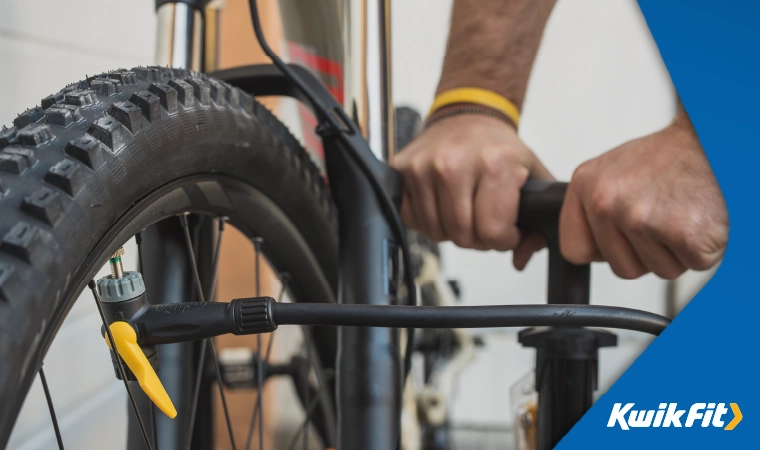
Tyre pressure is usually the first thing we think about, and rightly so. But the sidewalls, which are the sides of your tyres, can tell you just as much about their condition.
Cracks, bulges, or cuts in the sidewall can mean the tyre is weakened, even if the tread still looks fine. As a result of this, a tyre that seems perfectly usable from above might actually be more vulnerable to a puncture or blowout. Give both tyres a slow spin and check the whole way round. It only takes a moment, and it’s much easier than dealing with a flat halfway through your ride.
4. Wheel spokes
From the tyres, move inwards to the spokes. They might look simple, but they’re doing a lot of work. Spokes keep your wheel strong, balanced, and true, which basically means they help it spin straight.
A loose or broken spoke can cause the wheel to wobble, and once that happens, you might notice rubbing, shaky handling, or less reliable braking. To check them, gently squeeze neighbouring spokes together and see if any feel much looser than the rest. If they do, then your wheel may need attention before the problem gets worse.
5. Quick-release levers and thru-axles
While you’re looking at the wheels, it’s also worth checking how they’re attached. This is another one of those things that sounds obvious, but it’s surprisingly easy to miss, especially if you’ve recently fixed a puncture, removed a wheel, or put your bike in the car.
Quick-release levers should close firmly, and thru-axles should be tightened correctly. If either wheel feels even slightly loose, don’t ride until it’s sorted. In order for your bike to handle safely, the wheels need to be properly secured to the frame and fork.
6. Headset
Next, let’s move up to the front of the bike. The headset is the part that lets your handlebars and front fork turn smoothly. You don’t see much of it, so it’s not exactly front of mind, but you’ll definitely notice when it’s not right.
To test it, apply the front brake and gently rock the bike backwards and forwards. If you feel a knock near the handlebars, there may be unwanted movement in the headset. If the steering feels stiff, gritty, or notchy, that can be a sign it needs servicing.
7. Handlebar grips or bar tape
Since we’re already at the handlebars, check the parts your hands actually hold. Grips and bar tape can wear slowly, and because you touch them every time you ride, it’s easy to stop noticing how tired they’ve become.
If grips twist, slip, or feel smooth and shiny, they may not give you enough control in wet weather. Likewise, if bar tape is loose, torn, or unravelled, it can be uncomfortable and distracting. Replacing worn grips or tape isn’t just about making the bike look nicer, but can help you feel more secure and in control in general.
8. Pedals
Now move down to your feet. Pedals take a fair beating on every single ride, but they often get ignored until they start creaking. Give each one a quick spin by hand and check that it moves smoothly without grinding or wobbling. If you’re hearing any grinding or the pedal’s sticking at any point, try giving it a bit of a clean and some lubricant.
You should also look at the surface your shoe rests on. If the grip has worn down, your foot can slip, particularly in the rain or if you’re setting off quickly at a junction. In order for your power to transfer safely through the bike, your feet need a stable, grippy place to sit.
9. Chain wear
A noisy chain is easy to spot, but a worn chain can be harder to notice. Over time, chains stretch – and, once they do, they can cause extra wear to your cassette and chainrings too.
That matters because your chain is what keeps the bike moving smoothly. If it’s worn, dry, or dirty, you might notice slipping, rough gear changes, or a jumpy feeling when you pedal hard. As a result of this, keeping your chain clean, lubricated, and replaced when needed can make the whole bike feel better, not just quieter.
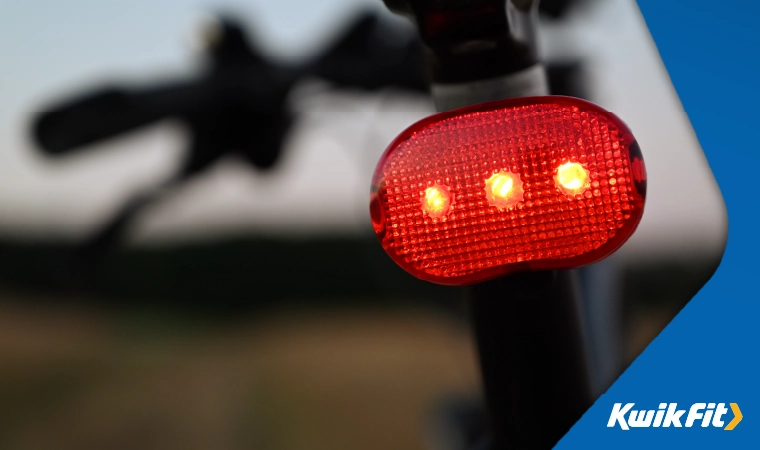
10. Lights and reflectors
Finally, before you head out, check how visible you are. Lights and reflectors are easy to forget when you’re riding in daylight, but British weather has a habit of changing its mind quickly - and it can get gloomy fast.
Make sure your lights are charged, bright, and securely attached. Give your reflectors a wipe, too, especially if your bike has been through rain, mud, or winter roads. Even when you can see perfectly well, the real goal is making sure drivers, pedestrians, and other cyclists can see you clearly.
A smoother, safer ride starts with the small stuff
None of these checks needs to take long, and that’s the point. You don’t have to become a bike mechanic to look after your bike well - you just need to know which small parts are worth keeping an eye on.
And, if something doesn’t feel right, you don’t have to guess. We’ve teamed up with bike experts Fettle to offer bicycle servicing and maintenance directly in selected Kwik Fit centres. So, whether your brakes are feeling soft, your gears are skipping, your tyres have seen better days, or you’d simply like someone to give your whole bike a proper once-over, help is always at hand.


Any facts, figures and prices shown in our blog articles are correct at time of publication.
Featured Articles
Is it Illegal to Drive With One Headlight?
Saturday 19th July 2025
Wondering if it’s illegal to drive with one headlight? Learn about the safety risks and penalties of illegal blown bulbs and why you should fix them promptly.
Air Con in EVs & Hybrids: Experts Answer Your Questions
Monday 30th June 2025
Does air con drain EV batteries? Can you use the air con while charging an electric car? Find out the answers to these questions & more from Kwik Fit’s experts.
Why Is Your Car Making a Noise? Fixes & Tips
Friday 13th June 2025
When your car starts making unexpected noises, it can certainly be quite disconcerting; it may be nothing to worry about, but here’s what you need to know.