
A Comprehensive Guide to Car Bulb Types
Jessica Bird | Thursday 23rd October 2025 11:31am

From headlights to brake lights, every bulb on your car plays a vital role in keeping you visible and safe. Proper lighting ensures that you can see clearly, be seen by other drivers, and signal your intentions on the road, especially in poor weather or low-light conditions.
Faulty or dim lights don’t just put you at risk; they can also lead to an MOT failure or even a police fine if your vehicle is deemed unsafe. That’s why understanding the different types of automotive bulbs (and knowing how to maintain them) is an essential part of responsible car ownership.
What type of bulbs does my car use?
Most vehicles use several types of bulbs across various systems: from headlights and indicators to brake lights, fog lights, and number-plate lamps.
How to find what bulbs your car uses
- Your owner’s manual: The easiest way to confirm your bulb type.
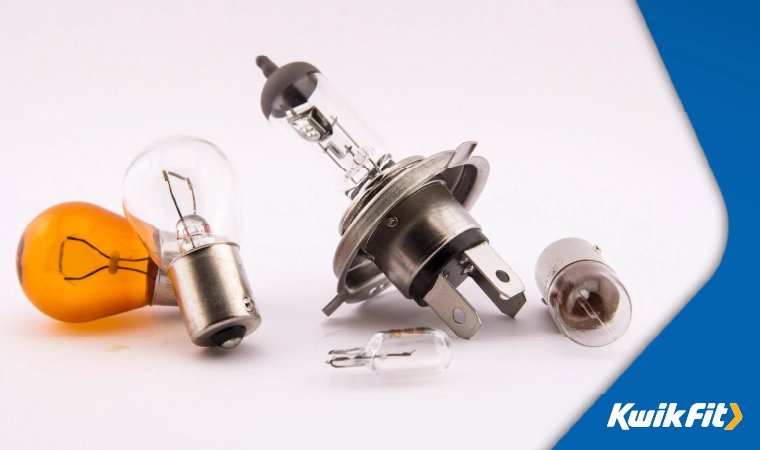
- Existing bulb markings: Most bulbs have printed codes, such as H1, H4, H7, or W5W/501.
- Ask a technician: If you’re unsure, a Kwik Fit expert can quickly identify your bulb type and fit a replacement while you wait.
Common bulb locations
- Headlights: Dipped beam and main beam for forward visibility.
- Indicators: Front, rear, and side repeaters to signal direction.
- Brake and tail lights: Essential for alerting drivers behind.
- Fog lights: Improve visibility in adverse weather.
- Daytime running lights (DRLs): Increase your visibility to other road users during daylight.
- Number plate and interior bulbs: Ensure compliance and convenience.
The different types of automotive bulbs
There are three main types of automotive bulbs in use today: halogen, xenon (HID), and LED. Each offers distinct advantages depending on your vehicle and driving needs.
Halogen bulbs
How they work: Halogen bulbs use a tungsten filament enclosed in halogen gas. When electricity passes through the filament, it heats up and produces light.
Pros:
- Affordable and widely available.
- Easy to replace at home.
- Provide adequate brightness for everyday driving.
Cons:
- Shorter lifespan (around 450–1,000 hours).
- Produce more heat and consume more energy.
- Emit a warmer, yellow-toned light.
Best for: Standard vehicles and drivers seeking a cost-effective, direct replacement option.
Xenon or HID (High-Intensity Discharge) bulbs
How they work: Instead of a filament, HID bulbs create an electrical arc between two electrodes inside a xenon gas-filled tube. This arc produces a very bright, white-blue light.
Pros:
- These bulbs are much brighter and whiter than halogen bulbs.
- This product offers a longer range of illumination, improving night visibility.
- These bulbs last two to three times longer than halogen bulbs.
Cons:
- More expensive to replace.
- Take a few seconds to reach full brightness.
- A ballast system is required to operate, which adds complexity.
Legal note: Aftermarket HID conversion kits are often not road-legal unless they meet UK type-approval standards and include proper beam alignment. Always consult a technician before fitting HID systems.
LED (Light-Emitting Diode) bulbs
How they work: LED bulbs use semiconductors to produce light efficiently, with minimal heat output.
Pros:
- Exceptionally long lifespan (up to 25,000 hours or more).
- Energy-efficient and emits a bright, clear light instantly.
- Compact and durable with excellent vibration resistance.
Cons:
- It can cause dashboard “bulb out” warnings without a compatible CAN bus system.
- Some retrofit LED bulbs are not road-legal unless specifically type-approved.
- Typically more expensive initially, though cheaper long-term.
Best for: Modern vehicles designed for LED lighting, or approved replacements that meet E-marking and UK standards.
A comparison: Halogen vs Xenon vs LED
| Feature | Halogen | Xenon | LED |
|---|---|---|---|
| Brightness: | Medium | Very High | High |
| Colour Temperature: | Warm (~3000K) |
Cool (4,300 - 6,000K) |
Cool (4,000 - 6,000K+) |
| Lifespan: | Short | Medium | Long |
| Energy efficiency: | Low | Medium | High |
| Cost: | £ | ££ | ££-£££ |
| Retrofit considerations: | Simple | Complex | Check approval |
| Road legality: | Always legal when fitted to the correct headlamp unit. | Legal if your car was built for them (factory-fitted or approved upgrade). | Legal if your car was built for them. Be aware: some aftermarket LED bulbs are not road-legal. |
Signs your bulbs need replacing
Even the most reliable bulbs wear out over time. Look out for these warning signs:
- Dim or flickering lights: Indicates an ageing filament or electrical issue.
- Discolouration: Xenon bulbs turning pink or blue usually means they’re nearing the end of life.
- Dashboard warning lights: Modern cars often alert you when a bulb fails.
- Darkened or cloudy glass: A common sign of halogen bulb fatigue.
A quick check you can do at home
- Park on a flat surface and turn on your headlights.
- Check your lights’ reflections on a nearby wall or garage door.
- Ask a friend to stand behind your car and confirm the brake and indicator lights are working.
If any light isn’t functioning or appears dim, it’s time to replace it.
UK legal requirements and MOT implications
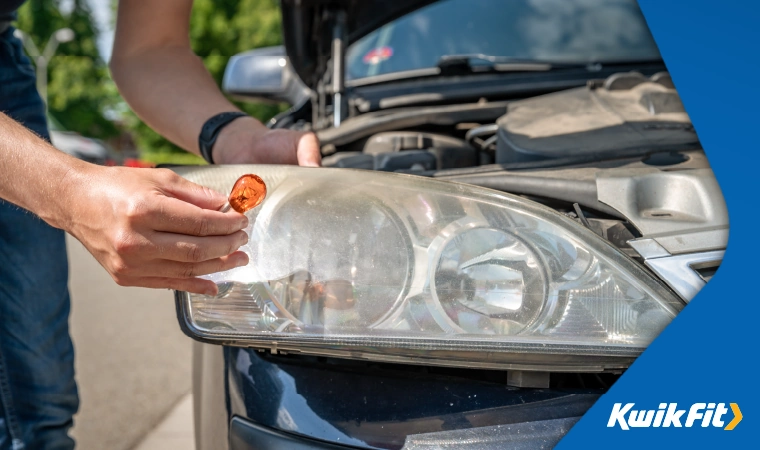
Under current UK rules, driving with a blown or faulty light is illegal, and could lead to a fine or fixed penalty notice. Beyond the legal aspect, it’s a serious safety hazard - especially in low-visibility conditions.
MOT lighting rules
During your MOT, all mandatory lights are inspected. A vehicle can fail its MOT for any of the following reasons:
- Inoperative or missing bulbs.
- Incorrect colour (for example, white indicators).
- Misaligned headlight beams.
- Damaged lenses affecting the output or beam pattern.
For the most up-to-date details, you can review the UK government’s MOT inspection manual.
To avoid a failure, it’s wise to perform regular lighting checks, or include a bulb inspection as part of your pre-MOT checks.
Replacing your own car bulbs
First, you need to decide if you’re going to go down the DIY or professional fitting route. While halogen bulbs are usually simple to replace, HID and LED systems are more complex. Many modern cars have tightly packed engine bays that make bulb access difficult.
DIY replacement tips
- Always switch off the ignition before replacing any bulb.
- Wear gloves when handling halogen bulbs, as skin oils can cause hot spots and shorten lifespan.
- Replace bulbs in pairs to maintain balanced light output.
Professional fitting
Our Kwik Fit technicians can replace most bulbs quickly while you wait. For complex HID or LED units, professional fitting ensures the correct installation, beam alignment, and legal compliance.
Preventing bulb problems
Regular maintenance can help you avoid premature bulb failure and improve visibility year-round:
- Clean your headlight lenses regularly to remove grime or oxidation.
- Inspect your lights monthly, especially before long journeys or MOT tests.
- Avoid cheap, unapproved bulbs that may not meet safety standards.
- Drive smoothly: Excessive vibration can shorten bulb life, particularly in halogen units.
- Keep electrical connections clean and secure to prevent flickering or intermittent faults.
- Make sure your car is professionally serviced regularly.
Let Kwik Fit help you fit the correct bulbs
Choosing the right car bulb can be confusing. Different technologies, fittings, and legal requirements mean it’s not always obvious which one is safe or road-legal for your vehicle. Get in contact with the team at Kwik Fit who will be happy to help.
Our expert technicians will:
- Identify the exact replacement bulb type your car requires using manufacturer data.
- Fit approved, road-legal bulbs that match your vehicle’s lighting system.
- Ensure your headlight alignment is correct to avoid dazzling other drivers.
- Advise you on safe upgrade options, including LED and xenon bulbs that are certified for UK road use.
So, whether you need a quick bulb replacement or want to upgrade to a newer lighting technology, find your local Kwik Fit centre. You’ll leave knowing your car is road-ready and MOT-compliant, with the right bulbs fitted by professionals.


Any facts, figures and prices shown in our blog articles are correct at time of publication.
Featured Articles
Is it Illegal to Drive With One Headlight?
Saturday 19th July 2025
Wondering if it’s illegal to drive with one headlight? Learn about the safety risks and penalties of illegal blown bulbs and why you should fix them promptly.
Air Con in EVs & Hybrids: Experts Answer Your Questions
Monday 30th June 2025
Does air con drain EV batteries? Can you use the air con while charging an electric car? Find out the answers to these questions & more from Kwik Fit’s experts.
Why Is Your Car Making a Noise? Fixes & Tips
Friday 13th June 2025

When your car starts making unexpected noises, it can certainly be quite disconcerting; it may be nothing to worry about, but here’s what you need to know.