
Are Smart Tyres Coming To The UK Market?
Jessica Bird | Friday 7th August 2026 12:09pm

You’ve probably seen the word "smart" attached to just about everything by now - from doorbells to fridges. So, it was only a matter of time before it reached the tyres keeping you and your car on the road.
If you’ve been wondering whether your next set of tyres is going to talk back to you, as strange as that might have been a few decades ago, the honest answer is more interesting than a straight yes or no.
Here is the thing most articles skate over: a version of the smart tyre is already here, hidden inside tyres being made right now. What is still to come is a much bigger, more connected idea of what a tyre can do, and what we can expect from our tyres in the future.
What does a "smart tyre" actually mean?
The trouble with the term “smart tyre” is that it covers different things, and they get lumped together in a way that can muddy the water for drivers.
1. RFIDs
The first main definition is a tyre with a small radio-frequency identification chip (RFID), installed into the rubber during the manufacturing process.
- When a scanner is held near it, the chip activates and hands over a unique ID number, a bit like a barcode you cannot see or peel off.
- Michelin, Continental, Bridgestone, and the other big names have been embedding these for years, and the tyre carries its identity from the factory floor all the way through to the recycling yard.
2. Tyres with tech
The second kind is what most people picture when they hear "smart tyre," and it is the more modern tech version.
- These have actual sensors built into a conductive layer of rubber, constantly measuring inflation pressure, tread depth, and the temperature of both the tyre and the road surface underneath it.
- Continental's concept ContiSense technology, for instance, is designed to flag dangerously low tread and can spot the moment a nail or piece of road debris punctures the tyre, sending an almost real-time alert rather than leaving you to find out the hard way on the motorway.
- Manufacturers are also exploring how to connect smart tyre tech with in-vehicle dashboards, which could help with real-time alerts of problems or driver assistance functions.
So, when someone asks whether smart tyres are coming, the useful reply is: which kind do you mean? One is already sitting in your local tyre bay, whether you realise it or not. The other is on its way, but it is taking the scenic route.
The RFID chip is already here, and regulation is why
The real force pushing smart tyres into the mainstream comes down to paperwork more than anything drivers are actually asking for.
The European Union is rolling out something called the Digital Product Passport. This scheme gives certain products a permanent digital record covering where they were made, what they are made of, and how they should be recycled.
The specific rules for the tyre sector are pencilled in for adoption around 2027. An RFID chip is the neat, tamper-proof way of linking a physical tyre to a digital record, which is why manufacturers have already begun fitting them as standard.
Now, while Britain is no longer part of the EU, tyres are a global product, so your new batch of tyres will probably contain RFID chips. In practice, if the tyres sold across the Channel carry RFID, the ones fitted at a Kwik Fit centre almost certainly will too.
For the moment, that chip does very little for you personally. Its job is really to help the shop keep track of stock and let fleets manage hundreds of tyres at once, and further down the line it should make recycling a cleaner business.
What it will not do quite yet is tell you your tread is getting low, so for that you are still leaning on the system your car already has.
Future MOTs & smart tyre data
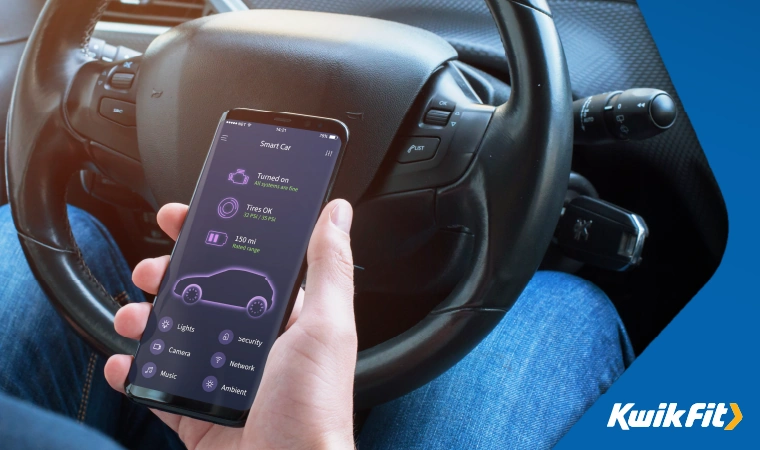
Your car very likely already has a form of tyre monitoring, and it has done for a while. The Tyre Pressure Monitoring System, or TPMS, became mandatory on all new passenger cars sold in the UK in 2014, and in 2015, it became part of the MOT.
If the TPMS warning light is glowing on your dashboard because the system has failed, that is an instant MOT failure rather than a mild advisory. So, the idea of tyres feeding safety data into a test isn’t some distant frontier: it is already happening.
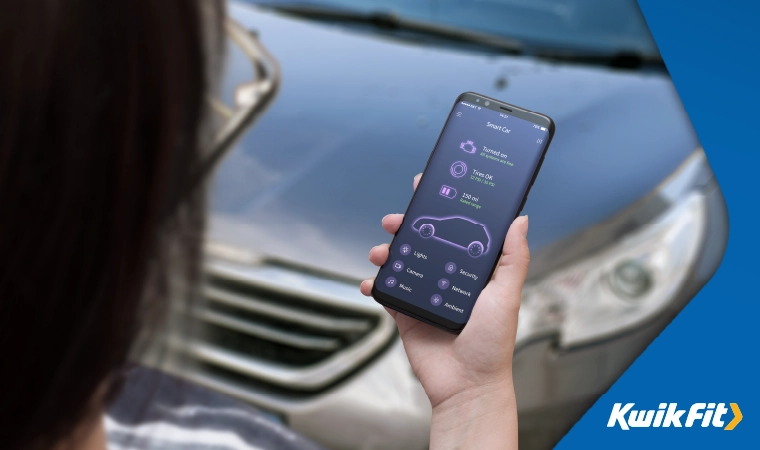
What the newer sensor-embedded tyres promise is a rich stream of information rather than a simple pressure warning. Rather than just knowing a tyre is under-inflated, the car could know exactly which tyre is losing air, how fast, how worn the tread has become, and whether the rubber is running hot.
Could a future MOT lean on smart tyre sensors the way it now leans on TPMS? It is plausible, and quite likely, though nobody should expect it soon. The current sensor tyres are expensive; they are rarely fitted to the average family hatchback, and the DVSA is not about to build a test around technology that hasn’t been widely adopted yet.
TPMS took years to travel from "fitted to new cars" to "part of the MOT," and the same journey applies here.
What do smart tyres mean for drivers like you?
If you are buying tyres today, some of them already carry an RFID chip, and it changes nothing about how you drive or what you pay. You will not notice it, and you do not need to. The clever sensor tyres that monitor tread and temperature in real time are real, they work, and Continental and others are selling versions of them, but they are not yet a mass-market option.
Human tyre checks are crucial
The far more important point is the one that has been true for years and will stay true no matter how clever tyres get. Your tyres are the only part of your car actually touching the road, and a chip in the rubber is no substitute for a proper look at tread, pressure and condition.
Whether or not your next set can phone home or audibly warn you of punctures, a set of eyes and a tread gauge still catches the things that matter.
Booking a free tyre check remains the most reliable way to know your tyres are safe and legal, and it will stay that way long after the word "smart" has stopped feeling novel.


Any facts, figures and prices shown in our blog articles are correct at time of publication.
Featured Articles
Is it Illegal to Drive With One Headlight?
Saturday 19th July 2025
Wondering if it’s illegal to drive with one headlight? Learn about the safety risks and penalties of illegal blown bulbs and why you should fix them promptly.
Air Con in EVs & Hybrids: Experts Answer Your Questions
Monday 30th June 2025

Does air con drain EV batteries? Can you use the air con while charging an electric car? Find out the answers to these questions & more from Kwik Fit’s experts.
Why Is Your Car Making a Noise? Fixes & Tips
Friday 13th June 2025

When your car starts making unexpected noises, it can certainly be quite disconcerting; it may be nothing to worry about, but here’s what you need to know.