
Is It Safe To Drive In A Storm?
Jessica Bird | Sunday 2nd November 2025 10:50am
Sometimes, looking at the weather outside the window isn’t enough to go on – and a red exclamation mark on the weather report doesn’t change the fact that you still have to get to work or drop the kids off at school. But let’s say a storm catches you off guard; is it ever safe to drive in, and are there instances where it’s unsafe?
Let’s look at some of the preparations you can make, how storms can damage your car, and the dangers which can arise from storms (all of which are especially important when considering that storms seem to be more frequent each year).
Is it safe to drive in a storm?
The short answer here is that, no, it’s not really “safe” to drive during a storm – you should always be wary of doing so. But there’s quite a wide margin of storm severity. So, for the most part, you can tell how safe a storm is to drive in with a bit of common sense: the more severe the storm, the less safe it is to drive in because the more chances there are for unexpected hazards to occur.
- If it looks like a storm’s brewing, you should always check weather reports to see how severe a storm is, as the beginnings of a storm don’t always necessarily reflect how severe it’s going to get. And different areas of the country will be affected differently depending on the quality of the roads, severity of the storm, remoteness, and terrain.
- If you live in an area which frequently floods, or somewhere with muddy and/or steep roads, then you will likely have far more problems to face than those who live in a well-connected city with access to services.
- Regardless of where you live, however, wet weather in general can present plenty of problems to a driver. Now, add high wind speeds, excessive downpours, cold, and prolonged weather damage to infrastructure, and you’ve got quite the collection of nasty threats to both driver and car.
- Make sure to keep up with any news of damage to infrastructure, services, or communications.
The following hazards are just a handful of factors that you should account for if you need to travel in a storm:
Reduced visibility
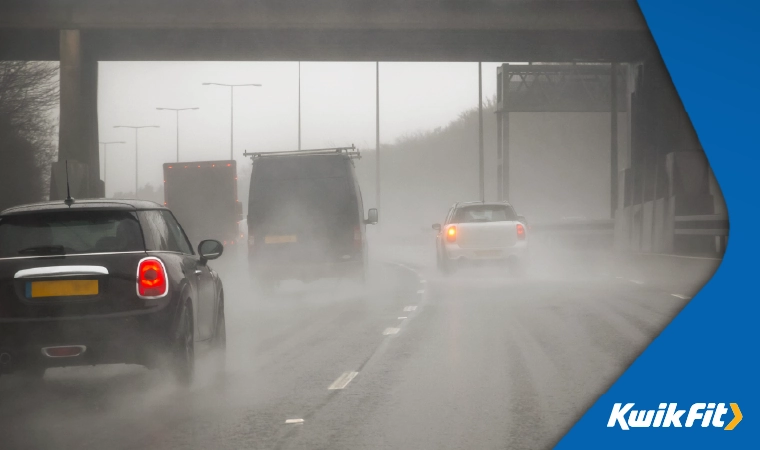
It might seem obvious that heavy rain reduces visibility. However, other things to consider are heavy splashes from other vehicles and mud being kicked up from your own and other drivers’ wheels. Windscreen wipers may struggle to remove these kinds of thicker residues from windows or can spread them across the screen, making it hard to see the road ahead.
And this spray can be problematic even after a storm, before the roads have had a chance to dry out properly.
- Make sure to check your windscreen wipers to see if they are working properly. Inspect the blades, give them a test run, and make sure there is screenwash in the reservoir. You may not feel you’ll need it if “the rain will wash it off anyway”, but mud and other residues often need the degreasing of window cleaner to be properly removed.
- You should also check your wipers regularly for signs that they may be broken, which would be indicated by things such as juddering, streaks, or reduced contact with the screen. If you’re experiencing any of these, get them replaced.
- Also, make sure to turn on your dipped headlights and to make sure they are working properly.
Puddles and potholes
After prolonged rain, potholes can quickly fill with water, or roads can be completely covered in a layer of water, which obscures the depth of the holes. Driving through these too quickly can cause punctures, bulged tyres and wheel damage. Potholes can be damaging at the best of times, so be sure to watch your speed when the roads are waterlogged.
- If you notice any damage to your tyres or suspension, you will need to get it fixed as soon as possible, and you should not travel in wet weather if you suspect your wheels may be overly worn.
Slipping and stopping
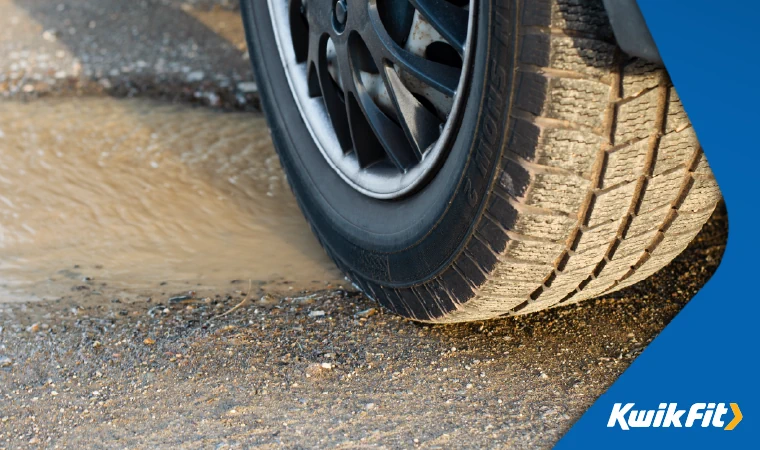
Wet surfaces, especially paired with ice, can be a danger to you, other drivers, other road users, and pedestrians. Stopping distances drastically increase when there’s not enough grip on the road. Unfortunately, this isn’t just down to you or your skill as a driver; it relies upon how other drivers act too, and, if other road users are going too fast or recklessly, there’s an increased chance of collisions and other accidents. Corners, stops, junctions, hills, bridges, and other trickier areas on the road are hot spots for accidents.
- It’s important to make sure you have appropriate tread depth and to check your tyre health and age. Different types of tyres are better suited for different types of weather, and depending on the time of year and your location, you may need to consider getting a different set of tyres.
Flooding and breaking down
Areas that are prone to flooding can often have level indicators to show how deep the water actually is. But, during unprecedented rainfall and storms, these may be inaccurate – and many areas that don’t usually flood won’t have any markers at all.
- So it’s important to slow right down when driving through water, and keep in mind that water on fords (rivers that cross roads) may be higher than you think. Not only do you risk damaging your wheels or suspension elements by wading into too-deep water, but there is a chance that your engine could become waterlogged and fail completely.
Falling objects and roadblocks
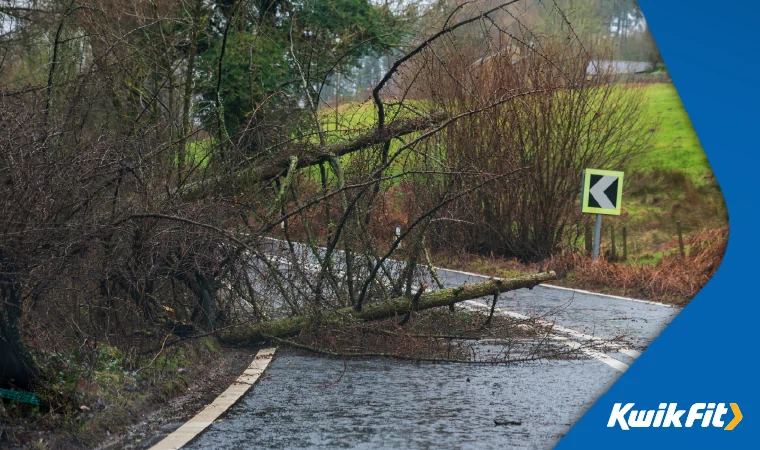
Aside from problems with floods and lower grip on wet roads, the other main danger is from falling objects and roadblocks. Horror stories crop up on the news and social media with every storm, but it’s easy to push them aside as sensationalist rather than actually possible.
But the worst doesn’t have to happen for something dangerous to take place. Roads can easily become blocked, power can be cut out, services may be reduced, and communications often become difficult. In the best case, this can just result in a bit of a delay, but it’s usually not worth the risk.
- It’s always best to keep your phone charged with your charger in your car, pack emergency essentials, and check the news and weather reports.
- Most navigation apps and devices have regular updates, which can inform you of fallen debris and obstructions
Lighting
Most people know not to stand beneath a tree during a lightning storm, but not many people realise that being inside your car is the safest option during a storm (other than being in your house). Cars have a metal frame and rubber wheels which allow lightning to pass through the vehicle without harming the passengers.
- If you’re driving and a lightning storm starts overhead, make sure that the windows are up and all passengers are inside until the lightning passes.
General damage and breaks
Along with mud being kicked up, there are small stones, branches, and general debris being thrown by the wind and hidden bumps, rocks, holes, and other hard objects in the road. These kinds of obstacles can easily get kicked up by other cars when not directly blown by the wind and lead to cracked screens, punctured tyres, and even broken suspension.
- Remember, keep a firm grip on the wheel, keep your distance from other vehicles and road users, and drive carefully (and slowly!).
Stay safe during stormy weather
So, accounting for all these potential dangers, it’s essential that every part of your vehicle is well maintained and kept in good working order, especially if you are forced to drive during stormy weather.
Driving in lower gears is safer but does use more fuel, so make sure that you’ve filled up before you go and follow a number of tricks to help save money on your fuel usage.
If you would like to check that your car is suitable for driving during storms and difficult weather, why not bring it along to your local Kwik Fit for a free Vehicle Safety Check?
In the meantime, be sure to service your vehicle regularly, replace any faulty parts, and keep on top of the latest driving advice with the Kwik Fit blog. For any further questions, get in touch with our friendly team today.


Any facts, figures and prices shown in our blog articles are correct at time of publication.
Featured Articles
Is it Illegal to Drive With One Headlight?
Saturday 19th July 2025
Wondering if it’s illegal to drive with one headlight? Learn about the safety risks and penalties of illegal blown bulbs and why you should fix them promptly.
Air Con in EVs & Hybrids: Experts Answer Your Questions
Monday 30th June 2025

Does air con drain EV batteries? Can you use the air con while charging an electric car? Find out the answers to these questions & more from Kwik Fit’s experts.
Why Is Your Car Making a Noise? Fixes & Tips
Friday 13th June 2025

When your car starts making unexpected noises, it can certainly be quite disconcerting; it may be nothing to worry about, but here’s what you need to know.