

Parking on Pavements: Everything You Need to Know
Jessica Bird | Saturday 11th October 2025 11:00am
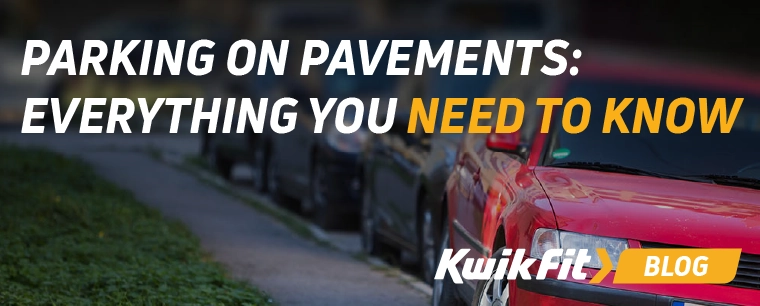
Is it illegal to park on the pavement? Can you park right next to a driveway? What about in London?
Navigating parking rules and regulations can be difficult to keep up with on your own street, let alone understanding the different regulations seen between towns in the UK.
As roads seem to get busier (and potential parking spots feel few and far between), parking on the pavement has become a cause for concern among drivers and local authorities.
Read on for clear guidance on the current laws, whether pavement parking is actually illegal (and in what scenarios), and if the rules are changing anytime soon.
What is the law on parking on pavements in the UK?
Much of the confusion around pavement parking comes from the fact that the rules vary depending on where you are. At present, the law is surprisingly vague; in some areas it’s permitted, while in others it could lead to a fine.
Is it illegal to park on the pavement in London?
Yes, it is illegal to park on the pavement in Greater London. Since 1974, pavement parking has been legally prohibited in the nation’s capital by a special Act of Parliament to reduce congestion, obstruction, and protect pedestrian areas.
Is it illegal to park on the pavement in the rest of England and Wales?
No, it remains largely legal, unless local restrictions are in place. Many local authorities have been granted “Civil Parking Enforcement” (CPE) powers, so motorists can still be fined if parked in a way that doesn’t meet local authority rules, such as:
- Vehicles are parked in contravention of waiting restrictions (e.g. yellow lines).
- A TRO and authorised traffic signs/bay markings clearly state it is not allowed, or the vehicle parked is classified as a ‘heavy commercial vehicle’ over 7.5 tonnes.
Is it illegal to park on the pavement in Scotland?
Yes. As of 11 December 2023, the Transport (Scotland) Act 2019 made pavement parking illegal throughout Scotland and offenders can receive a £100 fine. Limited exemptions exist for emergency services, roadworks, or unavoidable deliveries.
Are there going to be new rules?
As of September 2025, the Pavement Parking Bill passed its first reading in the House of Commons. If it becomes law, it will give English councils the power to prohibit pavement parking by default, similar to the existing systems in London and Scotland.
Until then, if there’s no signage or restriction in your area, you won’t automatically be fined for parking partially on a pavement, but that doesn’t always mean it’s acceptable.
What is classed as illegal parking?
Even where pavement parking isn’t specifically banned, you could still be fined under existing laws.
Under the Highways Act 1980, it’s an offence to “unnecessarily obstruct the highway”, and pavements are legally considered part of that highway. So, if your car blocks pedestrians, wheelchair users, or pushchairs, it could be treated as an offence.
In short, even if there aren’t clear signs or markings, you can still be penalised if your car causes inconvenience or danger to others. For a detailed look at how restrictions apply in different areas, see our guide on parking on single or double yellow lines.
Can I park over a dropped curb in the UK?
No. Parking across a dropped kerb counts as obstruction.
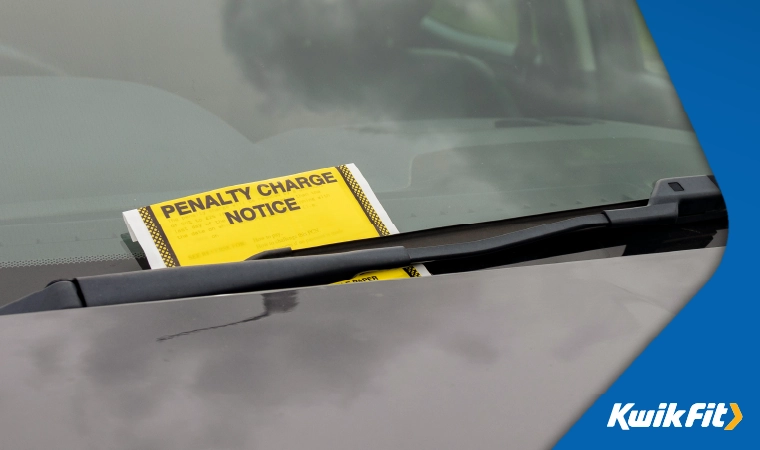
Dropped kerbs allow vehicles to enter driveways and provide easier access for wheelchair users or prams. Blocking one, even partially, can result in a Penalty Charge Notice (PCN) from your local council.
In London, it’s enforced under the Traffic Management Act 2004, while in other regions, councils with CPE powers can issue fines. If the dropped kerb belongs to a private driveway, the homeowner can report it, even if there are no road markings present.
Is it legal to park with a wheel on the pavement?
As covered earlier, pavement parking rules depend on location. In London and Scotland, it’s banned outright, with fines of £70 and £100 respectively. Elsewhere, it isn’t automatically illegal, but you can still be fined if it causes obstruction, breaches a local TRO, or is restricted by signage.
Some narrow residential streets may rely on partial pavement parking to keep roads passable, but always ensure at least 1.5 metres of pavement space is left for pedestrians. If you’re unsure, it’s better to park fully on the road; it’s both safer and easier to justify if questioned.
Is it illegal to park right next to a driveway?
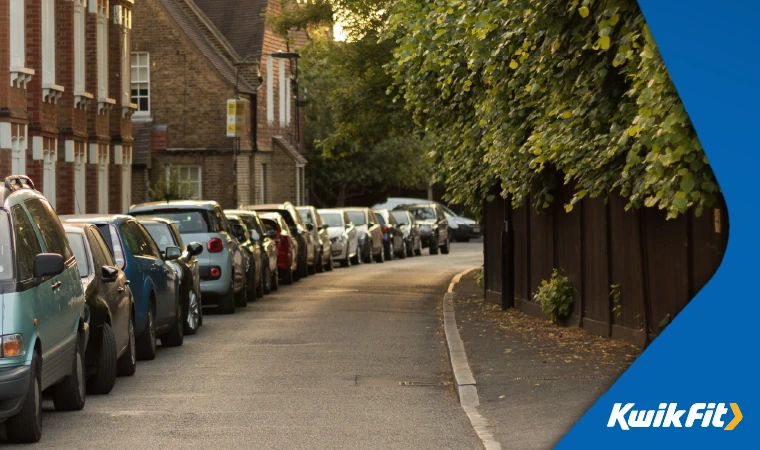
Parking too close to or directly in front of a driveway can also be treated as blocking access, even if you’re not completely preventing entry or exit.
As a rule of thumb, leave at least one car length of space in front of driveways, especially where visibility is limited. If your car prevents residents from safely entering or leaving, you could receive a PCN.
Is parking on the pavement a problem?
Yes, and not just legally.
Even where it’s tolerated, pavement parking can cause difficulties for pedestrians, wheelchair users, and those with pushchairs. When pavements are blocked, people are forced into the road, putting them at risk. It can also damage the surface, leading to costly repairs for local councils.
Until the new laws take full effect, the best rule of thumb is:
Only park on the pavement if absolutely necessary, and always leave enough space for pedestrians to pass safely.
Let's talk about the UK's new pavement parking laws
As of September 2025, pavement parking is:
- Illegal in London and Scotland
- Generally permitted in the rest of the UK, unless signs or local orders say otherwise.
The government’s Pavement Parking Bill is now progressing through Parliament after passing its first reading in the House of Commons on 3rd September 2025. If it becomes law, it will likely:
- Give English councils greater power to issue fines.
- Make pavement parking illegal by default unless clearly signed otherwise.
- Introduce clearer national guidance to replace the patchwork of local rules.
For now, motorists in England should stay alert to changes, particularly if parking habits in their area are affected by upcoming local restrictions.
Keep up with the latest driving news & law changes
At Kwik Fit, we’ve been helping UK motorists stay safe and informed for over 50 years. From changing regulations to everyday maintenance tips, our blogs and guides are designed to help you stay confident behind the wheel.
Explore more of our latest driving advice and motoring law updates over on the Kwik Fit blog, or visit your local Kwik Fit centre for expert support on tyres, servicing, and MOTs.


Any facts, figures and prices shown in our blog articles are correct at time of publication.
Featured Articles
Is it Illegal to Drive With One Headlight?
Saturday 19th July 2025

Wondering if it’s illegal to drive with one headlight? Learn about the safety risks and penalties of illegal blown bulbs and why you should fix them promptly.
Air Con in EVs & Hybrids: Experts Answer Your Questions
Monday 30th June 2025

Does air con drain EV batteries? Can you use the air con while charging an electric car? Find out the answers to these questions & more from Kwik Fit’s experts.
Why Is Your Car Making a Noise? Fixes & Tips
Friday 13th June 2025

When your car starts making unexpected noises, it can certainly be quite disconcerting; it may be nothing to worry about, but here’s what you need to know.