
Why Modern EVs Are Failing MOTs At Year Three
Jessica Bird | Tuesday 6th October 2026 9:58am
Ask any electric vehicle (EV) owner whether they’re worried about their first MOT, and they’ll likely be relaxed about the process. After all, with no exhaust, no oil changes, and fewer moving parts to worry about, what could go wrong on the first check?
Quite a lot, as it turns out. DVSA data from 2025 paints an awkward picture of MOT compliance for several well-known electric models, and the reasons might not be what you expect.
Five of the ten cars with the worst first-time MOT pass rates that year were electric. The Mercedes-Benz EQC came in at the top with a 17.2% failure rate. So, roughly 1 in every 6 that rolled up to a testing bay for the first time drove away without a clean pass.
Tesla's Model Y and Model 3 were both in the worst 10, with failure rates of 14.8% and 14.6%, respectively.
When you lay out thousands of pounds to buy an EV, it’s easy to assume its first MOT would be just a formality. However, there are reasons an EV can fail its MOT that you should be aware of.
So, can electric cars fail an MOT?
EVs need their first MOT at year three, and once every year after that.
While there’s no need for emissions and exhaust checks, EVs still have machinery comparable to traditional vehicles, including brakes, tyres, suspension, lights, steering, seatbelts, and a windscreen - and any of these can go wrong.
'EV's may have fewer moving parts than your standard petrol or diesel vehicle, but that doesn't necessarily mean maintenance free! EV's can, and do fail regularly on key safety components. Generally, an EV has a much longer service interval, meaning the MOT could, be the first time an EV is checked since it left the dealership. It's important to check Tyres, Brakes, Lights regularly to maintain the road-worthiness & safety of your vehicle'
Why are modern EVs failing at year three?
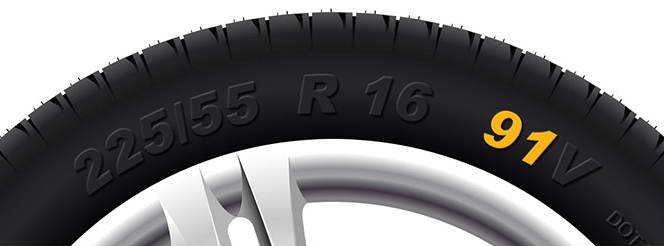
The reason appears to be tyres more than anything else. A 2023 Institute of the Motor Industry report put EVs at 40% more likely to fail on tyre-related issues than petrol cars, and when you think about what an EV actually does to its tyres, you can understand why.
- When you have a battery pack weighing hundreds of kilograms bolted to the car's floor, constantly pressing down, the tyres are the only thing stopping it from hitting the road. Then you pull away from a set of lights and the motor instantly goes, and there’s no waiting for revs to build.
- Over time, this increases tyre wear, with tread, in particular, suffering from the way the EV stop-starts.
- Your EV’s tyre wear might not always show in the way you would expect, either, as EVs can unevenly wear down tyres across the outer edges, and before you realise it, the legal minimum of 1.6mm has been reached.
EV-specific tyres exist for exactly this reason, built with reinforced sidewalls and harder-wearing compounds to cope. But if the car is still on whatever came from the factory three years ago, there is a reasonable chance they are closer to the limit than you think.
'The increased weight versus the average combustion vehicle, instant torque application and lower rolling resistance requirements of EV's, make EV Ready tyres a firm recommendation for our customers looking to replace their current rubber. We recommend a homologated tyre (which has been produced in partnership with the vehicle manufacturer) or an EV-Ready replacement that has the characteristics to cope with an EV's unique demands.'
Brakes: Are they a problem for modern EV MOTs?
You would think brakes on an EV would sail through the MOT. And in one sense they do, because regenerative braking picks up most of the work.
Lift off the accelerator and the electric motor flips into reverse, slowing the car down and feeding energy back into the battery. In some modern EVs, this means brake pads do very little work, so they will last much longer than they would on a petrol car.
However, this is where efficiency is a disadvantage:
- The discs are still bolted to the hubs, still sitting out there in the rain and exposed to road debris.
- Because the pads are not scrubbing against them regularly, they may become dirty and rusty, leading to corrosion or even caliper seizures.
- Calipers that are not being exercised can seize up on their slide pins.
So, while your brake pads are in excellent condition, everything around them could be degrading without you noticing.
To fix this, every few drives, use the brake pedal properly in a safe way, not just resting your foot on it but pushing through firmly enough to build heat and scrub the disc clean.
If your EV is approaching its first MOT, a free brake check can also catch corrosion or decay before the tester does.
Suspension and warning lights
There are other reasons why your new EV might fail its first MOT, one of them being its suspension.
Three to five hundred extra kilos of battery sitting low in the chassis, loaded onto springs, dampers, and bushes every time you clatter through a pothole or bounce over a speed bump, can wreck a suspension, with breakages or issues in joints or springs causing failure.
Suspension in spotlight: Tesla
There are now over 280,000 Teslas on UK roads, with 130,000 of them already having had their first MOT. During these checks, garages are increasingly finding suspension issues across all 4 Tesla models, namely the upper front arm ball joint degradation.
As more models begin to age, recurring problems like this will become even more common at garages across the UK.
Warning lights
There’s also the range of warning lights that you may have ignored on the dashboard that indicate deeper problems with your electric vehicle. If a warning light for any safety-critical system is lit when the car goes in, that alone can cause it to fail. Maybe an airbag light came on six months ago, and you never got round to having it looked at, or an ABS fault hasn’t been checked out. EVs carry more sensors and more electronic systems than older petrol cars, so the chances of a stray warning light impacting your MOT result might be higher.
Do normal garages MOT electric cars?
Any authorised MOT testing centre can test an EV. The DVSA framework is the same, just without the emissions element.
That said, not every garage has the same level of expertise with EVs, and a technician who understands how regenerative braking affects disc condition, for example, or what EV tyre wear patterns look like, is going to give you more valuable advice and will be able to explain why your EV passed or failed more reliably than a garage without enough EV experience.
Does Kwik Fit MOT electric cars?
Yes. Kwik Fit centres carry out electric vehicle MOT testing at over 600 locations across the UK, with technicians trained to high levels for working safely around high-voltage systems.
Some vehicle exclusions may apply, so it is worth checking with your local centre when you book.
You can also combine your MOT with a dedicated EV service in one booking, covering suspension, steering, brakes and the other areas where EVs tend to pick up advisories.
Staying ahead of your EV’s first MOT
The best thing you can do to avoid an MOT failure for common reasons is to check your tyre tread depth and condition regularly.
An electric car MOT is nothing to dread, but it does help to prepare. The cars that fail are overwhelmingly the ones where the owner figured fewer moving parts meant less to think about.
If your EV is coming up on its third birthday, book your electric vehicle MOT at your nearest Kwik Fit centre and get ahead of the test before it gets ahead of you.


Any facts, figures and prices shown in our blog articles are correct at time of publication.
Featured Articles
Is it Illegal to Drive With One Headlight?
Saturday 19th July 2025
Wondering if it’s illegal to drive with one headlight? Learn about the safety risks and penalties of illegal blown bulbs and why you should fix them promptly.
Air Con in EVs & Hybrids: Experts Answer Your Questions
Monday 30th June 2025
Does air con drain EV batteries? Can you use the air con while charging an electric car? Find out the answers to these questions & more from Kwik Fit’s experts.
Why Is Your Car Making a Noise? Fixes & Tips
Friday 13th June 2025

When your car starts making unexpected noises, it can certainly be quite disconcerting; it may be nothing to worry about, but here’s what you need to know.