
A Guide To The Fuel Finder Scheme & Petrol Station Law
Jessica Bird | Friday 10th July 2026 11:10am
Filling up has always come with an element of guesswork. You pull onto a forecourt, glance at the price of petrol or diesel, and hope you're not paying more than the station two miles down the road.
A new government scheme has been introduced to remove that guesswork, and now price changes must be reported within half an hour to the UK Government's Fuel Finder system. Petrol stations have been put on notice not to ignore the rules, or face fines.
This is a guide to the Fuel Finder scheme, the new petrol station law behind it, and what it means for you and the next time you fill up.
What is the Fuel Finder scheme?
The Fuel Finder scheme is a government initiative that requires every petrol station in the UK to share its fuel prices, so drivers can compare petrol prices before they pull in. It went live on 2nd February 2026 under the Motor Fuel Price (Open Data) Regulations 2025.
The idea came from the Competition and Markets Authority (CMA). After studying the fuel market, the regulator found that many drivers were paying more than they needed to for fuel due to weak competition.
Fuel Finder tackles this by making live prices open and easy to compare, then lets competition do the rest. The government estimates it could save the average car-owning household around £40 a year. That might not sound like much, but with surging fuel prices and global uncertainty, any savings can help.
The new petrol station law, explained
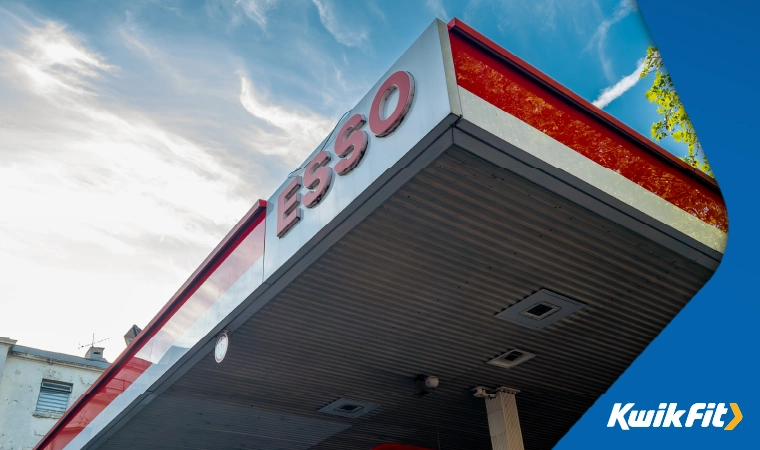
Under the new petrol station law, forecourts have to report any change to their pump prices within 30 minutes of it happening. So, if a station changes its price at 10am, that update needs to be logged by 10:30am. The changes are then fed into a central database and published as open, available data.
This data is what matters: comparison apps, websites, and even some in-car navigation systems pull from these open data feeds to show current prices near you, which may influence your decision about where to top up your tank.
What happens if a station ignores Fuel Finder scheme requirements?
For the first few months, the CMA focused on helping forecourts get set up rather than handing out penalties. That grace period ended on 1st May 2026. Since then, stations that fail to register, or report prices that don't match what's on the pump, can face enforcement action.
For the most serious breaches, fines can reach up to 1% of worldwide turnover.
How to do a fuel price check
You can check fuel prices using free comparison apps and websites that draw on Fuel Finder data. There's no official government app for drivers, yet, so third-party tools are the way to see live prices near you.
To check petrol or diesel prices before you fill up:
- Open a fuel comparison app or website, or your in-car navigation if it supports live pricing.
- Search your postcode or current location.
- Compare nearby forecourts and find the cheapest option along or close to your route.
- Check when the price was last updated, as old timestamps may not reflect current pricing.
A quick check like this takes seconds, but can be well worth it. We all know fuel prices tend to be much higher along motorway routes, so being able to find cheaper options before a journey can save you plenty in the long run.
Why the price at the pump can still differ from Fuel Finder scheme data
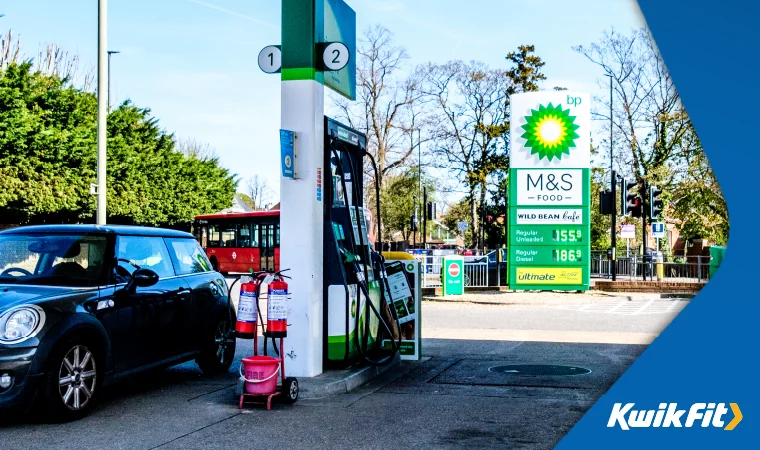
The scheme is a step forward, and a win for fuel cost transparency. However, it is a new programme, and not every petrol station is compliant. In addition, the 30-minute rule is a maximum, so a station can raise its price and still have up to half an hour to log it.
Location plays a part too. Motorway services and remote forecourts often charge more because there's less competition nearby, and on longer journeys, drivers may not have any choice in the matter. The scheme makes the price visible, but it doesn't control what petrol stations charge.
If you notice that the price displayed at a forecourt doesn't match what a live-tracking app shows, you can report the discrepancy through the government's Fuel Finder service.
For more on what drives prices up and down in the first place, check out our guide to the factors that can cause a fuel crisis.
What the Fuel Finder scheme means for you
With live petrol station prices at your fingertips, it's easier to avoid overpaying and to plan where you fill up. Combine that with a few good habits, from economical driving to keeping your car in good shape, and the savings will add up.
The bottom line
The Fuel Finder scheme and the petrol law behind it are designed to put transparent fuel pricing information in drivers' hands, and encourage forecourts to compete. Not every station is playing by the rules yet, so a quick price check before you fill up remains your best move.
A car that runs efficiently uses less fuel, which means a well-maintained vehicle helps your money go further at the pump. If yours is due some attention, book a service or a free vehicle safety check at your local Kwik Fit centre, and let our technicians keep it running at its best.


Any facts, figures and prices shown in our blog articles are correct at time of publication.
Featured Articles
Is it Illegal to Drive With One Headlight?
Saturday 19th July 2025
Wondering if it’s illegal to drive with one headlight? Learn about the safety risks and penalties of illegal blown bulbs and why you should fix them promptly.
Air Con in EVs & Hybrids: Experts Answer Your Questions
Monday 30th June 2025

Does air con drain EV batteries? Can you use the air con while charging an electric car? Find out the answers to these questions & more from Kwik Fit’s experts.
Why Is Your Car Making a Noise? Fixes & Tips
Friday 13th June 2025

When your car starts making unexpected noises, it can certainly be quite disconcerting; it may be nothing to worry about, but here’s what you need to know.