

Automotive Cyber Security Explained: Risks & Habits
Kwik Fit | Tuesday 24th March 2026 10:35am
In the 120-or-so years that cars have been common on the world’s roads, they’ve come a long way. Today’s vehicles are packed with technology that connects them to our phones, our homes, and the wider internet. With everything from remote locking apps to keyless entry and real-time navigation updates, modern cars are designed to make driving easier, safer, and more convenient.
But as vehicles become more connected, they also become part of the digital world – and that means cyber security is starting to matter in ways many drivers may not have considered before.
While cyber attacks on cars are still relatively rare for everyday drivers, the technology that powers connected vehicles does introduce new risks – especially when we imagine how those risks might develop in the future. The good news is that understanding how these systems work (and adopting a few simple habits) can go a long way in helping you stay protected.
So, what exactly are the cyber security risks facing modern vehicles, and what should drivers know? Let’s find out.
Modern cars are more connected than ever
There’s an in-joke in the mechanic world that today’s cars are more like computers on wheels, and it’s not too far from the truth. While relatively complex electronic systems have been part of common domestic vehicles since at least the 90s, many vehicles now contain dozens of electronic systems working together to control everything from braking and steering to navigation and entertainment.
On top of that, cars increasingly connect to the outside world. Smartphone apps allow drivers to check where their car is parked, to lock or unlock the doors remotely, or even to start the engine. Moreover, infotainment systems sync with phones through Bluetooth, and software updates can sometimes be delivered wirelessly without the need to visit a garage.
All of this technology makes driving more convenient. However, every digital connection creates another point that needs to be protected – especially with developments around automated driving.
As a result, manufacturers are investing fairly heavily in vehicle cyber security, but drivers also play an important role in keeping connected features safe.
What dangers does poor cybersecurity pose for your car?
It may be easy to assume that it doesn’t really matter if somebody has access to your car’s smartphone app – after all, why worry if somebody else can see your car’s battery capacity, or see what music you’re listening to, right?
Well, while most of the app functionality in cars is at present relatively harmless, it’s best to assume that app integration will continue to enable more driving functions in the future. It’s not inconceivable, for example, that malicious actors could gain access to your car’s app now, and wait a few years until that app allows for more control before taking any action.
Keyless entry and the rise of relay attacks
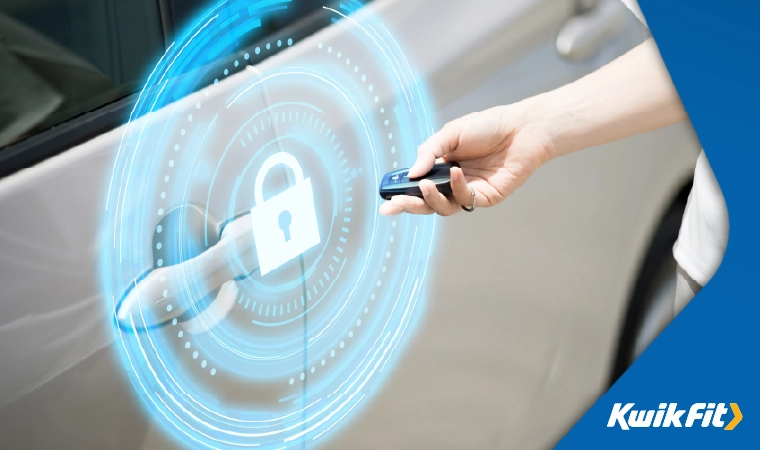
Keyless entry has quickly become one of the most popular features in modern vehicles. Being able to unlock and start your car without taking the key out of your pocket is undeniably convenient. However, it’s also a feature that criminals have learned to exploit.
A technique known as a relay attack has become increasingly well known in recent years. In this scenario, thieves use electronic devices to capture the signal from a key fob inside a home, and relay that signal to the vehicle parked outside. The car believes the key is present and unlocks – even though the owner may still be indoors.
The simplest protection against relay attacks is to put the key fob in a “Faraday Pouch” – which uses a wire grid to block any signals entering or leaving.
While it might sound sophisticated, relay attacks traditionally rely on signal interception rather than hacking the vehicle itself. However, being able to remotely unlock your car from an app now makes a relay attack redundant, if the thief has access to your account.
Wireless connections and digital exposure
Modern vehicles regularly communicate with other devices and networks. Bluetooth, for example, connects phones for music and calls, Wi-Fi enables certain online services, and electric vehicles interact with charging infrastructure whenever they’re plugged in (and often via some wireless networks too). These connections are designed with security in mind, but they still benefit from sensible digital habits.
For example, connecting to unfamiliar public Wi-Fi networks is a risk. If a network isn’t secure, it may be possible for information passing through it to be stolen – which includes things like your passwords or bank details.
Bluetooth connections are another area where small changes can help. Leaving Bluetooth permanently discoverable (especially without any pairing requirements) may allow unknown devices to attempt pairing with your infotainment system.
So, clearing out old paired devices and only connecting to trusted networks can help keep your vehicle’s digital environment cleaner and more secure.
Don't ignore software updates
Software updates might not feel particularly exciting, but they play an important role in keeping modern vehicles secure.
Much like smartphones and laptops, cars rely on complex software that occasionally needs updating. When manufacturers discover bugs or potential vulnerabilities, updates are released to fix them.
Some vehicles can receive these updates automatically, while others may require them to be installed during a service appointment. Either way, staying up to date ensures your vehicle’s systems are running the most secure version available. These updates can also improve system performance, navigation accuracy, and overall reliability.
In other words, that notification asking you to update your vehicle software is worth paying attention to!
Key takeaways
- Modern vehicles function as connected systems, linking to apps, networks and other devices, which introduces new cyber security considerations.
- Cyber threats for everyday drivers remain limited, but risks may grow as connected features expand and gain more control over vehicle functions.
- Keyless entry systems can be exploited through relay attacks, though simple tools like Faraday pouches can reduce this risk.
- Wireless features such as Bluetooth and Wi-Fi create potential entry points, so only connecting to trusted networks and removing unused devices is important.
- Software updates play a key role in fixing vulnerabilities and maintaining security, so they should not be ignored.
- Small, consistent habits can help drivers manage risk and keep connected vehicle features secure.
Keep in the loop with the Kwik Fit Blog
With the automotive world moving faster than ever before, it pays to stay in the loop. The best way to do so is to dive into our blog – where you’ll be able to learn about everything from how engines work to what’s the latest in car tech.
And, if you need any help with your car, the experts at your local Kwik Fit centre are always on hand to help.


Any facts, figures and prices shown in our blog articles are correct at time of publication.
Featured Articles
Is it Illegal to Drive With One Headlight?
Saturday 19th July 2025
Wondering if it’s illegal to drive with one headlight? Learn about the safety risks and penalties of illegal blown bulbs and why you should fix them promptly.
Air Con in EVs & Hybrids: Experts Answer Your Questions
Monday 30th June 2025

Does air con drain EV batteries? Can you use the air con while charging an electric car? Find out the answers to these questions & more from Kwik Fit’s experts.
Why Is Your Car Making a Noise? Fixes & Tips
Friday 13th June 2025

When your car starts making unexpected noises, it can certainly be quite disconcerting; it may be nothing to worry about, but here’s what you need to know.