
The Driving Laws Coming In 2027: A Budget Breakdown
Jessica Bird | Friday 6th November 2026 11:38am
Each new year brings updates to laws and policies that shape how the UK’s roads function, influencing everything from the rules of the road to driver behaviours, and the costs associated with keeping and running a car.
From electric vehicle taxes and fuel duty plans to driving test updates, a long list of planned changes are coming in 2027. These seem set to affect everyone on the roads; so, whether you’re a learner or a seasoned motorist, staying informed will help you avoid penalties, stay safe, and understand your responsibilities behind the wheel.
Here's what drivers can expect from the year ahead.
How will the Autumn Budget affect drivers
Autumn Budget 2026: key changes for UK drivers
- Fuel duty freeze extended: The 5p-per-litre fuel duty cut and freeze will remain in place until July 2027, when duty is scheduled to increase.
- Household electricity VAT relief extended: The temporary 0% VAT rate on domestic electricity will continue until July 2027, benefiting drivers who charge their EVs at home.
- Cheaper public EV charging: £100 million will be allocated over two years from spring 2028 to reduce costs at certain lower-powered public chargers, with potential average savings of £150 annually.
- Higher business mileage allowances: Tax-free mileage rates have increased to 55p for the first 10,000 business miles, with the rate above 10,000 miles rising to 35p from April 2027.
On the 28th October 2026, Chancellor John Healey delivered his first Budget, which contained a number of measures designed to support drivers in reducing rising costs.
Notable announcements include updates to fuel duty and continued changes for EV drivers, with potential impacts on everyone from long-distance commuters to those debating their first hybrid or electric purchase.
Let’s break down some of the key changes drivers are likely to encounter in the coming months.
1. An extended freeze on fuel duty
A notable feature of the Budget announcement was confirmation of an extended freeze on fuel duty until July 2027.
According to the Government, their “decisions on fuel duty across this Parliament will save the average car driver £230, the average large goods driver saves £472 and the average heavy goods driver nearly £4000 compared to plans under the previous government, and means petrol and diesel will be 15p per litre cheaper from April 2027.”
However, this temporary extension of the 5p-per-litre fuel duty cut is widely regarded as falling short of balancing the additional costs drivers have been experiencing, particularly since the Russian invasion of Ukraine in 2022.
For context, the RAC Foundation calculates that an additional £10.3 billion has now been paid at the pumps since the start of the conflict in the Gulf in February this year, over and above what might have been expected had petrol and diesel prices stayed roughly the same as they were before the war.
Rod Dennis, senior policy officer for the RAC, said: "A freeze only avoids making an already difficult situation worse; it doesn’t make filling up any cheaper. And it’s worth remembering that pump prices still soared this summer, despite fuel duty being at this very same reduced rate."

2. Support for EV charging
Many of the Autumn Budget’s proposed changes relate to EV charging, with drivers who charge their EV at home receiving some relief from rising energy prices thanks to an extended temporary removal of VAT for household electricity until July 2027. This is paired with a £100 household winter energy payment to people in council tax bands A to D.
Although these measures aren’t directly targeted at motorists, those capable of charging EVs and PHEVs at home stand to make savings as a result.
However, some have countered that these measures “widen the pavement tax” - particularly as electricity drawn from a public EV charger will continue to be charged VAT at a rate of 20%. The government has responded with the announcement of a ‘tariff taskforce’, led by industry experts, which will explore allowing drivers to use their cheaper domestic energy tariff at certain public chargers. More details on this are to be announced at a later date.
A further response comes in the form of a reduction to tariff prices at local, lower-powered chargers - designed to help reduce costs for drivers who can’t charge their car at home. According to the GOV.UK release, this could save drivers £150 per year on average, and impact about ? of the country’s current charging network.
3. Pay per mile tax on EVs
While the Chancellor didn't directly discuss plans to introduce a pay-per-mile tax on EVs, namely Electric Vehicle Excise Duty (eVED), the government has clarified its position with confirmation of a rollout date.
From 1st April 2028, electric and hydrogen-powered cars will be charged 3p per mile, while plug-in hybrids will pay 1.5p per mile. This will act as an extension of the current Vehicle Excise Duty (VED) regime.
Drivers will be required to provide mileage readings and estimate their mileage for the forthcoming tax period (typically a year), and then pay an upfront charge based on their estimates, or spread payment across a year. Year-end mileage readings - which may be taken from data gathered at MOT tests - will be used to trigger reconciliation.
Find out more about EV tax requirements - and how they’re evolving - in our dedicated blog.
4. Support for business drivers & mileage rates
In May 2026, the government announced a temporary 55p-per-mile rate for the first 10,000 business miles for cars and vans. This is now being made permanent.
(This measure increased the Approved Mileage Allowance Payments or ‘AMAPs’, which are the rate at which employers can reimburse employees, tax-free, for business mileage in a private vehicle.)
According to the Budget, this will mean “around 2 million employees and 1 million self-employed people, including care workers, social workers, electricians and plumbers, will see £120 a year in additional tax savings if they drive 6,000 business miles.”
Meanwhile, for drivers who go above 10,000 business miles, the rate will increase from 25p to 35p, allowing someone driving 15,000 business miles a year to receive up to £300 in additional tax savings from both upratings.
The Chancellor said this move is designed “to put more money back into the pockets of those who rely on their cars for work.”
Looking ahead - new driving laws coming in 2027
New driving laws for 2027: key changes
- Stricter rules for self-driving car advertising: Manufacturers and sellers will face restrictions on marketing vehicles as 'self-driving', 'driverless' or 'autonomous' unless they meet the relevant legal requirements.
- New driving tests in Northern Ireland: Practical tests will include longer independent driving sections, sat-nav use and updated vehicle safety questions. New drivers will face updated learning requirements, including a minimum six-month learning period, training logbooks and restrictions on passengers.
- Higher company car tax for EVs: Benefit-in-Kind tax rates for fully electric company cars will increase from 4% to 5%, potentially increasing costs for employees.
- Tougher vehicle emissions standards: Euro 7 standards are scheduled to become mandatory for new car and van registrations in Great Britain, with existing vehicles unaffected.
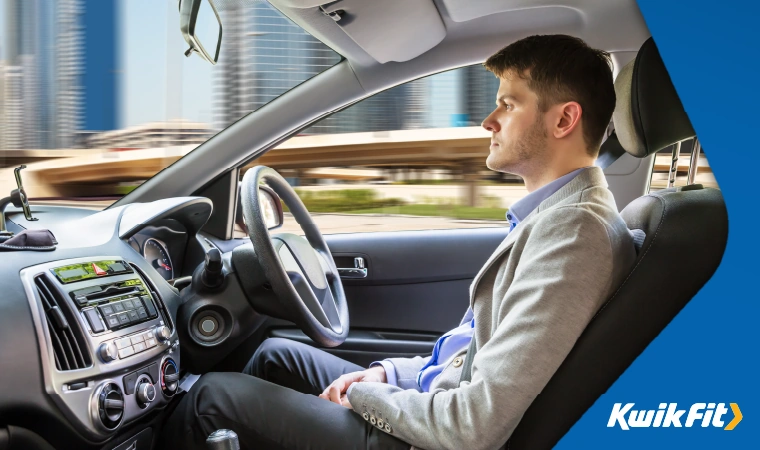
1. “Self-driving” set to become a legally protected term
The Automated Vehicles Act 2024 was launched in a bid to secure the safe deployment of automated vehicles (AVs) on roads in Great Britain. Now, marketing restrictions are coming into play early next year in a bid to progress the roll-out further.
From the 7th January 2027, words including “automated”, “autonomous”, “driverless”, “self-driving”, and “drive itself” will be restricted under the Act, meaning that using them to sell a car (or kit for a car) that is not authorised under the Automated Vehicles Act 2024 is an offence.
According to Simon Lightwood MP, from the Department for Transport: “These regulations will help prevent end-users in Great Britain from being misled into thinking that vehicles that are not authorised automated vehicles can safely and lawfully drive themselves.”
While laws around marketing terminology may appear to be modest regulatory changes, they represent a key foundational step in the creation of a trusted automated vehicle ecosystem - which could become more and more important as these cars start to hit UK roads.
2. Northern Ireland gets confirmation of a new practical driving test
2027 will bring a full transition to the Graduated Driver License (GDL) scheme in Northern Ireland, applying to category B learners whose provisional entitlement started on or after 1st October 2026.
- Learners who pass on or after 1st April 2027 fall under the new rules, which include elements like a 6-month minimum learning period and nighttime passenger restrictions.
- Drivers who held a provisional before the October date and pass by 31st March 2027 will retain legacy rights, such as the 45mph limit and amber ‘R’ plate.
1st April 2027 will also see Northern Ireland’s updated practical driving test come into effect, coinciding with the GDL scheme. These changes will extend the independent driving portion of the test, as well as introduce sat nav requirements and moving “show me/tell me” questions. However, it’s important to note that the overall standard required to pass remains unchanged.
3. Euro 7 announcement for the UK
Following consultations on the matter earlier this year, the Government has now confirmed it will be updating the minimum emission standard for new road vehicles in Great Britain to Euro 7.
This will include all new unlimited-volume light-duty vehicle registrations in Great Britain from the 29th November 2027. This change applies to the manufacture of new models; existing cars on the road are unaffected.
Euro 7 is the latest emissions standard for vehicles, building on Euro 6, with a stronger focus on the long-term impact of a vehicle - considering durability, consistency, and how clean a car stays over time. Learn more about what the shift to Euro 7 might mean for you in the future.
What should drivers do in response to the new driving laws?
While there aren’t any major changes to behaviour that drivers are likely to need to consider moving into 2027, there are some things that can help you stay ahead of the curve:
- Stay aware of autonomous driving capabilities: If you’re purchasing a new vehicle, be sure to carefully consider what automated driving features are enabled - and what they can safely and legally do.
- Prepare for updated driving tests in Northern Ireland: Learners in Northern Ireland should begin to familiarise themselves with the updated driving test format, including building confidence with sat navs. Ensure you’re aware of any learner restrictions that apply to you before hitting the road.
- Consider emissions standards when buying a new car: In the market for a new car in 2027? Make sure it’s Euro 7 compliant, so you’re ahead of the new standards.
- Keep up with regular car maintenance: Safe, roadworthy vehicles are still the number one response to almost all driving and regulatory changes - helping to ensure that road users can continue to exist safely and effectively. Staying on top of your manufacturer-recommended service schedule, annual MOT, and regular maintenance helps ensure that you never fall foul of any safety rules.

Check out Kwik Fit’s library of cost-saving advice
While a number of the latest Budget announcements are intended to help UK residents mitigate the increasing cost-of-living in the UK, it is undoubtedly still an expensive time to own and use a car.
To support drivers, we have a number of resources designed to provide expert money-saving advice on everything from cutting back on fuel to maintenance tasks you can do at home:
- 8 Ways to Improve the Fuel Efficiency of Your Car
- 11 Easy Ways to Save Fuel
- How to Spend Less Money on Fuel
- Fuel Efficient Tyres Can Save You Money
- How To Save Money On Your Car
- How Much Fuel Does Air Conditioning Use?
- How To Save Money On Family Car Costs
- Can Checking Your Tyre Pressure Save You Money?
- How To Improve Your Car’s Fuel Economy
For more expert guidance, head over to the Kwik Fit blog. Or, if you’ve got a question, contact us directly or pop into one of our centres, conveniently located across the UK.
Whether it’s for a free vehicle safety check or a combined annual MOT & service appointment, our in-centre teams can help you spot any issues before they develop into potentially costly problems.


Any facts, figures and prices shown in our blog articles are correct at time of publication.
Featured Articles
Is it Illegal to Drive With One Headlight?
Saturday 19th July 2025
Wondering if it’s illegal to drive with one headlight? Learn about the safety risks and penalties of illegal blown bulbs and why you should fix them promptly.
Air Con in EVs & Hybrids: Experts Answer Your Questions
Monday 30th June 2025
Does air con drain EV batteries? Can you use the air con while charging an electric car? Find out the answers to these questions & more from Kwik Fit’s experts.
Why Is Your Car Making a Noise? Fixes & Tips
Friday 13th June 2025

When your car starts making unexpected noises, it can certainly be quite disconcerting; it may be nothing to worry about, but here’s what you need to know.