
How to Drive An Automatic Car
A step-by-step guide on drive a car with an automatic gear box
- Start the engine while the gear selector is in P (Park).
- With your foot on the brake, change the gear selector into D (Drive).Carry out the regular ‘mirrors, signal, manoeuvre’ process before pulling away.
- Release the brake pedal and gently press the accelerator to move forward.
- Change between these two pedals with your right foot to drive.
- When parking, stop and change to P (Park) before applying the handbrake.
- For complex manoeuvres like junctions and roundabouts, read our dedicated beginner’s guides.
As automatic cars soar in popularity, manual gearboxes are no longer the default option for UK drivers.
Whether you’ve recently passed your driving test, are hiring an automatic car, are a nervous driver, or are thinking about switching to an automatic, learning how to drive one is simpler than many drivers expect.
This guide explains how automatic cars differ from manual models and takes you through the basics of driving one with confidence.
Is an automatic car easier to drive?
Automatic cars are generally easier to drive because there are fewer controls to manage, allowing you to focus more on the road ahead than on operating the vehicle.
Instead of thinking about clutch control or changing gear at the right moment, the car does that automatically for you. Many drivers find this makes everyday driving feel less demanding, particularly when in heavy stop-start traffic, on hills, or when manoeuvring at low speeds.
It’s one of the reasons automatic cars have become increasingly popular in recent years. The growing popularity of electric and hybrid vehicles has also accelerated the shift, as all production electric cars are automatic by design, which means more drivers are making the switch than ever before.
Can you drive an automatic car with a manual licence?
If you passed your driving test in a manual car, your licence usually allows you to drive both manual and automatic cars. This means you can switch to an automatic without taking another test.
However, if you passed your test in an automatic car, your licence will only allow you to drive automatic vehicles. You would need to pass a manual driving test before driving a manual car.
You can check the categories and restrictions shown on your driving licence if you’re unsure what type of vehicle you’re entitled to drive.
What makes an automatic car different?
Before you get behind the wheel, it's worth understanding a few key differences between manual and automatic cars.
Automatic cars change gear for you
In a manual car, you change gear yourself using the clutch pedal and gear stick. In an automatic, you simply select Drive (D) and the gearbox changes gear automatically as your speed changes.
The letters on an automatic gear selector are different
| Gear: | Meaning: |
|---|---|
| P | Park. Locks the transmission when the vehicle is parked. |
| R | Reverse. Used for reversing. |
| N | Neutral. Disconnects the engine from the wheels. |
| D | Drive. Used for normal driving. This is sometimes also marked as ‘E’. |
| S (if fitted) | Sport mode, which holds gears longer to provide stronger acceleration. |
Some automatic cars also include a manual or semi-automatic mode, allowing you to change gears yourself when required.
Which foot should you use to drive an automatic car?
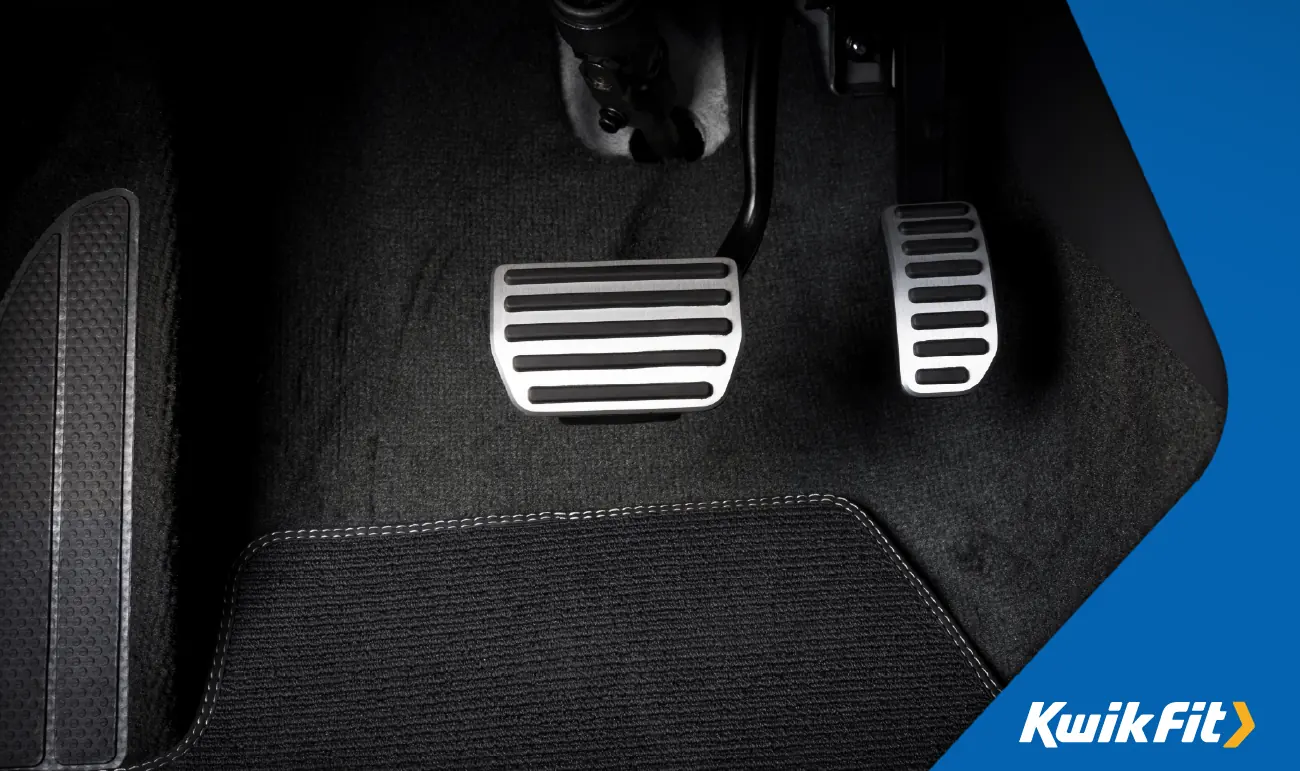
Unlike a manual car, an automatic only has two pedals: the accelerator and the brake. You should use your right foot for both pedals and keep your left foot resting away from the controls. This helps prevent you from pressing the accelerator and brake at the same time.
Can you stall an automatic car?
Because there's no clutch to operate, it's very unlikely you'll stall an automatic during normal driving. That can make moving off, stopping and driving in traffic feel much less stressful, particularly if you're used to driving a manual.
How do you drive an automatic car?
Driving an automatic is relatively straightforward once you’re familiar with the controls. The gearbox changes gear automatically, allowing you to concentrate on steering, braking and your surroundings.
1. Start the engine
Before starting the engine, make sure the gear selector is in P (Park) and keep your foot firmly on the brake pedal. Start the engine and release the parking brake if it’s applied.
2. Select drive
With your foot still on the brake, move the gear selector into D (Drive). Check your mirrors and surroundings before preparing to move away.
3. Move away smoothly
Gently release the brake pedal. Most automatic cars will begin to move forward slowly on their own. This is known as creep and is completely normal. It happens because the transmission remains engaged when the car is in Drive, even when you aren’t pressing the accelerator.
Rather than pressing the accelerator immediately, allow the car to roll naturally before applying gentle pressure to build speed. This gives you better control when parking, manoeuvring, or driving in slow-moving traffic.
4. Drive normally
Use your right foot to operate both the accelerator and brake. As you accelerate or decelerate, the gearbox will automatically select the appropriate gear. Unlike a manual, there’s no need to think about changing gear or operating a clutch, allowing you to focus on the road ahead.
When stopping briefly at traffic lights or in a queue, you can usually leave the car in Drive (D) with your foot on the brake. There’s no need to select Neutral (N) every time you stop, although you should follow the guidance in your vehicle handbook for longer waits.
5. Park safely
Bring the vehicle to a complete stop before selecting P (Park). Apply the parking brake before switching off the engine, following any manufacturer-specific guidance in your vehicle handbook.
Looking after your automatic car
Whether you drive an automatic or a manual, regular maintenance helps keep your vehicle safe, reliable, and performing at its best. Routine servicing, brake checks, and free tyre check can help identify potential issues before they become more serious.
If your car is due a service or MOT, you can book an appointment at your local Kwik Fit centre.
For more practical driving advice, vehicle maintenance tips and the latest motoring news, explore the Kwik Fit blog.